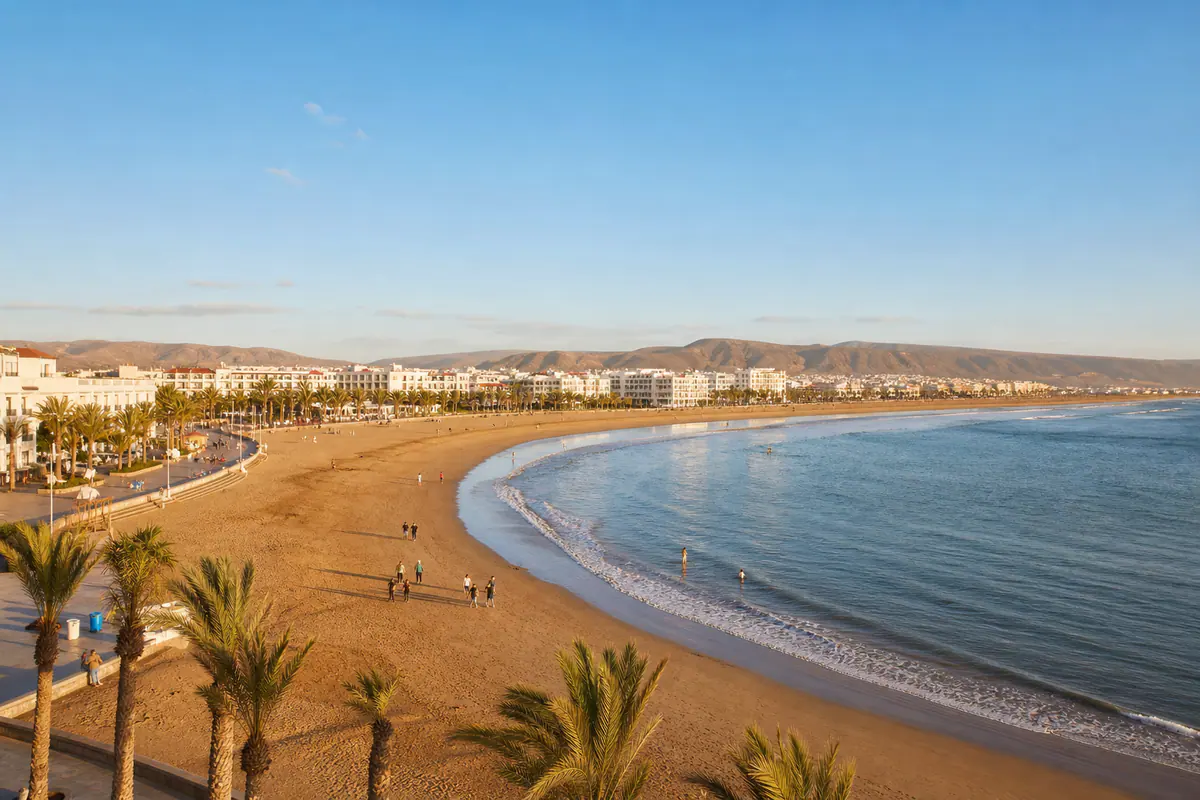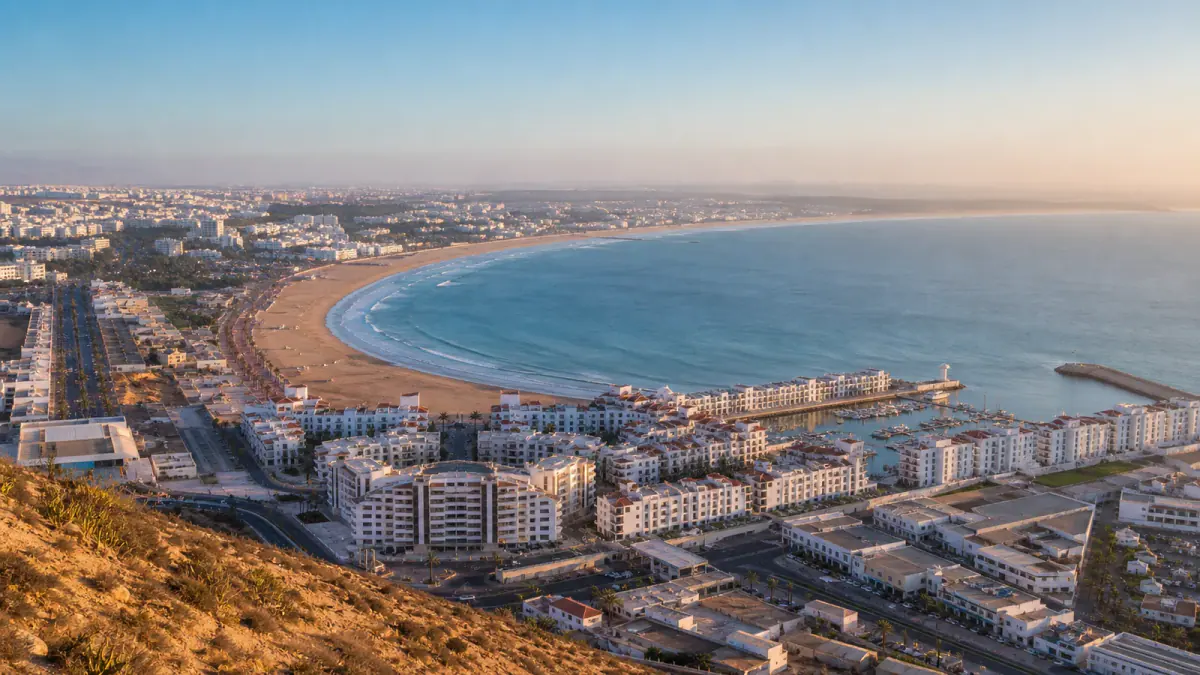
Agadir is not Marrakech beside the sea. It is a modern Atlantic city built around a broad beach, an easy promenade and the everyday life of the Souss region. That makes it a good choice when you want Morocco without filling every hour: walk the bay, browse Souk El Had, visit the restored Agadir Oufella, eat grilled fish and leave space for a slow afternoon.
This guide helps first-time visitors decide what Agadir is genuinely good at, how long to stay and how to build a trip that goes beyond the hotel pool without pretending the city has an ancient medina on every corner.
Is Agadir Right for Your Morocco Trip?
Choose Agadir when your priorities are:
- a comfortable beach base with many accommodation choices;
- an easy few days for children, older relatives or a mixed group;
- winter daylight and outdoor time;
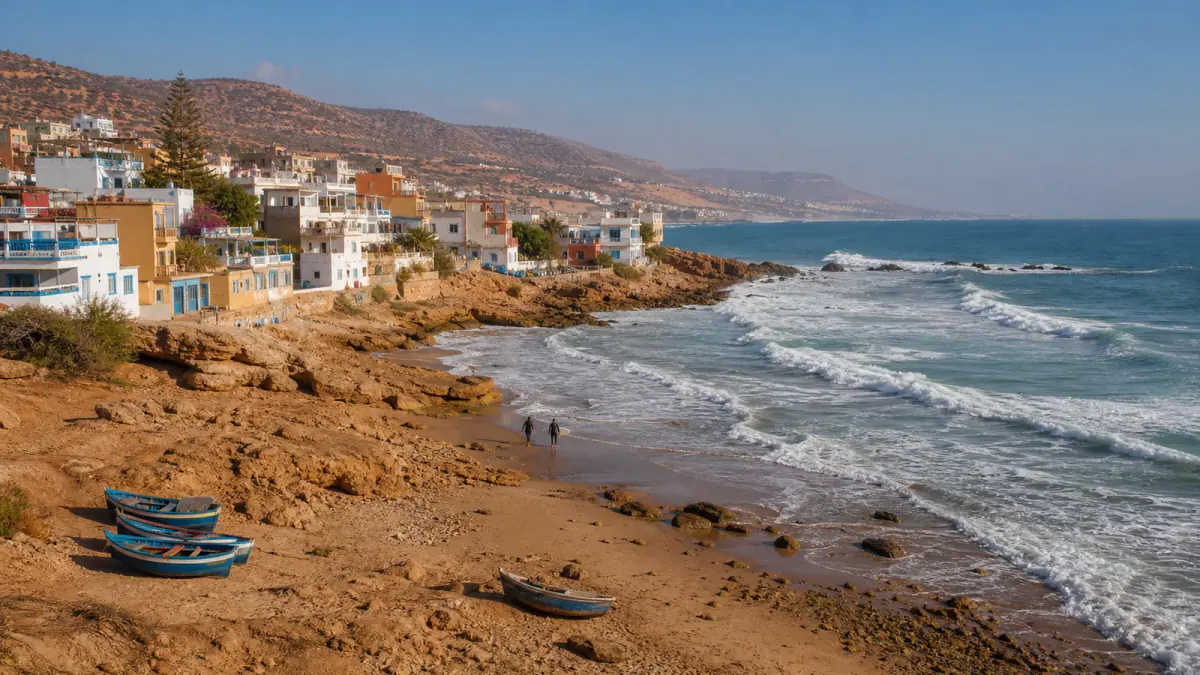
- access to Taghazout, the Souss plain and the Anti-Atlas foothills;
- a slower stop after Marrakech, Fes or a long road trip.
Choose Essaouira instead if a compact historic medina and port atmosphere matter more than resort convenience. Choose Taghazout if surfing is the center of the trip. Agadir works best as the practical middle ground: more services than a village and less sensory pressure than a large old medina.
Agadir at a Glance
| Planning question | Practical answer |
|---|---|
| How long to stay? | Two full days for the city; three or four with a day trip |
| Best base for first visit | Beachfront or Founty for convenience; Talborjt for more city life |
| Main experiences | Beach, promenade, Souk El Had, Agadir Oufella, food and coastal excursions |
| Main airport | Agadir Al Massira Airport |
| Car required? | No for the city; useful only for independent regional exploring |
| Important expectation | Agadir is modern and spread out, not a walk-everywhere old medina |
What Agadir Feels Like
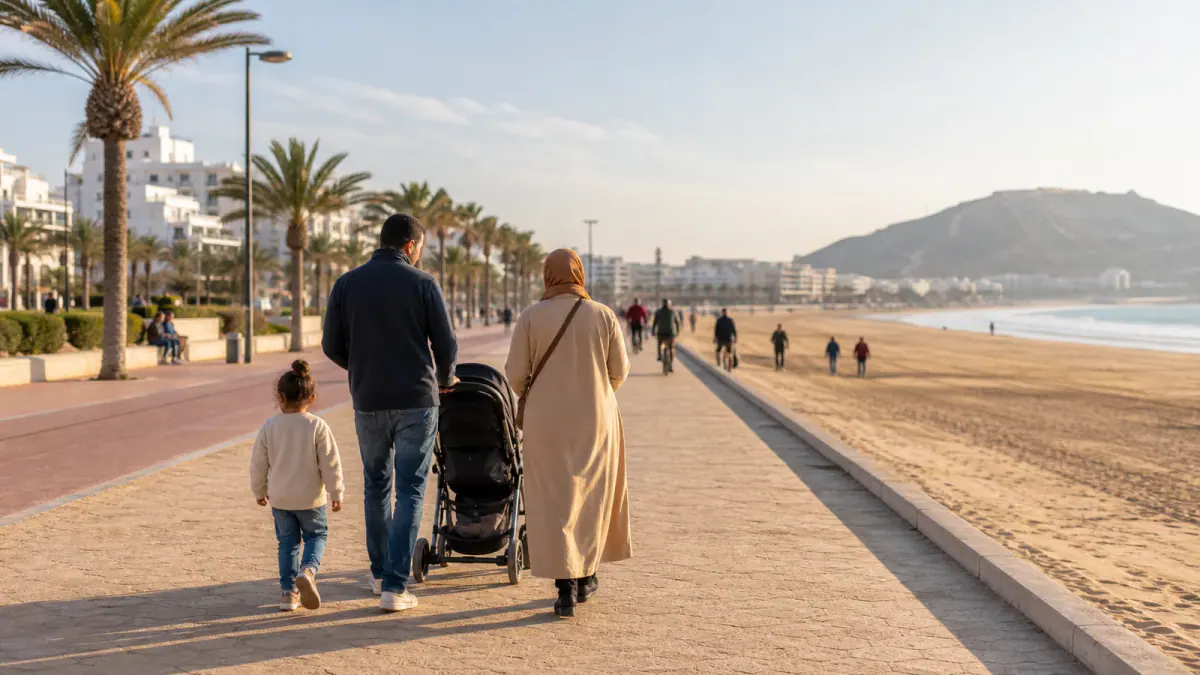
The bay gives the city its rhythm. Early morning belongs to walkers and runners; afternoons pull visitors toward the sand, cafes and hotel pools; evenings bring families back to the promenade. Move a few streets inland and the mood changes. Talborjt has neighborhood restaurants and daily errands, while Souk El Had feels like a working market rather than a decorative visitor attraction.
Agadir’s modern plan is tied to tragedy. The 1960 earthquake destroyed much of the former city, and reconstruction shaped the wide roads and low-rise urban form visitors see today. The hilltop kasbah is therefore more than a viewpoint: it is a place of memory overlooking the rebuilt city.
The Beach and Promenade
Agadir’s long sandy bay is the simplest place to begin. The promenade is useful even when swimming is not: it connects hotels, cafes, beach access and the marina side of the waterfront. The Moroccan National Tourist Office describes Agadir as the country’s leading seaside destination and distinguishes the comparatively sheltered bay from the more exposed surf around Taghazout in its official Agadir-Taghazout beach guide.
The Atlantic still deserves respect. Check the beach flags, keep children close to supervised areas and do not judge currents only by how calm the water looks from the promenade. The breeze can also disguise strong sun, so sunscreen and water matter on hazy days.
For a quieter walk, go before breakfast. For atmosphere, return near sunset. You do not need to spend the entire day on the sand for the beach to improve the trip.
Souk El Had Without Rushing
Souk El Had is where Agadir feels most connected to the wider Souss region. The market carries produce, dates, olives, spices, household goods, clothing, leather, ceramics and argan products. The National Tourist Office’s shopping guide highlights the souk as a major place for local products and crafts.
Give it at least ninety minutes and resist the urge to cover every aisle. A better approach is to choose what interests you:
- food sections for olives, spices, fruit and pantry ingredients;
- household sections for practical ceramics and woven goods;
- craft areas for leather, copper and jewelry;
- argan sellers for culinary or cosmetic products.
Ask which type of argan oil you are buying; culinary and cosmetic oils are processed and used differently. Look for sealed packaging when you need to fly home with it. Bargaining can be part of the interaction, but it should stay calm and good-humored.
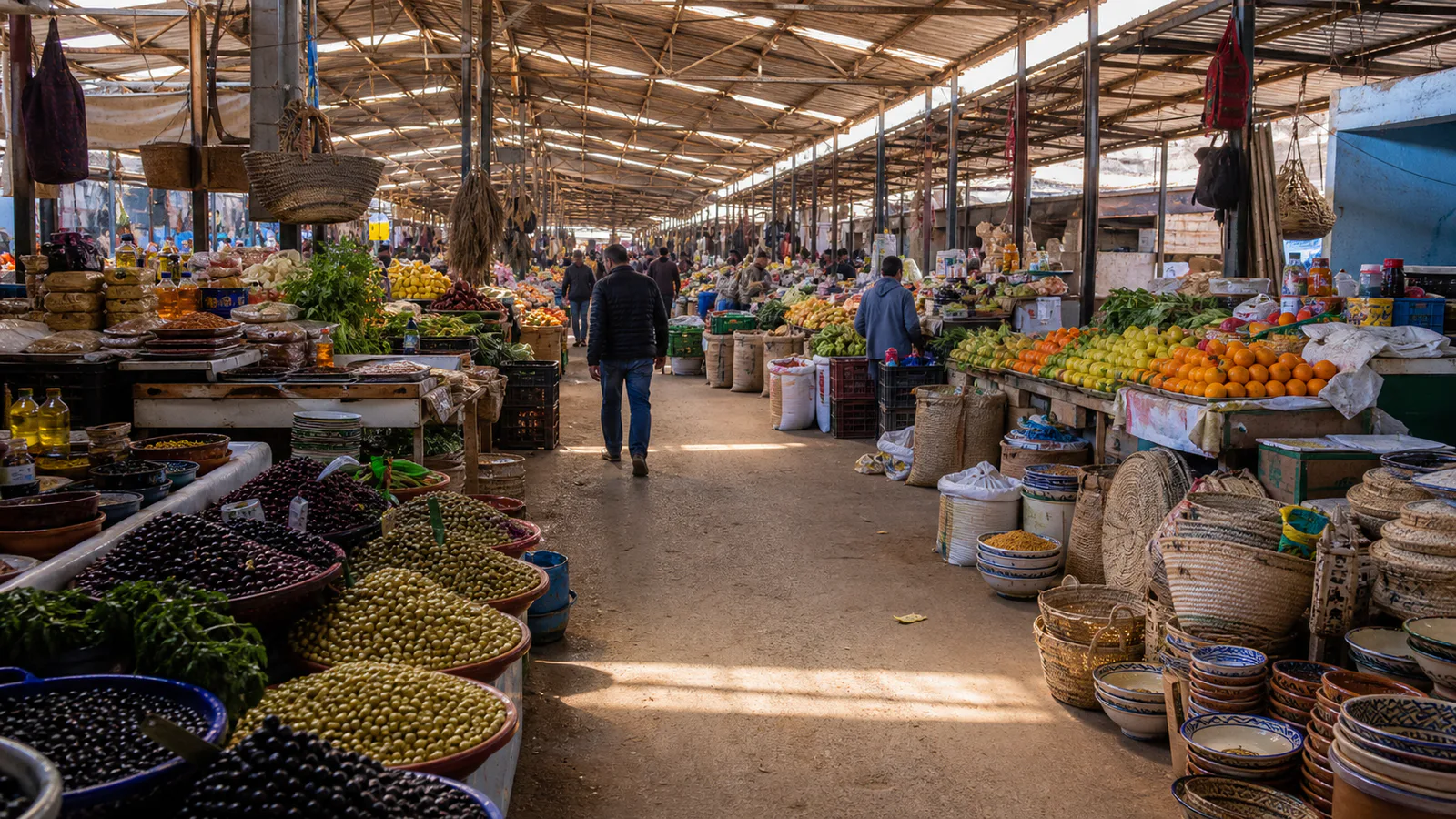
An illustrative Souk El Had market scene; products, stall layouts and crowd levels change throughout the day.
Agadir Oufella: Viewpoint and Memorial
Agadir Oufella is the surviving historic anchor above the modern city. The kasbah was founded in the sixteenth century and was devastated in the 1960 earthquake. Its restoration created a controlled visitor route intended to protect both archaeological remains and the memory of people who died there.
The official Agadir Oufella site explains why visitors walk on a raised circulation platform rather than directly across sensitive ground. Treat the visit as heritage first and panorama second.
Access arrangements and opening times can change for events, so check the kasbah’s current visitor information before going. Morning offers clearer detail across the city; later light can be warmer over the bay.
A New Place to Understand the Rebuilt City
The Museum of the Reconstruction of Agadir opened in 2025 in the former Bank Al-Maghrib building. It adds context that the beachfront alone cannot provide: how the earthquake changed the city and how reconstruction became part of modern Agadir’s identity. Verify hours with the National Museum Foundation before planning around it.
Pairing the museum with Agadir Oufella creates a more meaningful half day than treating the kasbah only as a sunset photo stop.
Marina, Talborjt and the City Beyond the Resort
The marina is polished, easy and useful for a walk or a meal, but it is not the whole city. Prices and atmosphere lean toward visitors. Talborjt offers a better look at ordinary urban Agadir, with cafes, bakeries, restaurants and local services.
A balanced day might begin on the promenade, move inland for lunch or the souk, then end near the waterfront. This prevents the common feeling that Agadir is only a strip of hotels.
What to Eat in Agadir
Agadir is a coastal city in a fertile agricultural region, so simple meals often work best:
- grilled sardines or other fish;
- seafood tagine;
- Moroccan salads and lentils;
- brochettes with bread and olives;
- amlou made with almonds, argan oil and honey;
- seasonal fruit and fresh juice.
Do not assume the marina is the only place for seafood. Ask about the day’s fish and confirm the price before ordering when it is sold by weight. For a broader introduction, use our traditional Moroccan dishes guide.
Getting From the Airport and Around the City
Agadir Al Massira Airport sits outside the center. Taxis, arranged transfers and the public AeroBus are the main options. Agadir Mobilite publishes the route and current information on its official AeroBus page; check it shortly before travel because schedules and fares can change.
Inside Agadir, small taxis are useful for moving between the beach, Talborjt, Souk El Had and other districts. The promenade itself is walkable, but the city is too spread out to plan every sight on foot. Confirm that the meter is used or agree on the fare before leaving.
A rental car is unnecessary for a normal city stay. It becomes useful when you want independent day trips and are comfortable with local roads and parking.
A Realistic Two- or Three-Day Plan
Day 1: Understand the city
Walk the promenade in the morning, spend the middle of the day at Souk El Had, then visit Agadir Oufella when the light softens. Eat away from the most tourist-facing strip if you want a more local evening.
Day 2: Beach and modern Agadir
Keep the morning flexible for the beach or hotel pool. Add the reconstruction museum or Talborjt after lunch, then return to the waterfront for sunset.
Day 3: Leave the city
Choose one excursion that matches your interests. Taghazout is the easiest coastal change; Souss-Massa National Park suits birdlife and landscapes; Taroudant offers ramparts and souks. Our Agadir day-trip guide compares them without trying to fit everything into one day.
Common Planning Mistakes
- Booking a remote hotel while expecting to walk everywhere.
- Expecting the city to look and feel like Marrakech or Fes.
- Spending every meal on the beachfront without exploring inland neighborhoods.
- Treating Agadir Oufella only as a backdrop instead of a memorial site.
- Adding several long excursions to a short stay that was meant to be relaxing.
- Assuming Atlantic swimming conditions are identical every day.
Frequently Asked Questions
Is Agadir worth visiting?
Yes, when you want an accessible coastal base, a broad beach and easy regional trips. It may disappoint travelers whose only priority is medieval architecture.
How many days are enough?
Two full days cover the city’s main experiences at a comfortable pace. Add one or two days for the coast, national park or Taroudant.
Where should a first-time visitor stay?
The beachfront or Founty is simplest for a beach-focused first trip. Talborjt is better when restaurants and city life matter more than being beside the sand. Compare the areas in our Agadir accommodation guide.
Can Agadir work without a car?
Yes. Taxis and walking cover the city, and organized trips can handle excursions. Rent only when the freedom is worth the added parking and navigation.
The Best Way to Use Agadir
Agadir is strongest when you stop asking it to be an old imperial city. Use it for ocean air, straightforward logistics and a gentler rhythm, then make deliberate choices: one serious market visit, one heritage visit and, if time allows, one excursion into the Souss landscape.
Continue with the Morocco first-time visitor guide or compare Agadir with our Essaouira travel guide.