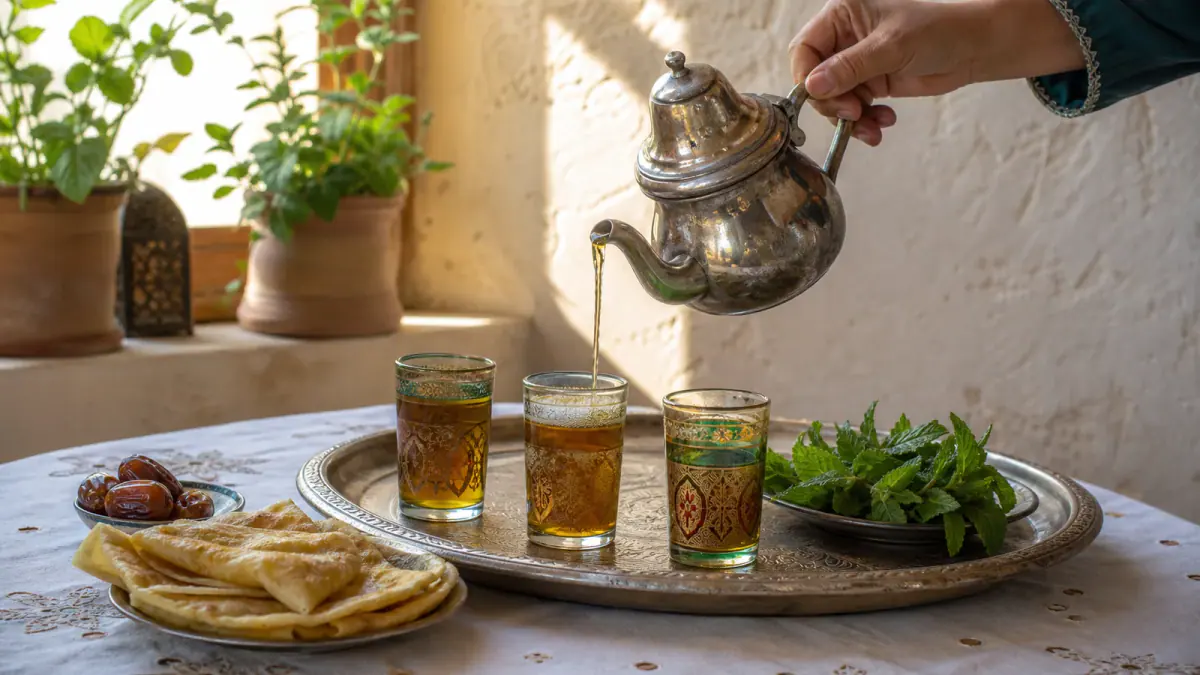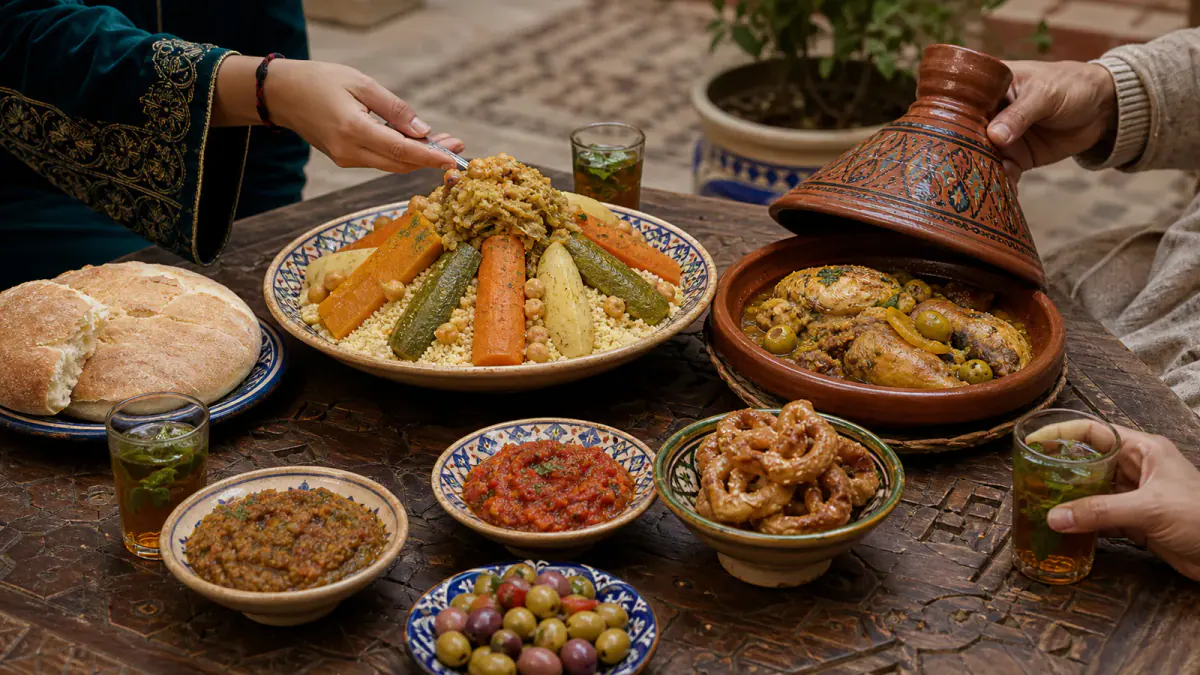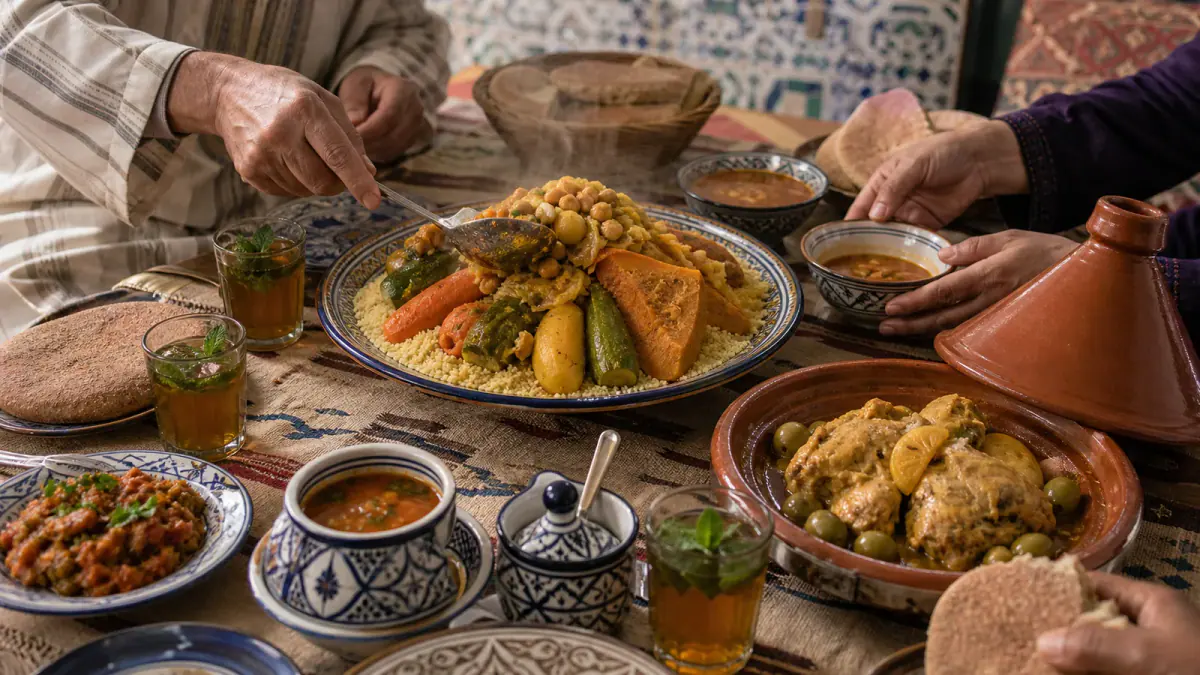
Traditional Moroccan food is not one fixed restaurant menu. It changes by region, season, family and occasion: Friday couscous, Ramadan harira, coastal sardines, celebratory pastilla and a Marrakech tanjia are all part of the same cuisine. Understanding those differences helps you order dishes when and where they are prepared at their best.
If this is your first food trip in Morocco, start with couscous, chicken tagine, harira and msemen, then seek out dishes that require more time or a specialist kitchen, such as rfissa, pastilla and tanjia. This list explains ten traditional Moroccan dishes, what to expect and where each one makes most sense.
The aim is not to rank one family recipe above another. It is to help travelers recognize the difference between an everyday breakfast bread, a shared weekly meal, a regional specialty and a celebration dish. Availability matters: freshly steamed couscous may follow a Friday schedule, rfissa can require advance notice, and the best sardine meal depends more on the day’s catch than on a famous menu.
The 10 dishes at a glance
| Dish | What it is | Where or when to look |
|---|---|---|
| Couscous | Steamed semolina with vegetables, broth and sometimes meat | Friday lunch; homes and traditional restaurants |
| Chicken tagine | Slow-cooked chicken with preserved lemon and olives | Widely available |
| Harira | Tomato, pulse and herb soup | Ramadan evenings and traditional eateries |
| Pastilla | Crisp layered pie with savory filling and sweet-spiced finish | Fes, celebration menus and specialist restaurants |
| Rfissa | Chicken, lentils and fenugreek over shredded trid or msemen | Family occasions; often pre-ordered |
| Tanjia | Marrakech meat dish cooked slowly in an earthen jar | Traditional Marrakech restaurants |
| Zaalouk | Cooked eggplant and tomato salad | Starter spread or accompaniment |
| Sardines | Grilled, fried or chermoula-stuffed fish | Atlantic and Mediterranean coastal cities |
| Msemen | Folded, griddled Moroccan flatbread | Breakfast, tea time and street stalls |
| Chebakia | Sesame pastry fried and coated with honey | Especially visible during Ramadan |
The Moroccan National Tourist Office identifies couscous, tagine, pastilla, rfissa and mechoui among the country’s emblematic foods and describes Moroccan cooking as shaped by Amazigh, Arab-Andalusian and Jewish culinary traditions. Its official gastronomy overview is a useful starting point, but no ten-item list can represent every regional kitchen.
1. Couscous
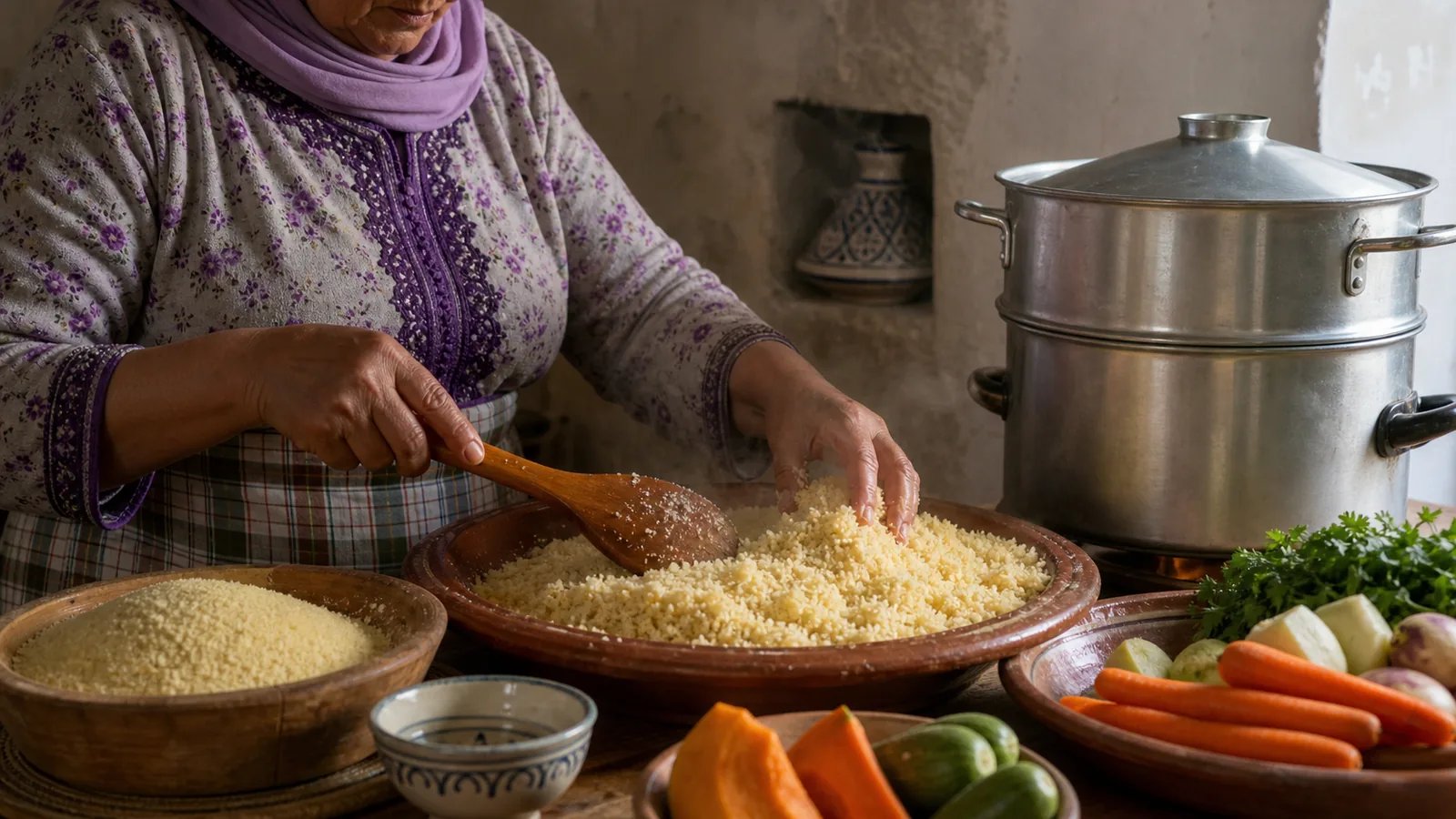
Couscous is both a dish and a body of knowledge. Semolina grains are moistened, rolled and steamed—traditionally several times—above a broth or stew. The grains are arranged on a broad platter, then topped with vegetables and, depending on the household, chicken, lamb, beef or no meat.
In Morocco, couscous is strongly associated with Friday and communal eating. Recipes vary: seven-vegetable couscous is widely recognized, tfaya adds sweet onions and raisins, and coastal or regional versions can follow different traditions. The best couscous is not dry grains with sauce poured over as an afterthought; steaming and gradual absorption create its texture.
UNESCO inscribed the knowledge and practices of couscous in 2020 through a joint nomination by Morocco, Algeria, Mauritania and Tunisia. The record emphasizes preparation skills, shared meals, solidarity and transmission between generations. It is North African heritage, not a dish that belongs to only one modern border.
How to try it: Ask whether couscous is available on Friday and whether the restaurant requires a reservation. A place that makes one large batch for lunch may offer a better experience than a menu promising instant couscous all day.
2. Chicken tagine with preserved lemon and olives
“Tagine” can mean the conical earthenware vessel, the cooking method and the finished dish. Chicken with preserved lemon and olives is an approachable example: savory chicken, onion, herbs and spices gain sharp salinity from cured lemon and olives.
The liquid should be concentrated rather than soup-like, and the preserved lemon is seasoning, not a large fresh-lemon garnish. Moroccan bread is commonly used to pick up food and sauce from the shared vessel.
Tagines vary enormously. Beef or lamb with prunes and almonds leans sweet and aromatic; kefta tagine combines meatballs, tomato and often eggs; vegetable and fish versions follow other balances. A generic “Moroccan tagine” does not describe one recipe.
How to try it: Chicken with preserved lemon is widely available and a good first order. Ask what tagine was prepared that day. Slow cooking takes time, and a suspiciously enormous menu may not mean every version has been simmering fresh.
3. Harira
Harira is a substantial tomato-based soup built with pulses, herbs and a thickening element. Chickpeas and lentils are common; vermicelli or another small pasta may appear, and some versions contain meat. Coriander, parsley, celery and warm spices give it a recognizable aroma.
Its strongest cultural association is Ramadan, when many families serve harira to break the fast alongside dates, eggs, chebakia and other foods. It is not limited to one month, however, and traditional restaurants or soup shops may sell it throughout the year.
Texture differs by cook. Some bowls are smooth and lightly thickened; others are dense with pulses. “Vegetable soup” is not a safe synonym: harira may contain meat stock or flour even when no pieces of meat are visible.
How to try it: Order a small bowl as a starter or light meal. During Ramadan, check restaurant opening times and be patient around sunset, when families and staff are preparing to break the fast.
4. Pastilla
Pastilla—also written bastilla—is a layered pie where crisp pastry meets a richly seasoned filling. Poultry versions may combine chicken or pigeon, eggs, onions, almonds, cinnamon and sugar. Seafood pastilla uses a different savory filling, often with fish, seafood and noodles, and should not be expected to taste sweet in the same way.
The tension between savory filling, warm spice and powdered sugar can surprise visitors who expect dessert. It is a celebration dish linked to skilled preparation, not simply “chicken pie.”
Fes is particularly associated with refined pastilla traditions, although the dish appears across Morocco. Individual portions are convenient, but a carefully prepared large pastilla shared at a meal shows its layers more clearly.
How to try it: Confirm whether the menu means poultry or seafood pastilla and ask if it must be ordered ahead. People with nut, egg, seafood or gluten allergies should treat the dish cautiously; several components may be hidden within the pastry.
5. Rfissa
Rfissa combines chicken, lentils, onions, fenugreek and a deeply seasoned broth served over shredded trid pastry or msemen. The bread layers absorb the broth, turning the dish into something soft, aromatic and comforting rather than crisp.
It is connected with hospitality and family occasions, including meals prepared for a mother after childbirth. Fenugreek gives rfissa a distinctive fragrance that some first-time eaters find more assertive than tagine.
Rfissa is labor-intensive and does not always suit an à-la-carte kitchen. The difference between freshly assembled layers and a hurried imitation is significant.
How to try it: Look for a specialist restaurant, home-cooking experience or daily special, and reserve when requested. It is usually a generous shared dish, so ask about portion size before ordering several mains.
6. Tanjia Marrakchia
Tanjia is closely tied to Marrakech. Meat, preserved lemon, spices, garlic and smen (aged clarified butter) are placed in a tall earthenware jar, sealed and cooked slowly. Traditionally, jars could be taken to the furnace associated with a neighborhood hammam, where residual heat cooked the contents.
Do not confuse tanjia with tagine. The names sound similar to newcomers, but the vessel, preparation and Marrakech identity are different. The finished meat should be very tender, with a concentrated sauce and the distinctive depth of preserved lemon and smen.
Food vendors are part of the living cultural scene around Marrakech’s famous square; UNESCO’s record for the cultural space of Jemaa el-Fna recognizes the square as a place of commercial and cultural exchange. That does not certify every food stall, so use normal hygiene judgment.
How to try it: Choose a restaurant known for tanjia rather than assuming every medina menu specializes in it. Ask whether it is sold by portion or for sharing. Our Marrakech travel guide can help place the meal within a realistic city itinerary.
7. Zaalouk
Zaalouk is a cooked salad, usually based on eggplant and tomato with garlic, olive oil, cumin, paprika and herbs. Depending on the cook, the eggplant may be roasted, boiled or cooked directly with the tomatoes, producing textures from chunky to almost puréed.
It is commonly served at room temperature as part of a spread of small salads accompanying bread and a main dish. Calling it “eggplant dip” explains how a visitor might eat it, but misses its place in the cooked-salad tradition.
Zaalouk can be one of the easiest plant-based foods to find, yet diners should still ask about preparation if they avoid animal products or have allergies. The rest of a salad assortment may include ingredients that are not obvious.
How to try it: Order several Moroccan salads for the table rather than treating each small plate as a separate course. Taste zaalouk beside taktouka, grated carrot salad or seasonal vegetables to understand the range.
8. Sardines with chermoula
Morocco’s long Atlantic and Mediterranean coasts support strong fish traditions. Sardines may be grilled with little more than salt, fried, or butterflied and paired around a chermoula filling made with herbs, garlic, spices and acid.
The “stuffed sardine” format is often two fillets pressed around the seasoning, coated and fried. At ports and fish markets, simpler grilled fish may be the better expression of what arrived that day.
Freshness and turnover matter more than elaborate presentation. A busy, clean grill with a short list can be preferable to a restaurant displaying many species with no clear pricing.
How to try it: Essaouira, Safi, Agadir, Casablanca and northern coastal cities are natural places to look, but availability changes with the catch. Confirm the price and whether it is per plate, portion or weight before ordering.
9. Msemen
Msemen is a square laminated flatbread made by stretching dough, folding it with oil or butter and semolina, then cooking it on a griddle. The folds create chewy, flaky layers. It appears at breakfast and tea time with honey, butter, soft cheese, jam or amlou; savory stuffed versions also exist.
Freshness transforms it. Warm msemen from a griddle has crisp patches and flexible layers, while one left for hours can become heavy. It is everyday food rather than a ceremonial showpiece, and that accessibility is part of its appeal.
Our Moroccan msemen recipe and breakfast guide covers the folding method in more detail.
How to try it: Watch for breakfast counters, bakeries, markets and tea stalls with active griddles. If ordering several toppings, ask whether they are included or priced separately.
10. Chebakia
Chebakia is a sesame-rich pastry shaped into a flower-like form, fried, soaked in honey and often finished with more sesame. Orange-blossom water, anise, cinnamon and other aromatics may appear in the dough, with recipes varying by family.
Its strongest season is Ramadan, when it is served beside harira to balance the savory soup with sweetness. Bakeries may sell it outside Ramadan, but the abundance and social context during the fasting month are distinctive.
Chebakia is dense, sticky and sweet; one or two pieces can be enough for a first taste. Sesame, gluten and frying oil are important allergy considerations.
How to try it: Buy a small quantity from a busy bakery and eat it with unsweetened or lightly sweetened tea if you find the usual combination too rich.
Which Moroccan dishes should a first-time visitor order?
Use this simple progression:
- Start familiar: chicken tagine, zaalouk and fresh bread.
- Try the shared staple: Friday couscous when it is freshly prepared.
- Add everyday food: harira and msemen.
- Choose a regional specialty: tanjia in Marrakech or sardines on the coast.
- Reserve a celebration dish: pastilla or rfissa from a kitchen known for it.
- Finish seasonally: chebakia during Ramadan or another local pastry.
This approach gives more range than ordering a different tagine every night. For a broader explanation of spices, meal structure, street food and regional influences, use our Moroccan food guide.
How to recognize a useful traditional menu
A traditional restaurant does not need antique décor. Look for specific information:
- a short list of dishes or clear daily specials;
- staff who can explain what was prepared today;
- honest notice that couscous, rfissa or pastilla requires advance ordering;
- visible turnover and food served at an appropriate temperature;
- transparent prices and portion sizes;
- willingness to answer ingredient and allergy questions.
“Authentic” is not a measurable hygiene standard. A famous street stall can still have poor handling, while a modern dining room can preserve traditional technique carefully. Judge the kitchen, food and clarity—not a decorative stereotype.
Eating etiquette for shared dishes
Moroccan meals are often communal. Follow your host or the people at the table. Bread may function as the utensil, with diners generally eating from the section in front of them rather than reaching across the platter.
Wash your hands, use the right hand when practical, and wait until the host begins. In a restaurant, requesting a fork is fine. Hospitality does not require you to overeat; a warm compliment and thanks are better than forcing another portion.
Mint tea often follows or accompanies food. If you want to reproduce it carefully at home, see our Moroccan mint tea guide.
Vegetarian, vegan and allergy considerations
Moroccan cooking includes many vegetables, pulses and grains, but a vegetable name does not guarantee a vegetarian preparation. Broth, smen, meat drippings or shared cooking surfaces may be involved.
Useful questions include:
- Does the broth contain meat?
- Is the dish cooked with butter or smen?
- Are almonds, peanuts, sesame or other nuts present?
- Does the pastry contain egg?
- Is fish or shellfish used in the filling or sauce?
- Can the kitchen manage cross-contact safely?
For a severe allergy, carry a professionally translated allergy card and do not rely only on a menu label. Pastilla, chebakia, couscous and restaurant salad assortments can contain ingredients that are not visually obvious.
Frequently asked questions
What is Morocco’s national dish?
Couscous is often described as Morocco’s emblematic or national dish, and it has deep social importance. Still, Morocco’s culinary identity cannot be reduced to one recipe; tagine, bread, soups, pastries and regional specialties are also central.
Is all Moroccan food spicy?
Moroccan food is highly spiced in the sense of aromatic seasoning, but it is not automatically hot with chili. Cumin, ginger, turmeric, cinnamon, paprika, saffron, coriander and blended seasonings create complexity. Harissa or fresh chili may be offered separately.
What is the difference between tagine and tanjia?
Tagine is a broad family of dishes cooked in or associated with a shallow conical vessel. Tanjia is a Marrakech specialty slow-cooked in a tall earthenware jar. They are different vessels and traditions.
Can I find these ten dishes in one restaurant?
Possibly, but that is not the best goal. Couscous, rfissa, pastilla and tanjia take distinct preparation, while sardines depend on location and supply. Try them across several meals and choose places known for the relevant dish.
What should I drink with Moroccan food?
Water and Moroccan mint tea are common choices. Some meals pair well with lben, a fermented milk drink, especially couscous. Availability and personal preference vary.
Final takeaway
The most revealing Moroccan food itinerary combines everyday and celebratory cooking: warm msemen in the morning, zaalouk with bread, harira at a simple restaurant, Friday couscous, coastal sardines and one carefully prepared pastilla, rfissa or tanjia.
Do not measure the experience by how many dishes you collect. Ask what was cooked today, learn why it is served, share when appropriate and give slow dishes the time they require.