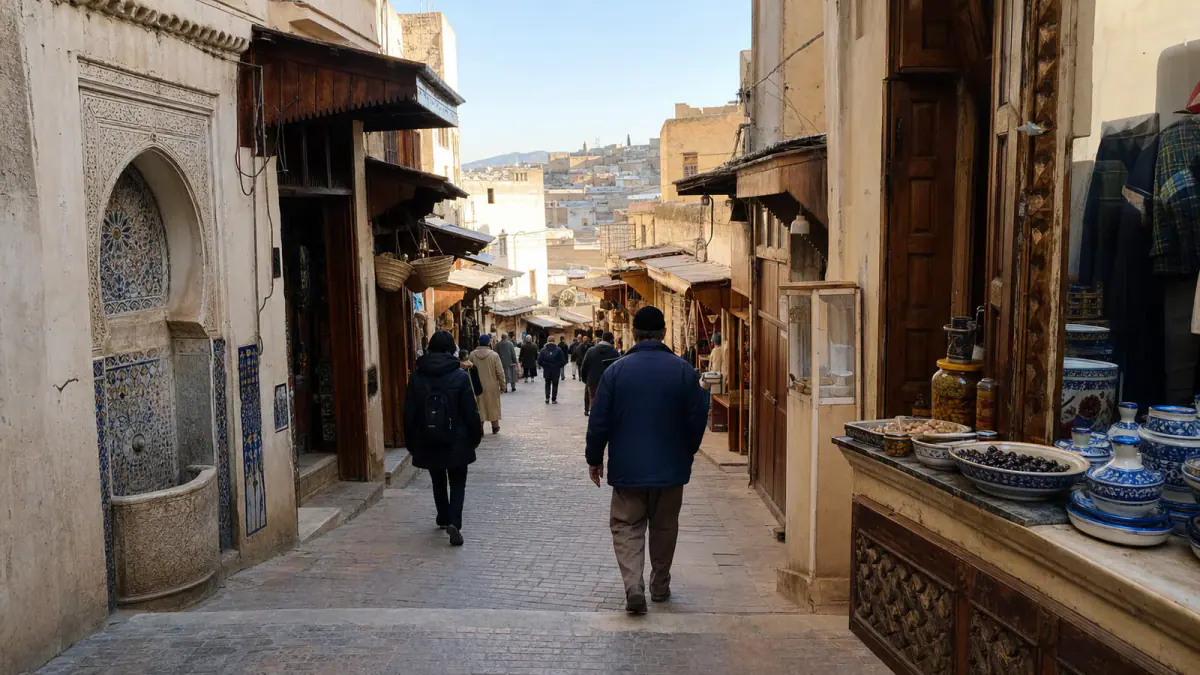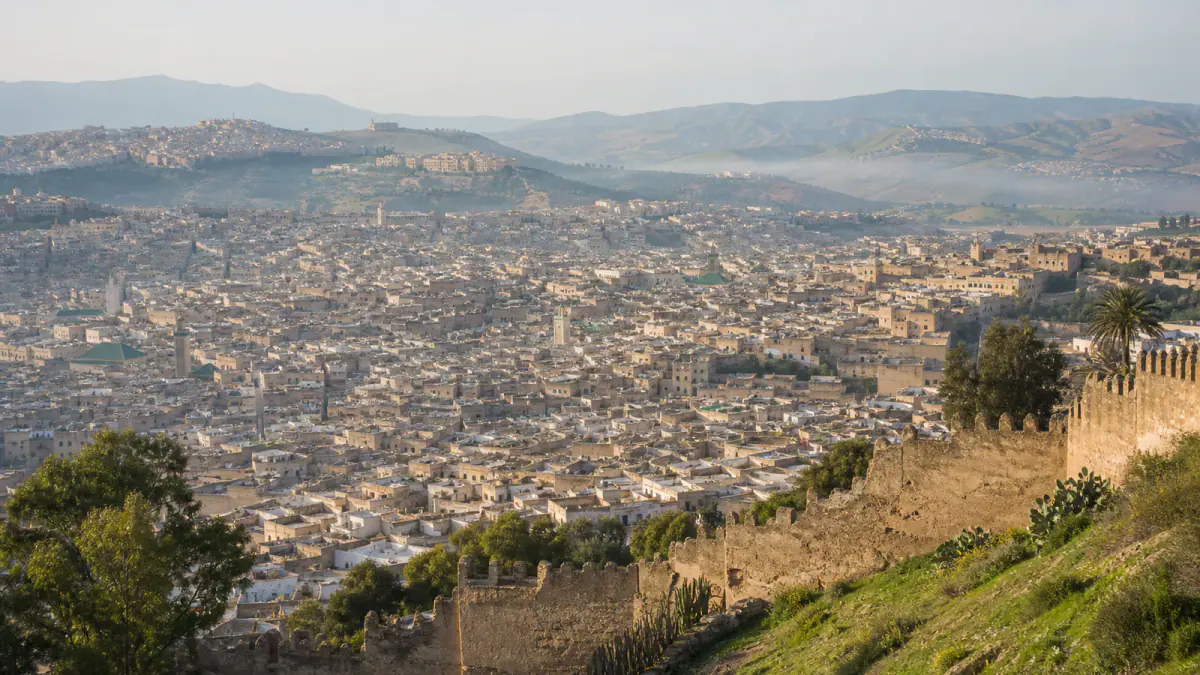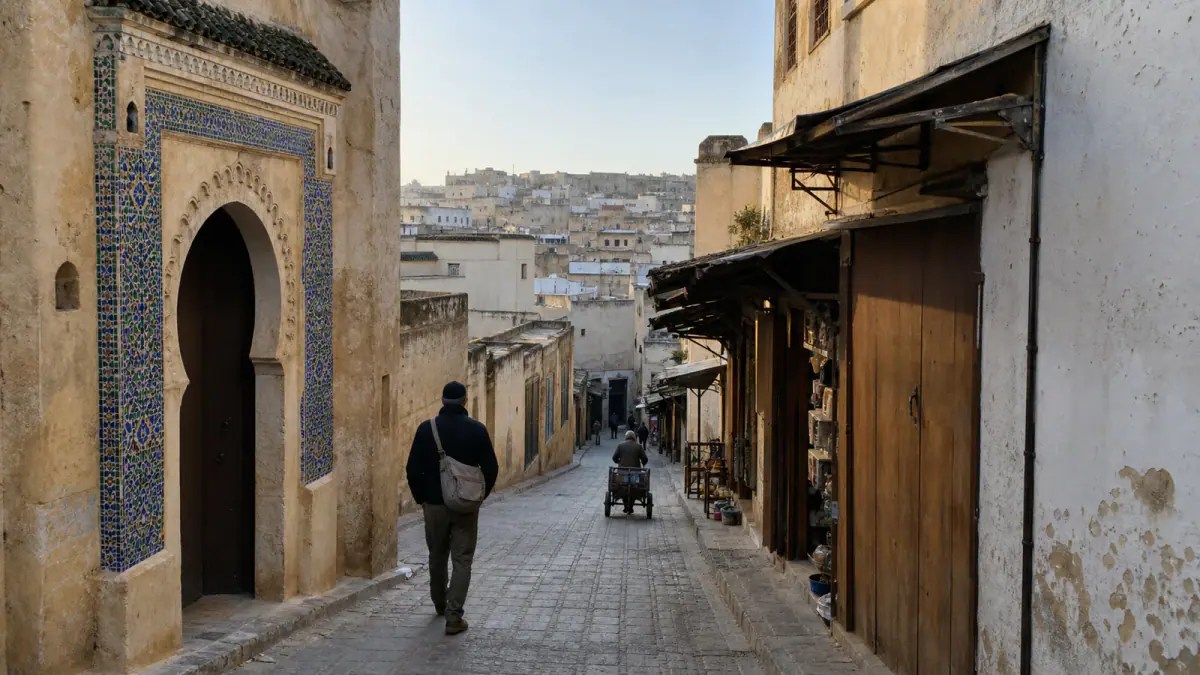
Fes rewards preparation. Its old medina is dense, hilly and largely pedestrian, while the train station, airport and modern districts sit outside it. Choosing the right arrival gate and accommodation area can make the difference between an exciting first walk and a stressful hour with luggage.
This Fes travel guide focuses on those practical decisions: how many days to allow, where to stay, how to arrive, whether to hire a guide and how to shape a realistic two-day visit. It leaves the long monument list to our dedicated medina guide.
Quick answer: Stay at least two nights in Fes, giving yourself one full medina day and a slower second day. First-time visitors usually benefit from a riad near an accessible medina gate such as Bab Boujloud or Batha. Arrange the final luggage transfer with the accommodation, use a licensed guide for the first half-day if wanted, and do not plan a day trip until you have allowed enough time for Fes itself.
Fes Trip Planning at a Glance
| Decision | Best starting choice for a first visit |
|---|---|
| Minimum stay | 2 nights |
| More comfortable stay | 3 nights |
| Best atmosphere | Riad in or beside Fes el-Bali |
| Easiest logistics | Batha or near an accessible medina gate |
| Best for modern hotels | Ville Nouvelle |
| Main arrival points | Fes railway station or Fes-Saiss Airport |
| First-day strategy | One guided or self-guided medina route |
| Best second-day rhythm | Palace gate, garden, pottery or a short return to the medina |
| Car needed in the city? | No |
The Moroccan National Tourist Office describes Bab Boujloud as the easiest entrance to the medina on its official Fes destination page. That does not mean every traveler should sleep beside it, but it is a useful reference point for orientation.
How Many Days Do You Need in Fes?
Two nights is the practical minimum. Arrive on the first afternoon, spend the next day in Fes el-Bali, then use the final morning for a garden, viewpoint or anything you missed.
Three nights is better if you dislike rushing. It gives you:
- one complete medina day;
- one lighter day for Fes el-Jdid, the Royal Palace gates, Jnan Sbil or a craft visit;
- time to rest at the riad instead of pushing through midday fatigue;
- flexibility if a museum is closed or the weather changes.
Four nights makes sense when Fes is your base for Meknes, Volubilis, Moulay Idriss, Sefrou or the Middle Atlas. A day trip should be an addition, not a replacement for the city.
Travelers sometimes schedule one night because Fes looks compact on a map. The problem is not distance. It is the density of the medina, the time required to understand its lanes and the mental energy used by constant turns, slopes, shopfronts and sensory detail.
Where to Stay in Fes
There is no single “best area.” The right choice depends on how much atmosphere you want and how much friction you accept with luggage, stairs and taxis.
Near Bab Boujloud
The Blue Gate area is convenient for a first visit. It is easy to recognize, taxis can approach nearby roads, and the two main commercial lanes of Fes el-Bali begin close to it.
This area suits travelers who:
- want restaurants and casual food nearby;
- prefer a simple landmark when returning;
- plan to explore without a guide;
- do not mind a lively entrance zone.
The tradeoff is activity. The immediate area can feel busy and tourist-facing. Ask the riad whether your room faces an internal courtyard and how late nearby restaurants remain active.
Batha and the Medina Edge
Batha offers a useful compromise: medina atmosphere with easier vehicle access than a deep interior lane. It can work well for families, short stays and anyone arriving after dark.
Confirm the exact walking distance from the taxi drop-off. “Near Batha” can describe very different locations, and a five-minute walk with a day bag feels different from a fifteen-minute walk with suitcases.
Deep Inside Fes el-Bali
A riad deep in the medina can be magical. Mornings begin inside the old city, major sights are close and the transition from a plain lane to an ornate courtyard is part of the experience.
The cost is logistics. Taxis cannot reach the door, navigation is harder at night and stairs may be steep. Before booking, ask:
- What is the nearest vehicle-accessible drop-off?
- Does the property arrange a porter or staff escort?
- How many minutes is the walk with luggage?
- Are guest rooms reached by stairs?
- Can dinner be provided after a late arrival?
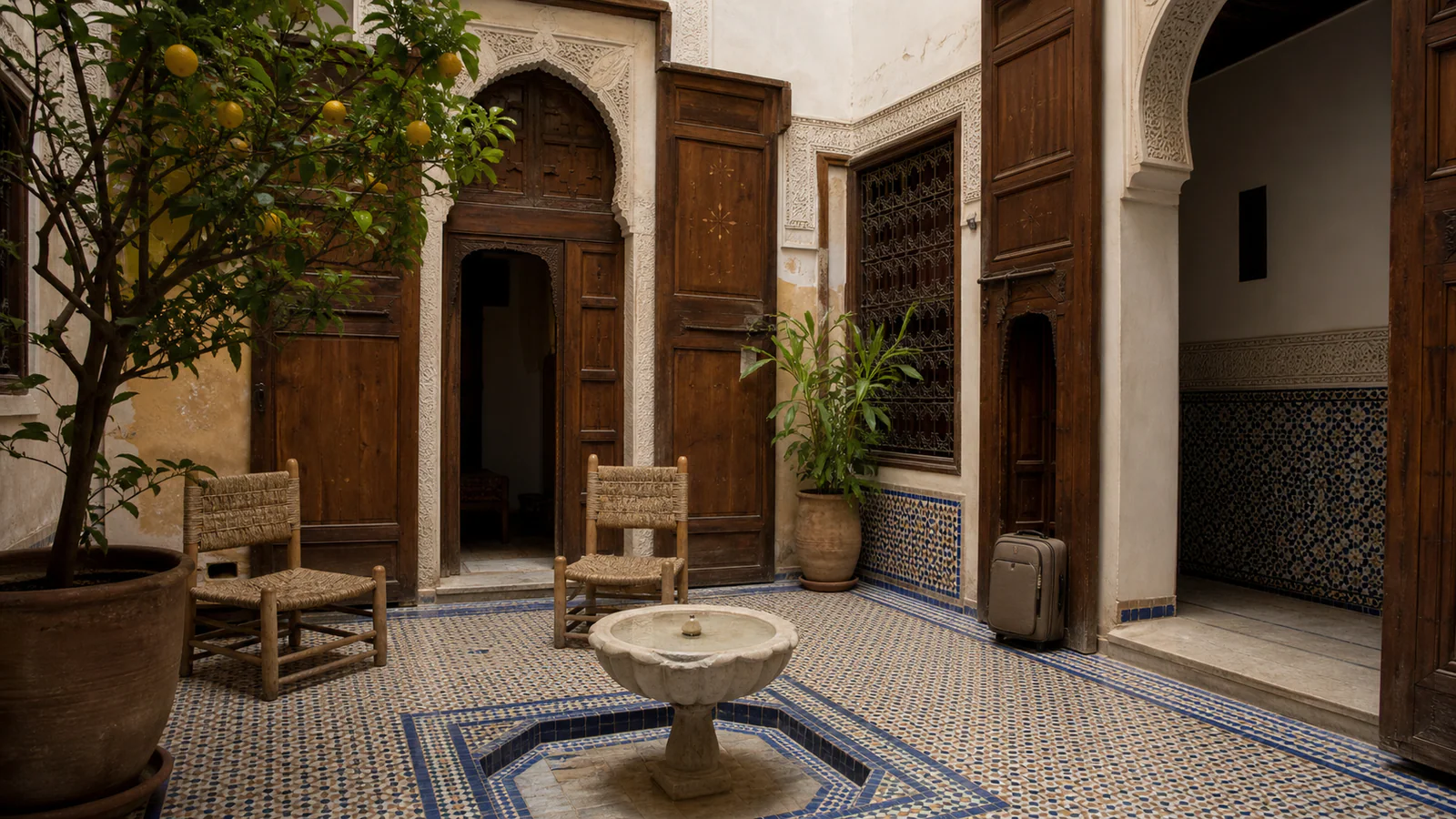
A beautiful photograph does not answer those questions. Access details are part of the room.
Ville Nouvelle
Ville Nouvelle is useful for larger modern hotels, easier taxi pickup, nightlife and straightforward access to the railway station. It also suits travelers who need elevators, predictable street access or business facilities.
You will commute to the medina, but taxis make that manageable. The district is not a failed version of historic Fes; it is another part of the living city. Still, if your main reason for visiting is dawn and evening inside the old medina, the daily transfer may feel like a missed opportunity.
Riad or Hotel?
Choose a riad for courtyard architecture, personal hosting and a strong sense of place. Choose a hotel for elevators, vehicle access, larger facilities and more standardized service.
Read recent reviews for practical patterns rather than adjectives. Look for repeated comments about:
- hot water and heating in winter;
- air conditioning in summer;
- nighttime noise;
- stair height;
- breakfast timing;
- staff help with directions;
- distance from the nearest taxi point.
Traditional buildings can be cool in winter and difficult for guests with limited mobility. “Authentic” should never be used to hide missing information. Ask direct questions before paying.
How to Get to Fes
Fes is connected by rail, road and air. The best method depends on your wider Morocco route.
By Train
Train is usually the simplest choice from Rabat, Casablanca, Kenitra, Meknes and Marrakech. Fes station is in the modern city, not at the medina. From the station, continue by petit taxi to the closest agreed drop-off for your accommodation.
Schedules can change for holidays and Ramadan. Use the official ONCF website for the travel date rather than copying an old timetable from a blog. Confirm whether a journey is direct and note the station name on the ticket.
Arrive with the riad’s address, phone number and drop-off instructions saved offline. Showing only the property name may not be enough when several guesthouses have similar names.
By Plane
Fes-Saiss Airport is south of the city. ONDA, Morocco’s airport authority, states that it is about 12 kilometers from Fes and lists taxi services on the official Fes-Saiss Airport page.
For the smoothest arrival, ask your accommodation about a transfer before the flight. Even when a driver cannot reach the riad door, the property can name the correct gate and coordinate the final walk.
Do not assume a late flight leaves enough time for dinner or independent medina navigation. Arrange pickup, tell the riad your expected arrival and keep its phone number accessible.
By Bus or Private Car
Long-distance coaches connect Fes with cities not always convenient by rail. Use the operator’s current timetable and verify the exact terminal.
A rental car is unnecessary for sightseeing inside Fes. If Fes is one stop on a road trip, book accommodation with clear parking guidance. Never assume a medina riad has parking because a booking map shows a nearby road.
Arriving with Luggage
The medina’s pedestrian character is part of its value. UNESCO describes the Medina of Fez as a historic town preserving a complex urban fabric, and that fabric was not designed for rolling suitcases.
Pack so one person can manage their own bag over uneven paving. A small wheeled case can work near a gate, but a heavy oversized suitcase becomes difficult on steps and slopes.
Use a porter recommended by the accommodation, agree on the price before moving and keep valuables with you. Photograph or save the route from the drop-off if you plan to repeat it independently.
Do You Need a Guide in Fes?
You do not need a guide for the entire stay, but a licensed guide can add real value on the first morning. The medina is not only confusing; its craft organization, religious buildings, fondouks and neighborhood structure are easy to pass without context.
A half-day guide is often enough to establish:
- the difference between the main lanes and residential passages;
- the locations of useful gates;
- which religious interiors are open to non-Muslims;
- how workshops connect to craft production;
- a route back to your accommodation.
Ask the riad, an official tourism office or a reputable licensed operator. Clarify duration, language, price, monument fees and whether shopping stops are included. A guide should not pressure you to purchase.
Independent travelers can also manage well by using a few anchors. Our focused Fes medina guide explains a landmark-based route without trying to map every alley.
A Practical Two-Day Fes Itinerary
This plan gives the medina one serious day and keeps the second day lighter.
Arrival Afternoon
Check in, accept help with the final route and ask staff to mark your nearest gate on an offline map. Do not begin with the tanneries if only an hour of daylight remains.
Instead:
- walk to one nearby landmark;
- have tea at the riad;
- arrange a guide for the next morning if wanted;
- eat close to the accommodation;
- repeat the return route before it becomes late.
The goal is orientation, not achievement.
Day One Morning: Fes el-Bali
Begin near Bab Boujloud or another gate agreed with your guide. Follow a coherent path through the medina, selecting a small number of major stops: a madrasa, a fondouk or museum, the area around Al-Qarawiyyin and one craft district.
Fes el-Bali is not a preserved set. It remains a place of homes, commerce, worship and production. The Moroccan tourism office’s Fes medina overview emphasizes its tanners, weavers, metalworkers and potters, but visitors should view that work without blocking passages or treating workers as performers.
Non-Muslims cannot enter every mosque or religious space. Respect a closed threshold. Exterior doors, adjacent lanes and accessible madrasas still provide substantial architectural context.
Day One Lunch and Afternoon: Tanneries and Crafts
Have lunch before fatigue becomes the main memory. Then choose one craft area rather than collecting every workshop.
The Chouara Tanneries are visually powerful but come with sales pressure and strong smells. Viewpoints are generally accessed through leather shops. Ask whether access is free or connected to a shop visit before climbing, listen to safety instructions and buy only if you genuinely want the item.
Mint can soften the smell for some visitors, but it is not magic. People sensitive to odors may prefer a short visit or skip it.
For leather, ceramics or metalwork:
- ask what material and process were used;
- inspect stitching, glaze or finish;
- compare before buying an expensive item;
- agree on the full price and shipping terms in writing;
- avoid claiming an antique can leave the country without documentation.
Finish early enough to find your way back in daylight. A rooftop or courtyard break is more useful than forcing one final monument.
Day Two Morning: Fes el-Jdid and Jnan Sbil
Start outside the densest medina. See the monumental doors of the Royal Palace from the public area, walk through sections of Fes el-Jdid and visit Jnan Sbil when open.
This morning provides physical and historical contrast. Streets are easier to read, the garden gives shade, and you can understand that Fes contains several urban layers rather than one endless old town.
Opening conditions change, so ask locally before building the entire morning around a single gate or garden.
Day Two Afternoon: Choose One Direction
Select according to your interests:
- History: return for one missed madrasa or museum.
- Craft: arrange a focused pottery or artisan visit.
- View: take a taxi to a legal public viewpoint in clear weather.
- Rest: hammam, long lunch and riad time.
- Modern city: explore Ville Nouvelle and eat outside the medina.
Do not add Meknes and Volubilis as a rushed afternoon. They deserve a separate day.
Food in Fes
Fassi cuisine is known for careful seasoning and combinations of sweet and savory. Pastilla is the famous example, but a good meal may also include cooked salads, seasonal vegetables, soups and slow-cooked dishes.
Riad dinners can be worthwhile because many traditional preparations require advance work. Ask in the morning whether dinner must be reserved. Outside the riad, choose places with clear menus and visible prices rather than following a stranger to a “family restaurant.”
Food tours can help with market context, but confirm group size, dietary handling and whether the tour enters private homes. No visitor is entitled to private access simply because an experience is marketed as authentic.
Navigation, Taxis and Everyday Practicalities
Download an offline map, but treat it as support rather than truth. GPS can drift between high walls, and small lanes may appear connected when a passage is private or stepped.
Use gates, squares and major lanes as anchors. Save the accommodation’s phone number. If lost, ask a shopkeeper, café worker or family rather than following an insistent stranger who announces that every road is closed.
Petit taxis operate outside the pedestrian core. Ask for the nearest recognized gate or square, not the riad door. Carry small cash and confirm the local fare method with your host because procedures and rates can change.
For a broader arrival comparison across the country, see our guide to Morocco’s main airports.
Best Time to Visit Fes
Spring and autumn usually give the easiest walking temperatures, but they also attract more visitors. Winter days can be pleasant while mornings, nights and traditional buildings feel cold. Summer heat makes long medina days demanding.
Whatever the season:
- start walking early;
- carry water;
- use the early afternoon for lunch or rest;
- bring a light layer for shaded interiors;
- check festival and holiday dates before booking.
Fes hosts major cultural events that can change room availability and traffic. Event dates belong in current official listings, not in a timeless itinerary.
Etiquette and Responsible Visiting
Dress in a way that is comfortable and respectful around religious and residential areas. Ask before photographing people, especially artisans at close range. Do not photograph through home entrances.
Keep moving when carts or loaded animals need the lane. Workshops are working environments; follow instructions around dyes, kilns, tools and wet surfaces.
Bargaining is normal in many souks, but it should remain calm. If you do not want an item, say no and leave without turning the exchange into a performance. If you accept tea and a long product demonstration, understand that the seller hopes to make a sale, even though you are not required to buy.
Fes, Fez or Fès?
All three spellings refer to the same city. “Fes” is common in English travel writing, “Fez” is another established English form, and “Fès” follows French transliteration. Transport sites and booking systems may use different versions, so check the station or airport code rather than worrying about the spelling.
Frequently Asked Questions
Is two days enough for Fes?
Two full days are enough for a strong first visit. Two nights with only one full day is workable but rushed. Three nights creates a more comfortable pace.
Is it better to stay inside the Fes medina?
Stay inside or near the medina for atmosphere and easy morning access. Choose Batha, a gate area or Ville Nouvelle if vehicle access, elevators and simpler luggage handling matter more.
Can taxis enter Fes el-Bali?
Taxis reach roads and gates around the old city but not most interior lanes. Confirm the correct drop-off and final walking route with your accommodation.
Is Fes suitable for travelers with limited mobility?
It can be challenging because of slopes, steps, uneven paving and vehicle restrictions. Ask hotels and individual attractions specific accessibility questions. Staying near an accessible gate or in Ville Nouvelle may reduce difficulty.
Should I book a guide before arriving?
It is sensible during busy periods or if you need a particular language. A half-day licensed guide on the first morning is enough for many visitors.
Is a day trip to Chefchaouen realistic from Fes?
It is possible by road but creates a long day. Chefchaouen is better with at least one night if your route allows. Our Chefchaouen walking guide is designed for a slower visit rather than a rushed photo stop.
Final Takeaway
Fes becomes easier when you plan the edges of the experience: the correct gate, the last part of the luggage transfer, a riad suited to your mobility, one coherent medina day and enough time to rest.
Give the city at least two nights, use official transport information for your travel date and resist turning every craft, madrasa and viewpoint into a box to tick. The reward is not only seeing Fes el-Bali; it is beginning to understand how this complex city still works.