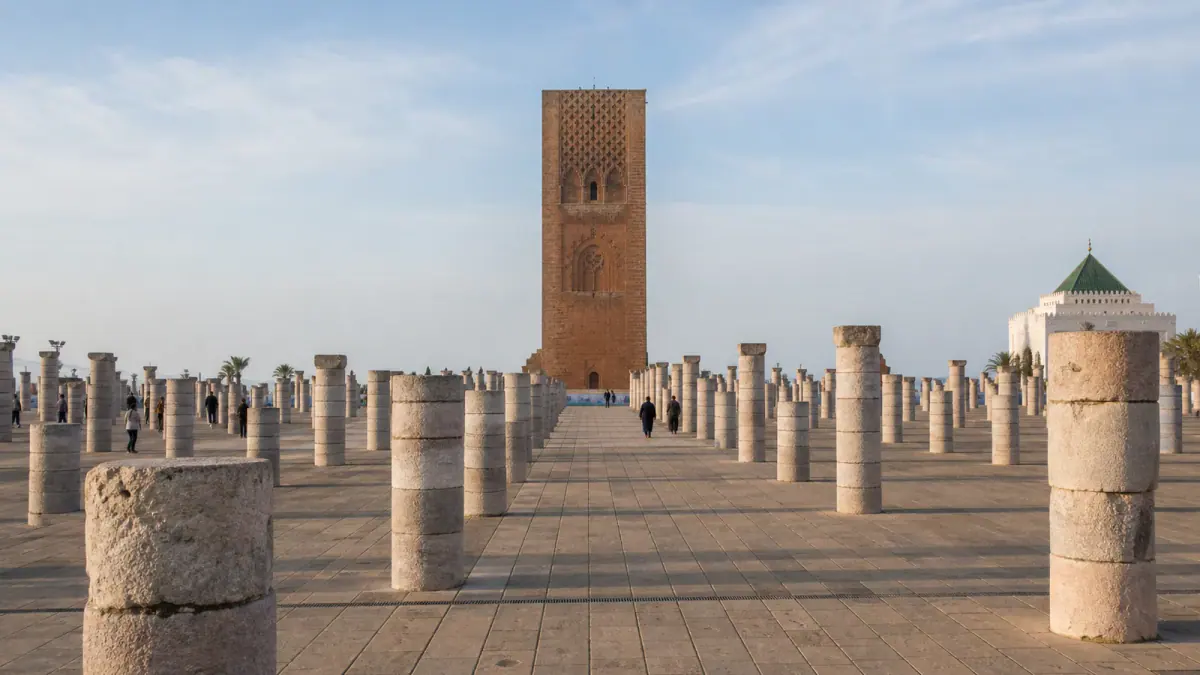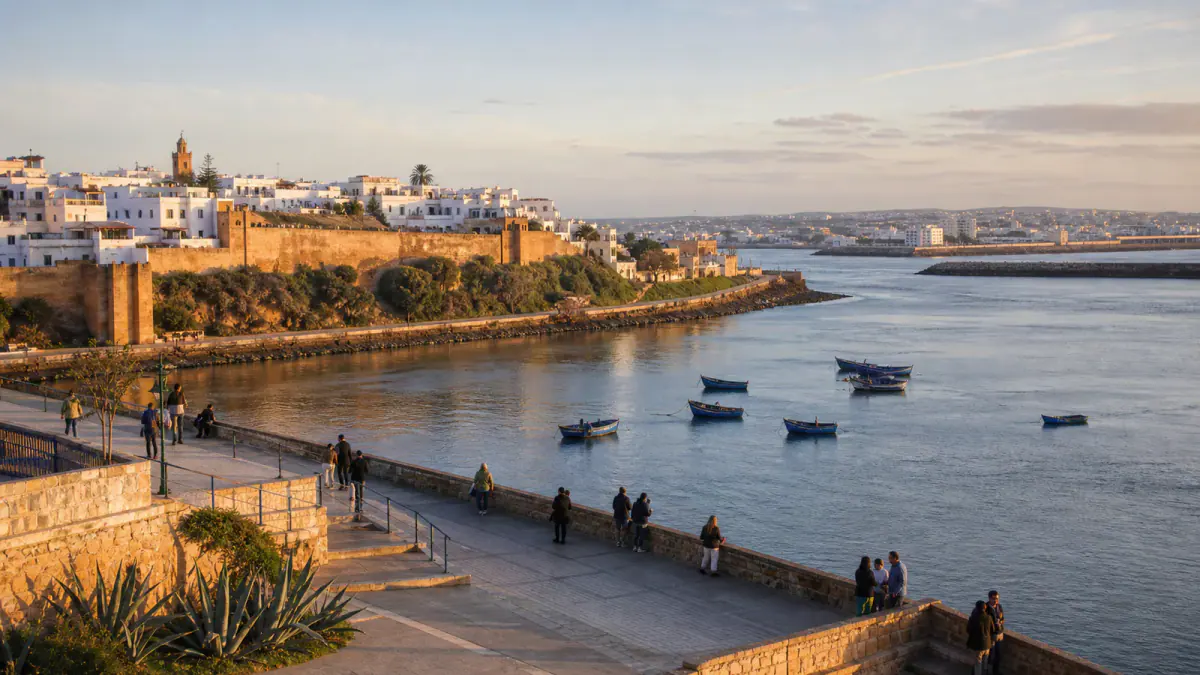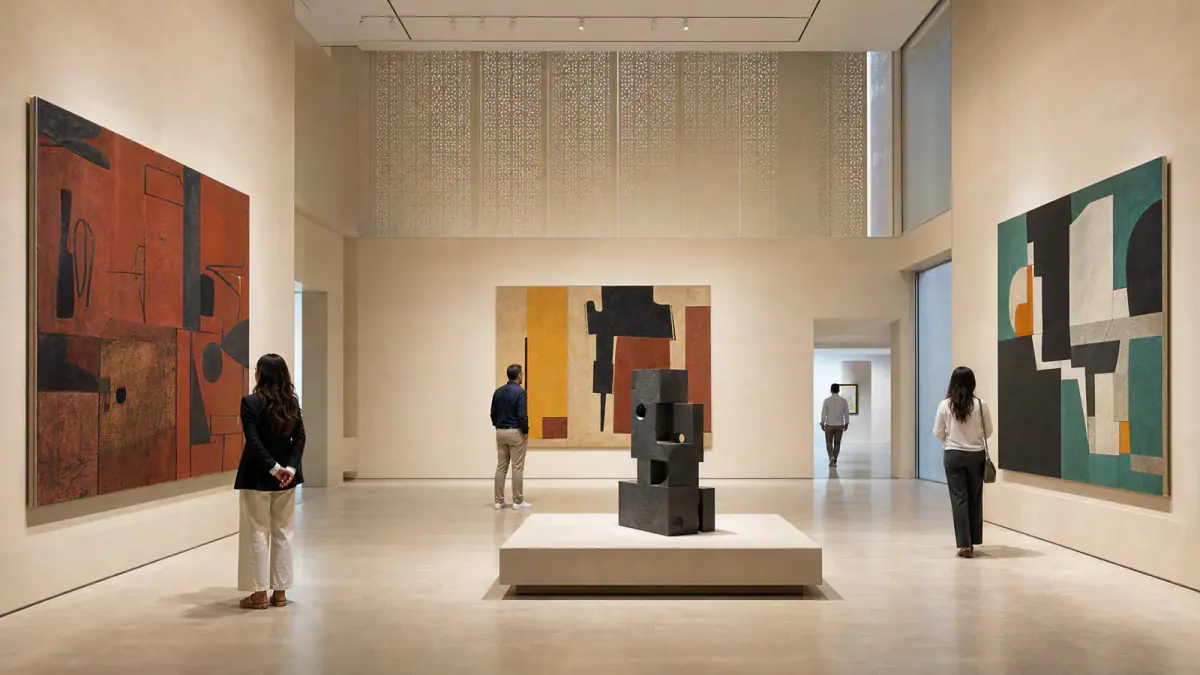
Rabat’s museums tell a broader story than a quick tour of royal monuments can. In one day, you can move from prehistoric tools and Roman-era bronzes to modern Moroccan painting, photography and experimental contemporary work. The collections are not simply rainy-day alternatives. They help explain how Morocco’s ancient civilizations, Islamic traditions, colonial period and post-independence artists all shaped the capital visitors see today.
The most useful way to plan a Rabat museum day is to choose two substantial collections and leave room for one smaller gallery. The Mohammed VI Museum of Modern and Contemporary Art and the Museum of History and Civilizations make the strongest first pairing. Villa des Arts adds a more intimate exhibition setting, while temporary shows can introduce artists whose work is not always visible in permanent displays.
This guide focuses on museums and visual culture rather than repeating a general Rabat itinerary. For monuments, neighborhoods and transport, start with our complete Rabat travel guide.
Why Rabat Is a Good City for Museum Travelers
Rabat is both a historic city and a 20th-century planned capital. UNESCO describes its World Heritage property as a dialogue between an Arabo-Muslim past and Western modernism. That relationship is visible outside in the medina, Oudayas, administrative avenues and modern neighborhoods, but museums make the layers easier to understand.
The city is also less exhausting than Morocco’s busiest tourist centers. Distances between the central museums and galleries are manageable, streets are generally easier to navigate, and a cafe break does not require abandoning the day’s route. This makes Rabat a good place to look closely rather than rush through a checklist.
Museum programs do change. A room can close for installation, a temporary exhibition can end, and weekly opening hours may shift during holidays or Ramadan. Check the institution’s official page on the morning of your visit. The National Museums Foundation museum directory is the best starting point for its network, while individual institutions publish their own current notices.
Start at the Mohammed VI Museum of Modern and Contemporary Art
The Mohammed VI Museum of Modern and Contemporary Art, often shortened to MMVI, is the natural anchor for an art-focused day. Its purpose is larger than displaying attractive paintings. The museum places modern Moroccan art within the country’s changing social and cultural history, then connects it with temporary exhibitions from Morocco and abroad.
Give the museum at least 90 minutes. Two hours is better if the temporary exhibition interests you or if you like reading curatorial material. Trying to cover every work quickly usually produces less understanding than selecting several rooms and following how styles, subjects and materials change.
What to look for inside
Begin by noticing how Moroccan artists negotiate place and identity. Some works use recognizable landscapes, architecture or daily life. Others move toward abstraction, calligraphic forms, geometric structure or materials associated with craft traditions. The interesting question is not whether a work looks “traditional” or “modern.” It is how the artist decides what to carry forward, reject or reinterpret.
Look for contrasts between artists trained in formal academies and those whose practices developed through different local traditions. Also notice how labels describe schools, movements and generations. Moroccan modernism did not emerge as a copy of one European movement; artists debated education, public space, decolonization and the role of visual culture in an independent country.
Temporary exhibitions can substantially change the visit. Consult the official MMVI museum page before going rather than relying on an old travel article for the current program. The Visit Rabat museum listing is another practical reference for planning.
A respectful way to visit
Photography rules may differ between exhibitions. Look for signs or ask a staff member before taking pictures, and never use flash where it is prohibited. Keep a comfortable distance from artworks and display cases. If a room is busy, step aside before reading a long label so other visitors can pass.
Children can enjoy the museum when adults turn the visit into a conversation. Ask them to choose one color, shape or scene they remember rather than expecting them to process every room. Families should also check the museum’s current program for workshops or guided activities.
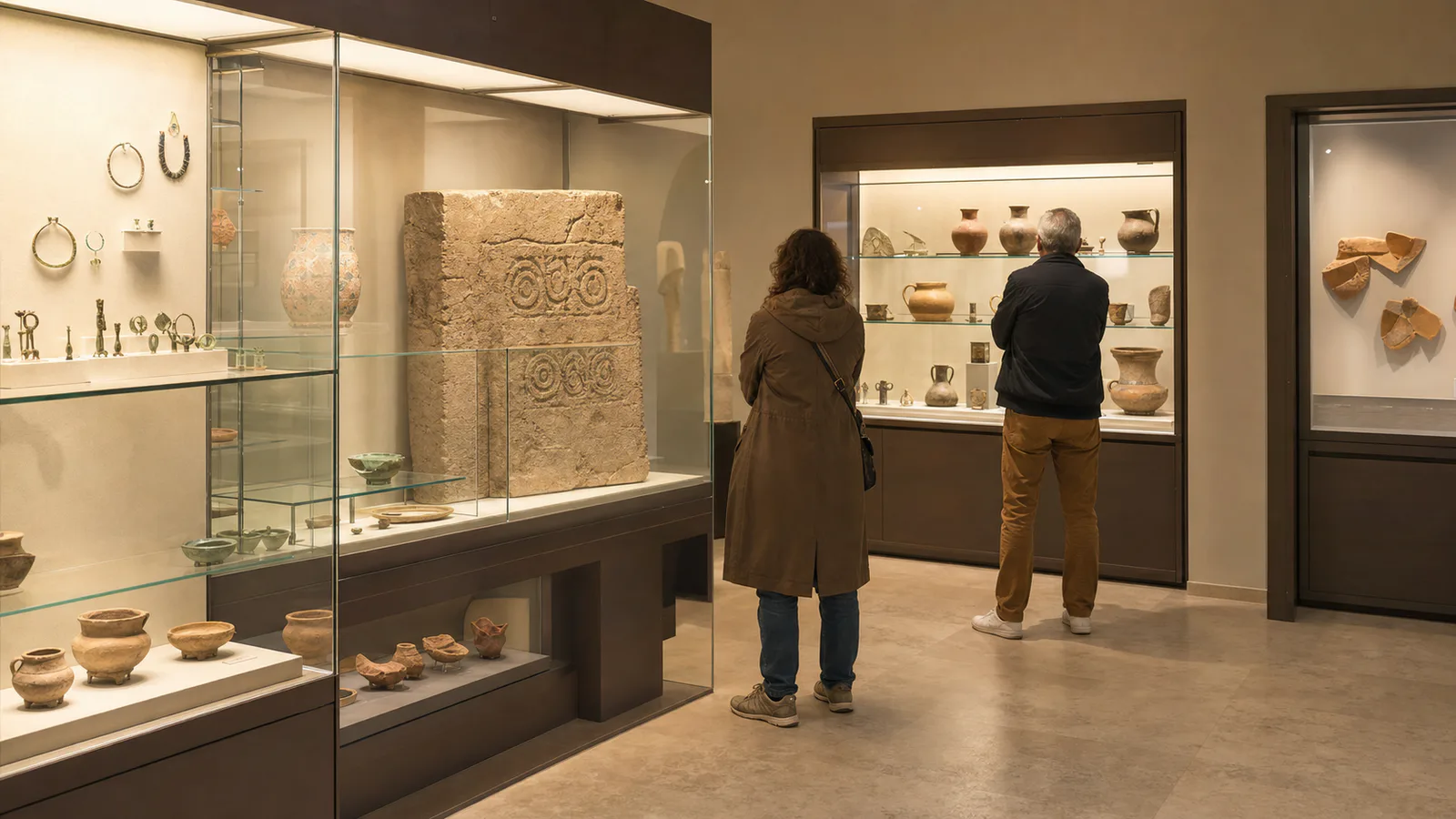
An illustrative view of the kind of objects and display atmosphere visitors may encounter in a history museum; exhibitions and gallery arrangements change.
Continue at the Museum of History and Civilizations
The Museum of History and Civilizations offers a different lens. Instead of beginning with the modern artist, it begins with the long human history of Morocco. Archaeological objects help connect broad periods—prehistory, Amazigh societies, ancient Mediterranean exchange and the Islamic centuries—to physical evidence.
This is the museum to visit if place names such as Volubilis, Lixus or Chellah feel familiar but disconnected. Objects can make those sites more legible. A bronze figure, funerary object, ceramic vessel or coin is not only a beautiful artifact; it is evidence of trade, belief, technology and political power.
How to read an archaeology display
Start with four questions:
- Where was the object found?
- When was it made?
- What material and technique were used?
- What do archaeologists think it was used for?
Those questions keep a room full of small objects from becoming a blur. A coin can show political authority and commercial connections. Pottery can reveal domestic habits and trade routes. Jewelry can indicate status, craft knowledge or cultural exchange. Stone inscriptions can preserve languages and institutions that no longer exist in the same form.
Do not worry if you cannot remember every dynasty or date. Build a simple timeline instead: early human presence, ancient kingdoms and Mediterranean exchange, Roman influence in parts of Morocco, and successive Islamic dynasties. You can then place individual objects somewhere on that line.
Pair the collection with a real site
The museum becomes more memorable when paired with one archaeological place. In Rabat, Chellah is the obvious choice because its Roman and medieval layers are visible in one setting. Read our self-guided Rabat route if you want to connect a museum morning with an outdoor historical walk.
Travelers continuing north can also compare the collection with Volubilis near Meknes. The point is not to see every related place. It is to move once between object and landscape, because each makes the other easier to understand.
Visit Villa des Arts for a Smaller-Scale Experience
Villa des Arts Rabat feels different from a national museum. Its garden and villa setting create a quieter encounter with art, and its program can include exhibitions, talks and cultural events. It works particularly well as the third stop of the day because the scale is easier after two larger collections.
The program changes, so check the Villa des Arts introduction and its current exhibitions page before building your route around a particular artist. If no exhibition matches your interests, use the time for a slower return to the MMVI or for architecture and public space nearby.
In a small gallery, pay attention to installation. Ask why works are grouped together, how natural or artificial light changes the room, and whether the exhibition follows a chronology, theme or visual conversation. Smaller exhibitions often reward this kind of close looking.
Temporary Exhibitions, Photography and Independent Spaces
Rabat’s cultural life cannot be reduced to three addresses. Foundations, cultural institutes and independent spaces may present photography, design, archives, film or emerging artists. These programs are valuable, but they are also the hardest part of a trip to plan months in advance.
Use a simple verification method:
- Check the venue’s own website or verified social channel.
- Confirm that the exhibition dates overlap your visit.
- Look for a closure notice or required reservation.
- Save the address, because similarly named venues can appear in search results.
- Treat an event aggregator as a lead, not final confirmation.
The national tourism office’s overview of museums and art galleries in Morocco can help identify the broader scene. For a show happening this week, however, the organizing venue remains the most reliable source.
Photography exhibitions are especially useful for travelers interested in how Moroccans represent their own cities, families and landscapes. Images made within the country can challenge the familiar visitor’s gaze of colorful doors, empty deserts and staged markets. Read captions carefully and distinguish documentary projects from conceptual or constructed photography.
A Practical One-Day Rabat Museum Route
This schedule keeps the focus on art and history without turning the day into a race. Opening days and times must be confirmed before departure.
Morning: modern and contemporary art
Begin at the Mohammed VI Museum when it opens. Spend roughly two hours in the permanent collection and current temporary exhibition. Take notes on two or three artists you want to research later rather than photographing every label.
Pause for coffee or an early lunch in central Rabat. A real break matters because museum fatigue can make the second collection feel less interesting than it is.
Early afternoon: archaeology and material history
Continue to the Museum of History and Civilizations. Give it 60 to 90 minutes. Choose a limited theme—bronzes, ceramics, ancient settlements or changing belief systems—if the quantity of material feels overwhelming.
Late afternoon: a flexible third stop
Choose Villa des Arts if its current exhibition appeals to you. If not, use the late afternoon to connect indoor culture with the city. Walk through a modern avenue, visit a bookshop, or head toward Chellah while there is still comfortable light.
This structure is deliberately flexible. Two attentive museum visits are more valuable than four rushed entrances.
A Half-Day Plan
If you have only half a day, choose according to your strongest interest:
- Modern Moroccan identity: MMVI, followed by a short walk through central Rabat.
- Ancient history and archaeology: Museum of History and Civilizations, followed by Chellah if timing allows.
- Current exhibitions and a quiet setting: Villa des Arts plus whichever nearby temporary show is confirmed.
- A first visit with mixed interests: MMVI for 90 minutes, then one historical monument rather than a second museum.
Travelers arriving by train from Casablanca can make MMVI the anchor of a focused visit. Our Casablanca-to-Rabat day-trip guide explains the rail planning and a wider one-day structure.
How Museums Add Context to Rabat’s Architecture
The museum day becomes richer when you pay attention to the buildings and streets between stops. Rabat’s World Heritage significance includes both historic fabric and the planned modern capital. The UNESCO description of Rabat is useful background before walking.
In the medina and Oudayas, scale, materials and street patterns reflect older forms of urban life. In the modern city, broad avenues, administrative buildings, gardens and institutional architecture express the priorities of a capital developed during the French Protectorate and adapted after independence.
This does not mean every building fits neatly into one period. Cities accumulate changes. A productive museum day trains you to look for those continuities and interruptions outside: ornament beside concrete, inherited craft beside industrial production, and historic symbols inside modern state institutions.
Understanding Moroccan Art Without Stereotypes
Visitors sometimes approach Moroccan art expecting only mosaics, carpets, calligraphy or desert scenes. Those traditions matter, but they are not the boundaries of Moroccan creativity. Artists have worked through abstraction, conceptual art, photography, video, installation, social critique and many other forms.
It also helps to avoid treating “Moroccan” as one uniform identity. The country includes Arab, Amazigh, Saharan, African, Mediterranean, Jewish and Andalusian histories, among others. Artists may embrace, question or combine these inheritances. A museum label is an introduction, not the final interpretation.
Craft and fine art should not be placed in a simplistic hierarchy. A woven textile or carved object can embody complex design knowledge, while a contemporary artist may deliberately use craft materials to challenge the divisions created by institutions and markets. Look for the decisions behind the work: material, repetition, labor, symbolism and intended audience.
For more context beyond the capital, browse our Moroccan culture guides. They cover traditions and social practices that can help make museum objects less isolated from living culture.
Museum Etiquette and Useful French or Arabic
Rabat’s principal institutions are accustomed to visitors. Even so, a few habits make the experience smoother:
- Greet the ticket or security staff before asking a question.
- Follow bag-check and photography instructions without argument.
- Keep calls and recorded audio quiet in galleries.
- Do not touch an object unless an interactive display explicitly invites it.
- Ask before photographing another visitor or staff member.
- Keep children close to fragile displays.
French is widely useful in cultural institutions, and Arabic is Morocco’s official language alongside Amazigh. English information may be available, but not every label will necessarily be translated.
Useful phrases include bonjour or salam for hello, s’il vous plaît for please, and est-ce que les photos sont permises? to ask whether photographs are allowed. A polite question is better than assuming.
Accessibility and Comfort
Accessibility varies by building and exhibition. Modern institutions may offer lifts and step-free routes, while older villas or temporary installations can be less predictable. Travelers who require a specific entrance, lift, wheelchair access, seating or accessible toilet should contact the venue directly before visiting.
Carry water, but expect rules about drinking inside galleries. A light layer is useful because indoor temperature can feel cool compared with the street. Choose a small bag where possible; large luggage may not be accepted or may require storage.
Benches are not guaranteed in every room. If standing for long periods is difficult, ask staff where seating is available and build a cafe break between institutions.
Visiting With Children
A successful family museum visit is usually shorter than an adult enthusiast’s visit. Agree on one simple mission: find an animal, choose a favorite color, compare two faces, or identify an object that might have been used at home.
Do not turn every label into a lesson. Let children observe first, then ask an open question. Sketching on a small notebook can work where permitted, but pencils are safer than pens around collections.
For a full family day, combine one museum with an outdoor stop. The Oudayas, riverfront or a garden gives children space after a concentrated indoor visit. Check temporary programming because a workshop can be more engaging than asking a child to follow an adult-oriented permanent display.
Common Planning Mistakes
Assuming Monday or a holiday follows normal hours
Museum schedules differ, and special dates can override the usual weekly pattern. Verify each venue individually.
Building the day around an old exhibition announcement
Search results can preserve event pages long after a show closes. Confirm the ending date on the venue’s current program.
Trying to see every collection
Depth beats quantity. Select a theme in each museum and keep enough energy to understand it.
Treating museum photography as permission to reproduce art freely
Permission to take a personal photograph does not automatically remove an artist’s copyright or a venue’s publication rules. Follow the stated conditions.
Repeating a general sightseeing itinerary
If this is your second Rabat day, resist returning automatically to every headline monument. Museums reveal a different city and justify dedicated time.
Two Days for Art and Culture
With two days, separate the themes.
On day one, visit MMVI and Villa des Arts, then walk through the modern center while thinking about Rabat as a planned capital. On day two, visit the Museum of History and Civilizations and Chellah, then continue to the medina or Oudayas to see how historical forms survive in the living city.
This division also protects against museum fatigue. It leaves time to read, sit and revisit a work rather than collecting entrance tickets.
If Rabat is one stop in a longer cultural trip, continue to Fes for historic urban fabric and craft traditions. Our history of Fes guide explains the dynasties and institutions behind the medina.
Final Takeaway
Rabat’s museums are not side attractions. Together they explain Morocco across a long timeline: ancient material cultures, changing cities, modern nationhood and artists still debating what Moroccan visual culture can become.
Start with the Mohammed VI Museum and the Museum of History and Civilizations. Add Villa des Arts when its current program fits your interests. Check official schedules, choose depth over quantity, and connect at least one collection with the streets or archaeological sites outside.
Most importantly, keep this page at its existing URL if you saved it before. Its focus has been improved from a thin general guide into a dedicated museum and art resource, while the indexed address remains unchanged.