One day in Rabat is enough to see Morocco’s capital at a comfortable pace if you follow one geographic route instead of collecting disconnected sights. Start at Hassan Tower and the Mohammed V Mausoleum, continue to the Kasbah of the Udayas and adjacent medina, then choose either Chellah or the modern museum district before an evening by the Bouregreg or Atlantic.
This self-guided itinerary is for travelers who are already staying in Rabat or arriving at Rabat Ville with a full day available. It prioritizes the capital’s historic-to-modern contrast while leaving time to look, eat and walk without treating the city as a race.
Rabat One-Day Itinerary at a Glance
| Approximate time | Stop | Why it belongs | Best connection |
|---|---|---|---|
| 9:00 | Hassan Tower and Mohammed V Mausoleum | Monumental history and Moroccan craftsmanship | Taxi, tram plus walk, or walk from central Hassan |
| 10:30 | Kasbah of the Udayas | Blue-and-white lanes and river views | Short taxi or a longer city walk |
| 12:15 | Rabat medina and lunch | Street life, food and a slower middle of the day | Walk from the Udayas |
| 14:30 | Chellah or modern museum district | Archaeology and gardens or indoor art | Petit taxi or tram/walk combination |
| 17:00 | Avenue Mohammed V or medina return | Modern-capital context and café break | Walk or tram |
| Evening | Bouregreg, Udayas edge or central dinner | A calm finish rather than another major sight | Walk or petit taxi |
Times are flexible. Opening hours, restoration work, prayer access, exhibitions and ticket arrangements can change. Check the official venue on the day, especially for Chellah and museums, and keep the two afternoon branches interchangeable.
Before You Start
Rabat is Morocco’s national capital and one of its four imperial cities. It does not feel like a smaller Marrakech. The value of a day here is the relationship between Almohad monuments, Andalusian and medina heritage, twentieth-century urban planning, museums, the Bouregreg River and the Atlantic.
UNESCO inscribed Rabat as a modern capital and historic city because these layers form a coherent urban ensemble. That is why this itinerary moves across different periods instead of remaining inside the old city.
Bring:
- comfortable shoes for stone, paving and slopes;
- a light layer for Atlantic wind;
- sun protection and water in warm weather;
- a small amount of cash for local transport and simple purchases;
- a saved offline map and the accommodation address;
- clothing that is respectful around the mausoleum and religious spaces.
If you arrive by train, Rabat Ville is the most convenient central starting point for this route. Verify your live service on ONCF Voyages and do not build the day around a timetable copied from an old article.
9:00 — Hassan Tower and Mohammed V Mausoleum
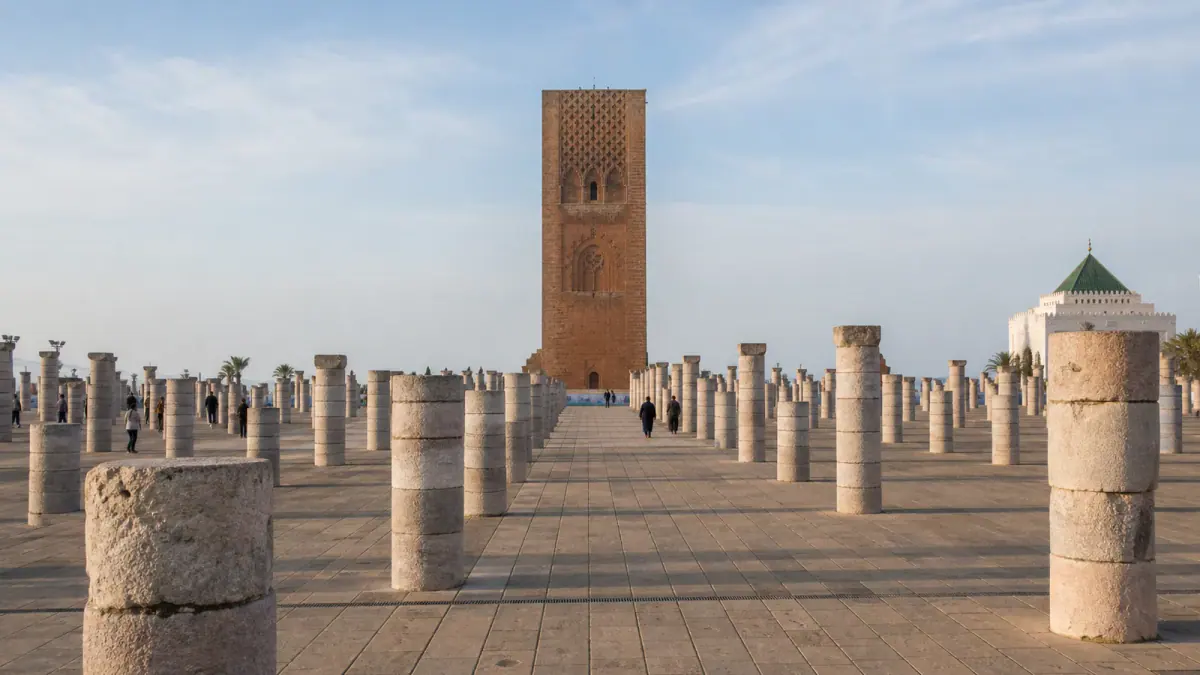
Begin at the Hassan complex while the day is still cool and your attention is fresh. The unfinished Hassan Tower and the field of stone columns belong to an ambitious Almohad mosque project begun in the twelfth century. UNESCO identifies the Hassan Mosque, its surviving tower, ramparts and gates among the major earlier layers within Rabat’s World Heritage property.
The open esplanade makes the project’s scale visible. Do not treat the columns as decorative props: walk around the edges first, then look back toward the tower to understand the intended prayer-hall grid.
The Mohammed V Mausoleum stands within the same monumental ensemble. Its white exterior, green-tiled roof and detailed interior craftsmanship create a striking contrast with the unfinished stone project nearby. Morocco’s tourism office highlights marble, carved wood, plaster and onyx among its decorative materials.
How to visit respectfully
- Follow guards and posted access instructions.
- Keep voices low and photography discreet.
- Dress with shoulders and knees covered.
- Do not assume every interior area is open during ceremonies or prayer periods.
- Allow other visitors space rather than blocking the main viewing points.
Give the complex roughly one to one and a half hours. That is enough to understand it without reducing it to a ten-minute photo stop.
10:30 — Move to the Kasbah of the Udayas
The Udayas are not immediately beside Hassan Tower. You can walk if you enjoy urban transitions and have time, but a petit taxi preserves energy for the kasbah lanes, medina and afternoon branch. Ask for the entrance near Bab Oudaïa and check the meter or current local procedure.
The move itself reveals Rabat’s scale. The capital is walkable in districts, not as one continuous compact medina. Using one or two short transport hops is often more sensible than proving you can walk every kilometer.
11:00 — Explore the Kasbah of the Udayas
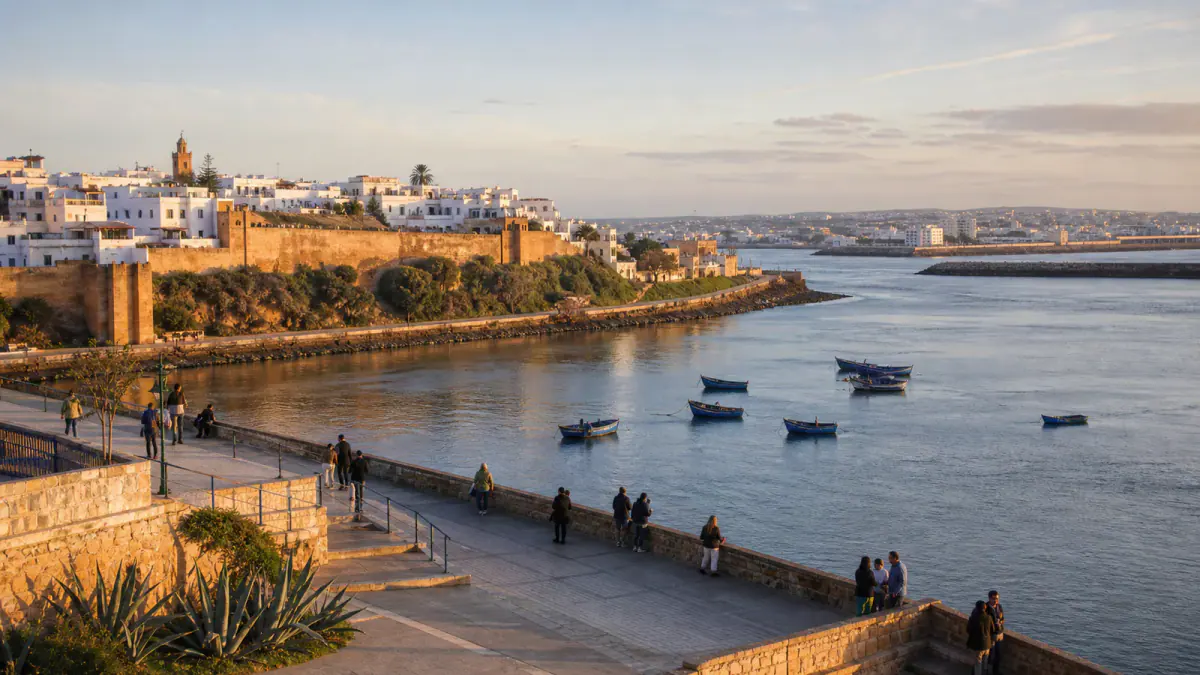
The Kasbah of the Udayas occupies a strategic position above the meeting of the Bouregreg and Atlantic. Its monumental gate, compact residential lanes, white-and-blue walls and river views make it one of Rabat’s most distinctive places.
Enter without turning the neighborhood into a photo set. People live behind the painted doors. Keep voices down, avoid photographing residents at close range without permission and do not block narrow passages.
A simple route is:
- pause at the monumental entrance and study the carved stonework;
- follow the main lanes rather than chasing every blue doorway;
- visit the Andalusian Garden if it is open;
- continue toward the viewing edge above the river;
- leave toward the medina instead of retracing the entire kasbah.
The official Rabat destination page identifies the Udayas, Chellah and the city’s coastline among its central experiences. The kasbah works best as part of that wider landscape, not as an isolated Instagram stop.
If mobility is limited
The Udayas include uneven paving, steps and slopes. Focus on the entrance, accessible main lane and nearest viewpoint rather than forcing the full loop. Save energy for a taxi to the afternoon stop. The modern museum branch later in this itinerary is generally a more manageable alternative to a long archaeological walk.
12:15 — Walk Into the Medina for Lunch
Rabat’s medina adjoins the Udayas, making it the logical lunch and midday section. It is more navigable than Fes and usually less intense than central Marrakech, but it remains a living commercial neighborhood rather than a themed attraction.
Rue des Consuls is a useful orientation line for craft shops and historic urban atmosphere. Then move away from the busiest corridor when you want a quieter meal or café.
What to look for at lunch
Choose a place with:
- a visible menu or clearly explained daily dishes;
- enough time for a seated meal rather than a rushed snack;
- a location that does not require crossing the city before the afternoon;
- good recent hygiene signals and steady local use.
Moroccan options may include tagine, grilled dishes, salads, soup or a daily plate. Availability changes; avoid treating one specific dish as guaranteed. If you want cultural context before ordering, our guide to traditional Moroccan dishes explains the main names and eating occasions.
Leave room for a short unstructured walk. A successful one-day itinerary should include at least one period when you are not checking the next pin.
14:30 — Choose One Afternoon Branch
Trying to complete Chellah, multiple museums, the royal area, the full medina and the coast in one afternoon makes Rabat feel fragmented. Pick the branch that matches your interest and the day’s conditions.
Option A: Chellah for Archaeology and Gardens
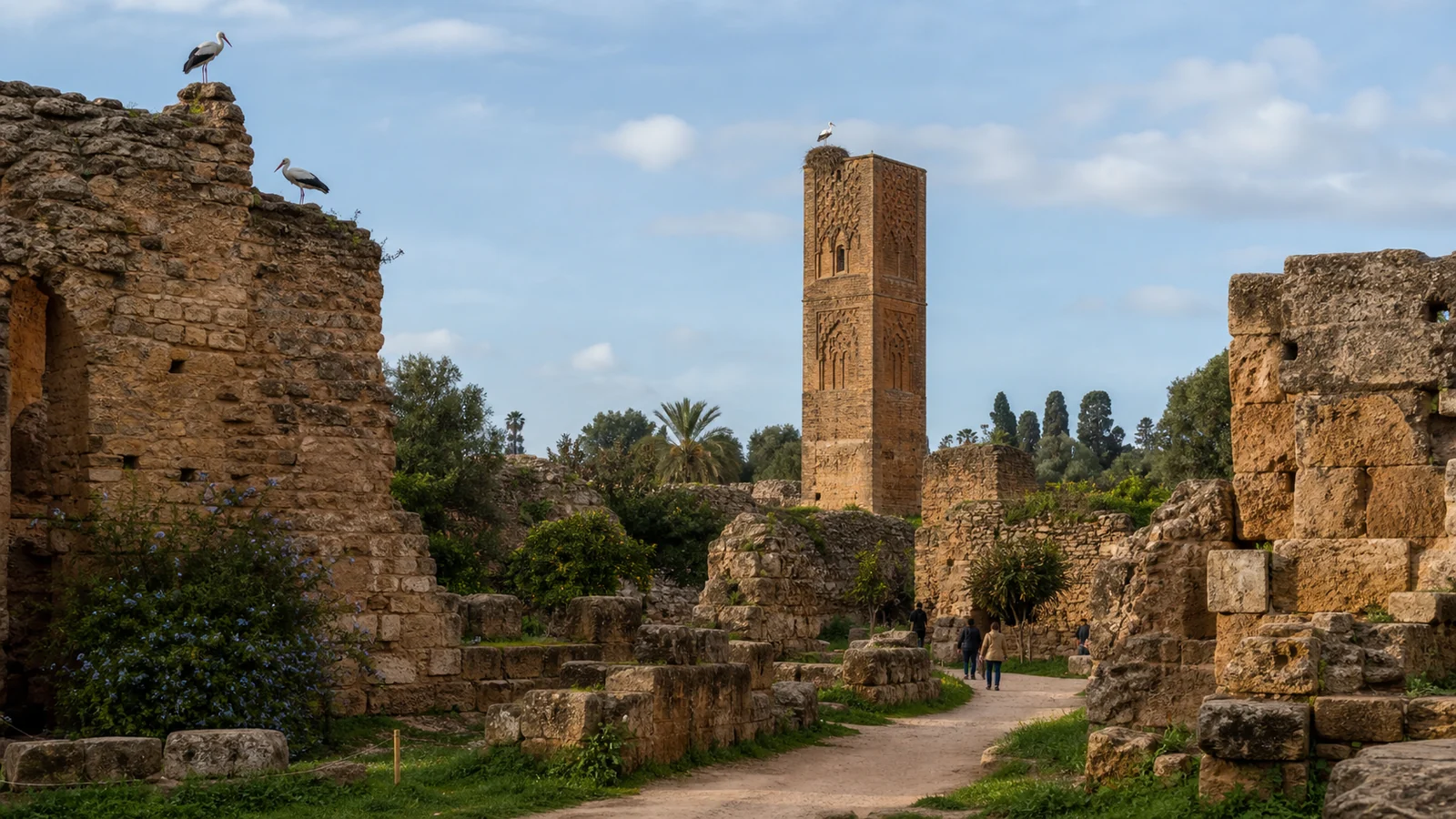
Chellah is the better choice for layered history, gardens, ruins and an outdoor visit. The site combines traces from ancient settlement with a later Marinid necropolis and religious complex. Storks, vegetation and weathered walls create a very different atmosphere from the morning’s monumental esplanade.
Take a petit taxi from the medina or central city rather than assuming the entire route is a pleasant continuous walk. Tram plus walking may also work depending on your starting point; check the live network through the official Rabat–Salé tram planner.
Inside the site:
- begin with the interpretation material instead of walking straight to the prettiest ruin;
- notice how Roman-era and Islamic-period layers occupy the same landscape;
- keep to marked paths and barriers;
- do not approach nests or wildlife;
- allow time for the climb back toward the exit.
The official Chellah visitor-information page provides current ticket and access details. Check it shortly before visiting because restoration zones and visitor routes can change.
Who should choose Chellah?
Choose it if you enjoy archaeology, gardens, outdoor photography and slower site interpretation. Skip it when heavy rain, strong heat, limited mobility or a late start would make the paths unpleasant.
Option B: Modern Art and the Ville Nouvelle
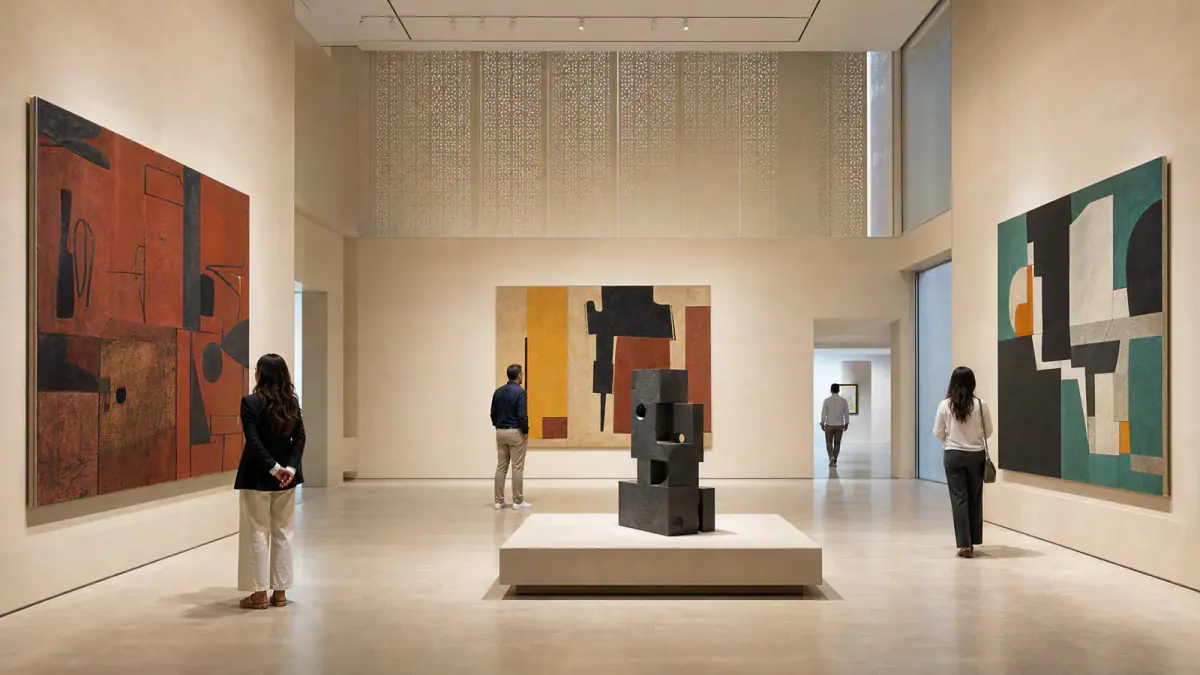
Choose this branch for modern Moroccan culture, architecture, air-conditioned indoor time or a lower-walking afternoon. The Mohammed VI Museum of Modern and Contemporary Art sits near the central urban fabric and introduces twentieth- and twenty-first-century Moroccan art.
The museum’s exhibitions and closure days can change. Check the National Museum Foundation listing before going rather than relying on a fixed schedule reproduced here.
After the museum, walk along the central avenues around Rabat Ville. This is not filler between historic sites. UNESCO’s inscription explicitly includes the twentieth-century new town, administrative areas, residential and commercial development, and public gardens. The broad streets help explain why Rabat feels different from Morocco’s more medina-dominated visitor cities.
Who should choose the museum branch?
Choose it if you like modern art, design and city planning, or if rain and heat make Chellah less appealing. It also fits travelers who want a more accessible surface and shorter outdoor exposure.
17:00 — Reconnect With Central Rabat
After Chellah, return toward Avenue Mohammed V, Rabat Ville or the medina edge. After the museum, you are already close to the modern center. Use this period for a café, a final craft purchase or an unhurried walk.
This is where many itineraries make a mistake: they add another major monument because an hour remains. Resist that urge. A pause in the modern city gives context to the historic stops and protects the evening from fatigue.
If you need to retrieve luggage or catch a train, finish near Rabat Ville. If you are staying overnight, you can return toward the river or Udayas side for the final light.
Evening — Bouregreg, Atlantic Air or a Calm Dinner
For a scenic finish, choose one of three moods:
- Bouregreg riverfront: best for water views and the relationship between Rabat and Salé;
- Udayas edge: useful if you want to see the river mouth in softer light;
- central dinner: the practical choice when the weather is windy, you are tired or your hotel is inland.
Do not promise yourself a precise sunset viewpoint before checking the season, cloud and access. Rabat’s evening strength is the slower pace itself. End somewhere that keeps the return journey simple.
The beach is not automatically the best final stop. Ocean conditions, darkness and your accommodation location matter. A well-lit central walk or dinner can be the wiser ending.
Getting Around Rabat in One Day
Walking
Walking works inside each cluster:
- Hassan Tower and mausoleum;
- Udayas and medina;
- museum district and central avenues;
- Chellah’s internal visitor route.
It is less efficient between every cluster. Expect uneven paving in historic areas and more distance than the map may suggest.
Petit taxis
Short taxi rides are useful between Hassan Tower, the Udayas and Chellah. Use the official rank or a clearly identified petit taxi, ask for the meter/current local process and carry small cash. Do not accept a city-to-city fare from a small urban taxi.
Tram
The Rabat–Salé tram can support central movements, but it does not remove every walk. Use the official interactive map and timetable on the day rather than memorizing stop names from an old screenshot.
Train
Rabat Ville is central for this itinerary; Rabat Agdal is useful for other districts and some connections. Confirm which station appears on your ticket. Our Morocco airports guide explains the difference between arriving through Rabat-Salé and connecting from Casablanca Mohammed V.
A More Relaxed Version
If you prefer fewer transitions, remove Chellah and keep:
- Hassan Tower and mausoleum;
- Udayas;
- medina lunch;
- modern-art museum or long café break;
- riverfront evening.
This version is better for families with young children, travelers carrying luggage, hot afternoons or anyone who values observation over coverage.
A History-Heavy Version
For a heritage-focused day:
- spend longer at Hassan Tower and the mausoleum;
- explore the Udayas gate and fortification context;
- eat quickly in or near the medina;
- give most of the afternoon to Chellah;
- finish with a short modern-city walk to understand the UNESCO contrast.
Use our separate Rabat culture guide for deeper context on the monuments. This itinerary owns route order and timing; that page owns cultural interpretation.
What to Skip With Only One Day
Do not add all of the following:
- distant beaches;
- the Exotic Gardens of Bouknadel;
- a full Salé itinerary;
- multiple museums;
- extensive shopping;
- a long formal lunch;
- Chellah and every modern district.
These can all be worthwhile, but not inside the same self-guided day. If Rabat is more than a stopover, our complete Rabat travel guide covers neighborhoods, longer stays and day trips.
Rain, Heat and Friday Adjustments
Rain
Choose the museum branch, use taxis between clusters and keep the Udayas visit short because stone paving can become slippery.
Strong heat
Start early, put outdoor monuments before lunch and move the museum or a long café break into the hottest period. Carry water without assuming vendors are available inside every site.
Friday
Expect religious rhythms and some business schedules to differ around midday. Monument and museum access may also change for ceremonies, holidays or maintenance. Check official pages and build in flexibility rather than declaring a universal Friday closure.
One-Day Rabat Budget Categories
Exact prices change, so plan categories instead of copying a fixed total:
- local transport from the station or hotel;
- one or two petit-taxi rides;
- Chellah or museum admission;
- lunch, water and a café stop;
- optional craft purchase;
- luggage storage if your accommodation cannot hold bags.
The free outdoor portions can keep the day affordable, but do not assume every interior or archaeological area has free entry.
Frequently Asked Questions
Is one day enough for Rabat?
Yes, for the Hassan complex, Udayas, medina and one afternoon branch. It is not enough for every museum, Chellah, Salé, gardens and beaches.
Is Rabat the capital of Morocco?
Yes. Rabat is Morocco’s political and administrative capital. Casablanca is the larger commercial center, but it is not the national capital.
Can this itinerary be done entirely on foot?
Technically, a strong walker can connect much of it, but one or two short taxi or tram-assisted transfers create a better day. Chellah is the main reason to use transport.
Should I choose Chellah or the Mohammed VI Museum?
Choose Chellah for archaeology, gardens and an outdoor visit. Choose the museum for modern Moroccan art, easier surfaces, rain or strong afternoon heat.
Where should I start after arriving by train?
Rabat Ville is the most convenient central station for this sequence. Begin with Hassan Tower by taxi, tram/walk combination or a longer walk, depending on luggage and energy.
Is the Udayas the same as Rabat’s medina?
No. The fortified kasbah and the medina are adjacent but distinct urban areas. Visiting them together is efficient because you can walk from one to the other.
What if a site is closed?
Swap Chellah for the museum district, replace an inaccessible interior with the exterior architecture and gardens, or spend longer in the Udayas and medina. The itinerary is designed with a branch precisely so one closure does not ruin the day.
Final Rabat Route
A balanced day in Rabat moves through four layers: Almohad ambition at Hassan Tower, royal and craft detail at the mausoleum, Andalusian and residential character in the Udayas and medina, then either Chellah’s archaeology or the modern capital’s museums and boulevards.
Keep the route linear, use transport for the awkward gaps and finish somewhere convenient rather than forcing one last attraction. Rabat rewards attention more than speed.
Official planning and heritage sources
- UNESCO: Rabat, Modern Capital and Historic City
- Moroccan National Tourist Office: Rabat
- Moroccan National Tourist Office: Rabat medina and monuments
- Rabat Region Historical Heritage
- Chellah official visitor information
- National Museum Foundation: Mohammed VI Museum
- Official Rabat–Salé tramway
- ONCF Voyages