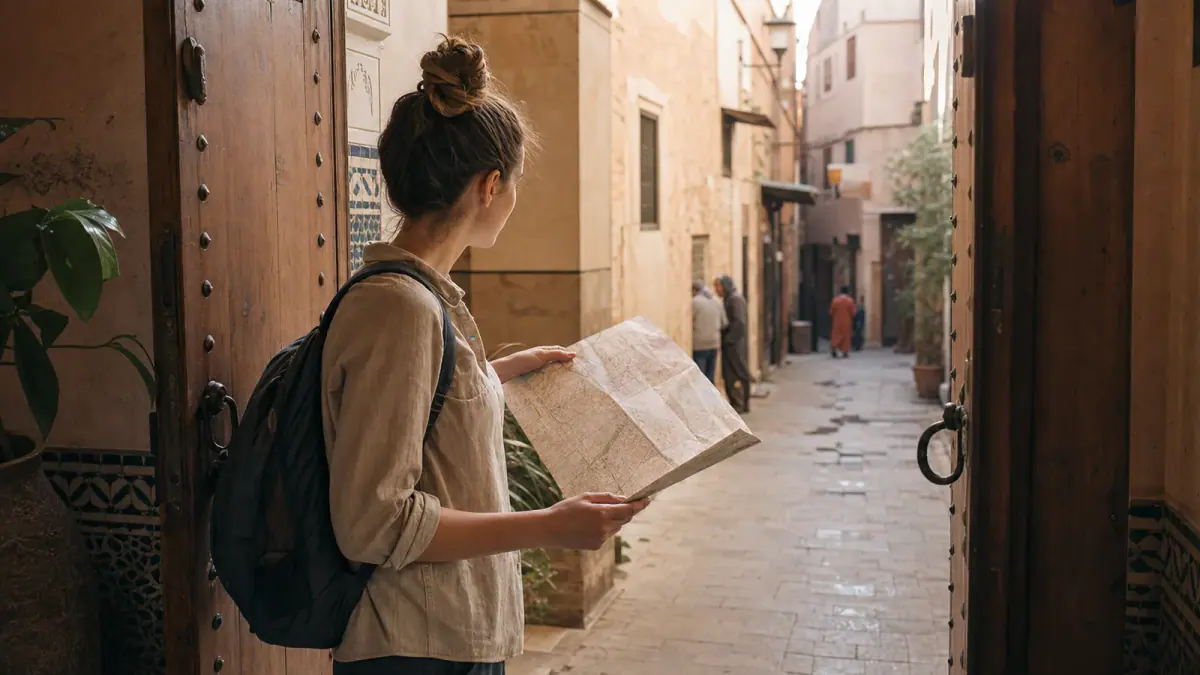
The best time to visit Morocco is usually spring (March to May) or autumn (September to November) for a route that combines cities, mountains and desert. But there is no single perfect month for the whole country. Atlantic Essaouira in July, high-altitude Imlil in January and inland Marrakech in August are three very different trips.
Choose your dates by region and activity. Spring and autumn offer the easiest compromise for a first tour; summer favors Atlantic beach towns over the deep south; winter can be excellent for cities and desert days if you pack for cold nights and keep mountain plans flexible.
Best time to visit Morocco at a glance
| Your trip priority | Usually the easiest period | Main trade-off |
|---|---|---|
| First city-and-scenery tour | March–May; September–November | Popular dates can book early |
| Marrakech and Fes sightseeing | Spring and autumn | Warm spells are still possible |
| Sahara journey | Spring and autumn; selected winter dates | Desert nights can be cold |
| Atlantic coast | Late spring through early autumn | Essaouira can be notably windy |
| High Atlas hiking | Spring and autumn, depending on altitude | Snow, heat and storms change trail conditions |
| Surf trip | Depends on coast and skill level | Swell, wind and water conditions vary |
| Lower prices and fewer crowds | Parts of winter and hot summer inland | Weather compromises are greater |
Morocco’s National Tourist Office describes the country as a meeting point of Atlantic, Mediterranean, mountain and Saharan influences. Its official climate overview specifically recommends spring and autumn for the Sahara. Treat that as a regional principle, not a guarantee for a particular week.
Morocco weather is regional, not national
Weather apps can encourage a misleading question: “What is Morocco’s temperature?” Morocco stretches from two coastlines across the Rif and Atlas ranges to desert landscapes. Elevation and distance from the ocean matter as much as the season.
- Atlantic coast: Casablanca, Rabat, Essaouira and Agadir are moderated by the ocean. Wind and marine cloud can make the coast feel cooler than an inland forecast with a similar number.
- Northern Mediterranean and Rif: Tangier, Tetouan and Chefchaouen can receive wetter winter weather than southern desert routes.
- Inland cities: Marrakech, Fes and Meknes have greater day-to-night and seasonal contrasts than the coast.
- Atlas Mountains: conditions change quickly with altitude. A sunny valley does not prove a high pass is clear.
- Sahara and pre-Saharan south: strong sun and dry air create large contrasts between daytime and night, especially outside summer.
The Moroccan meteorological service tracks temperature, precipitation, wind, humidity, snow and extremes through its national observation network. For an actual departure, use Météo Maroc rather than a climate average alone.
Morocco month by month
This guide uses broad planning patterns. Heat waves, storms, snowfall and unusually warm or cool periods do not follow a blog calendar.
January
January suits travelers who prefer quieter cities and can accept short days, rain possibilities in the north and cold mornings. Marrakech may feel pleasant in the sun, but an unheated courtyard riad can be chilly after dark. Fes and Chefchaouen can feel colder and damper.
The Sahara can offer clear daytime conditions, yet camp nights require genuinely warm layers. Snow can affect Atlas roads and high routes. January is not the moment to assume every summit trek is available.
February
February remains winter, with similar packing needs to January. Days begin to lengthen, and southern itineraries can be rewarding, but mountain access remains condition-dependent.
This is a useful month for visitors who value lighter crowds more than swimming weather. Check heating in accommodation and avoid booking a mountain plan without an operator’s current assessment.
March
March begins the popular spring window. Inland sightseeing becomes easier, valleys may look greener, and city-plus-desert itineraries are generally more balanced than in midsummer.
Weather can still turn unsettled. A warm afternoon in Marrakech does not remove the need for rain protection or a jacket in the Atlas. Easter and school-holiday periods can increase demand depending on the year.
April
April is one of the strongest all-round choices for Marrakech, Fes, Rabat, the foothills and a carefully planned Sahara route. Spring landscapes and moderate conditions make multi-region travel easier.
It is also popular. Book small riads, guides and desert camps early if your dates overlap major holidays. High-mountain trails may still hold snow, so “spring” at city level is not automatically trekking season at every altitude.
May
May often provides warm, long days before peak inland summer heat. It works well for city mornings, coast combinations and lower- or mid-altitude walking.
Later in the month, midday heat becomes more important in Marrakech and the south. Shift walking to morning and late afternoon, keep water available and treat shade as part of the route.
June
June is a transition month. The Atlantic coast becomes increasingly attractive while inland cities and southern roads grow hotter. It can still work for a broad itinerary, particularly early in the month, but pacing matters.
Mountain hikes need route-specific advice: lower valleys can be hot even when summits look cool. A breezy coastal finish in Essaouira can be a smart counterweight to Marrakech.
July
July favors travelers whose plan is built around Agadir, Taghazout, Essaouira or other coastal areas. Marrakech and Fes remain visitable, but midday sightseeing can become tiring and heat-sensitive travelers may enjoy the trip less.
Avoid treating a long Sahara transfer as a routine summer excursion. If fixed dates force an inland itinerary, choose air-conditioned accommodation, start early, pause through the hottest hours and keep the route short.
August
August carries similar heat trade-offs and often coincides with high domestic and international holiday demand on the coast. Reserve popular beach accommodation in advance.
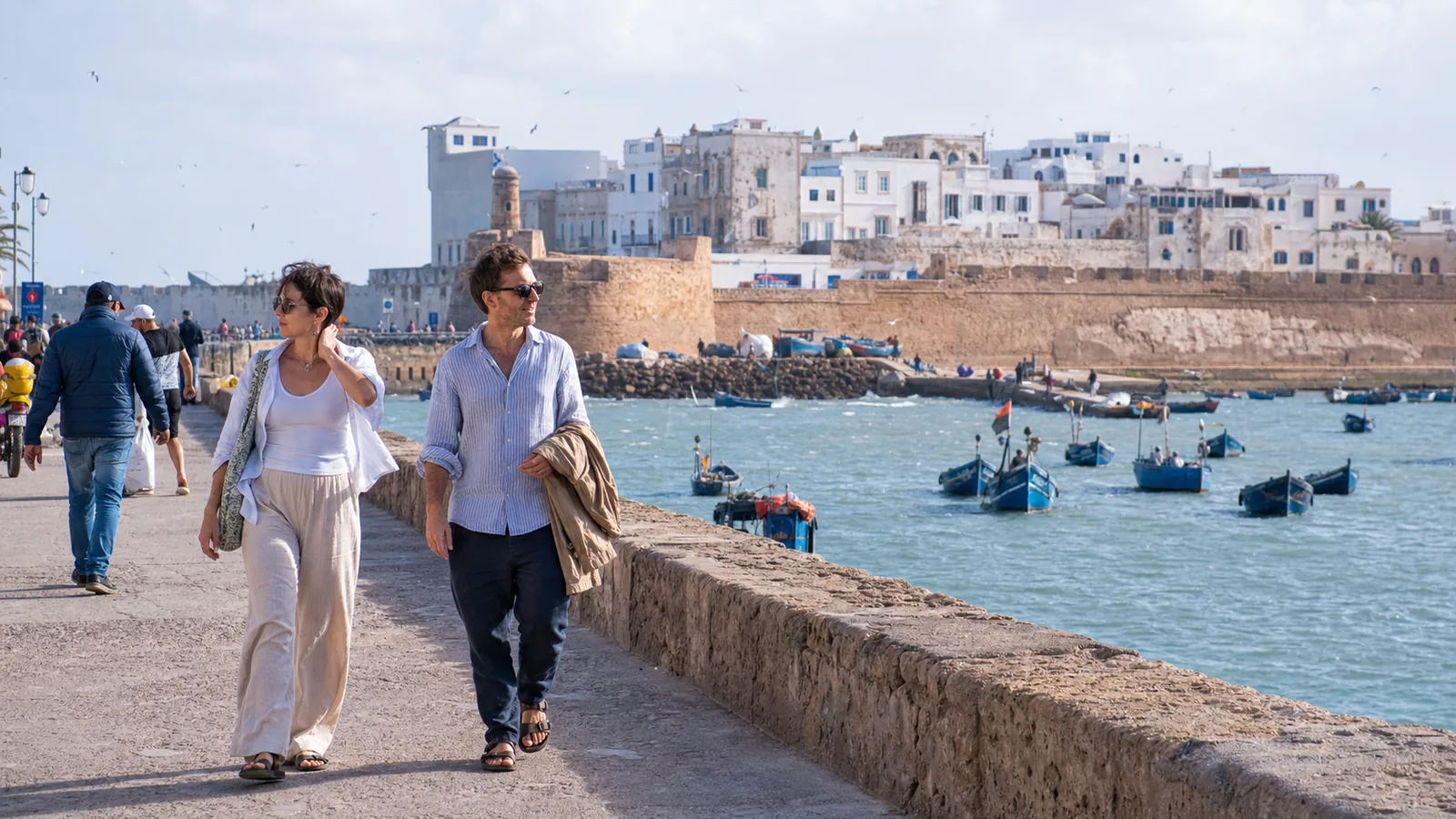
Essaouira’s wind can feel refreshing, but it may not suit someone imagining still, tropical beach weather. Agadir offers a different beach-city experience. Read our Agadir travel guide and Essaouira guide before choosing.
September
September begins another excellent multi-region window, though inland heat may linger early in the month. Later dates are often easier for city walking and southern travel.
Sea conditions can remain appealing on the Atlantic, while autumn demand starts building in famous destinations. Keep a summer-style heat plan if traveling near the beginning of the month.
October
October is a favorite for classic Morocco routes: imperial cities, valleys, desert and coast can be combined with fewer temperature extremes. It is also a strong hiking month on suitable routes.
Popularity is the cost. Book constrained accommodations and guides ahead, but do not make every day inflexible; autumn rain or mountain conditions can still alter an excursion.
November
November can offer pleasant city and desert days with cooler evenings and an increasing chance of unsettled northern weather. It is often a good compromise for visitors who can pack layers.
Daylight is shorter than in October. Build long road transfers carefully and plan outdoor activities earlier in the day.
December
December works for winter sun seekers who understand that Morocco is not uniformly warm. Southern days may be bright, while nights in Marrakech, Fes, the mountains and desert can be cold.
Holiday demand may raise flight and accommodation prices around late December. Confirm heating, bring a proper outer layer and leave flexibility for mountain roads.
Best time for Marrakech and Fes
For long days on foot, March–May and September–November are generally the most comfortable windows. These months reduce—but do not eliminate—the chance of difficult midday heat.
Marrakech is often warmer and drier than Fes. In summer, start with outdoor monuments and markets early, rest at midday and return toward evening. In winter, ask whether your riad room is heated; attractive courtyards are designed for airflow and can feel cool.
Fes can be wetter and colder in winter. Its medina also requires extended walking, so rain protection and shoes with grip matter. For a first visit, compare the cities in our Morocco first-time visitor guide.
Best time for the Sahara
Spring and autumn are the clearest default choices for Merzouga, Erg Chebbi and southeastern road trips. Winter is possible and often beautiful, but nights can be sharply cold; summer exposes travelers to severe daytime heat and makes long outdoor stops less comfortable.
Do not choose only by the camp’s promotional photographs. Ask:
- how many hours are spent driving each day;
- whether the tent has appropriate bedding for the season;
- what happens during strong wind or poor visibility;
- whether the route includes high passes;
- how much outdoor activity occurs around midday;
- whether the operator changes the program in extreme conditions.
Sand and wind are natural parts of a desert environment. A forecast cannot guarantee a perfect sunset or clear stars.
Best time for the Atlas Mountains
“Atlas hiking” covers gentle valley walks, multi-day routes and high summits. Their seasons are not interchangeable.
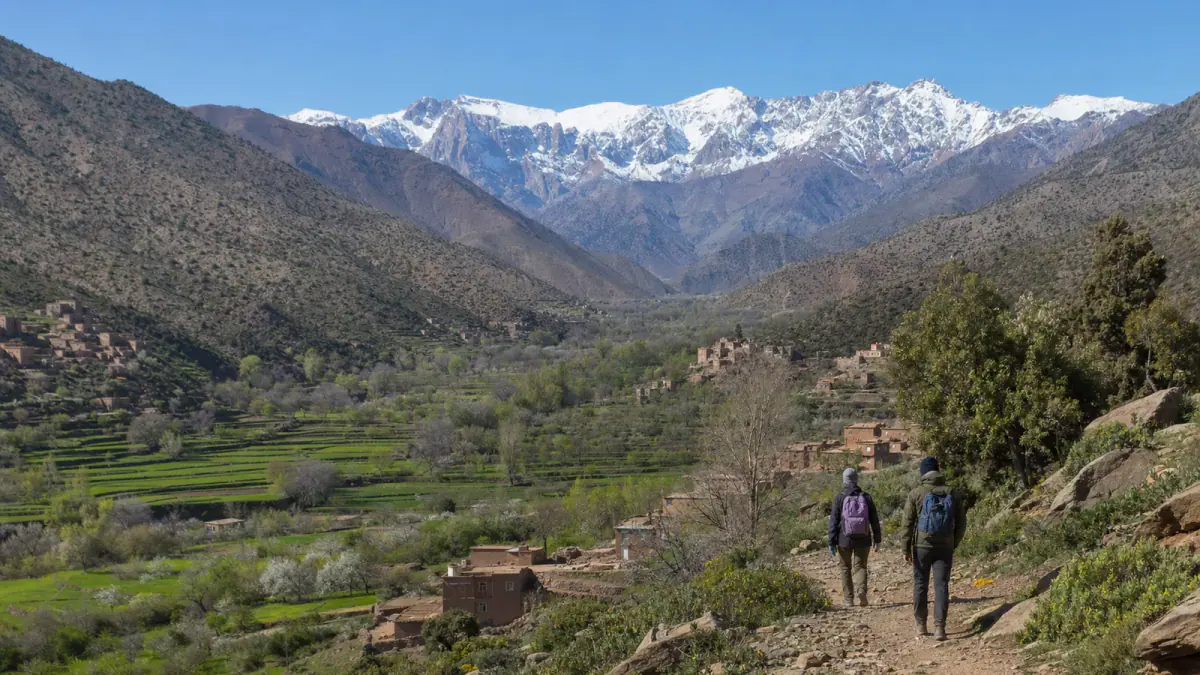
Spring brings greener lower valleys, but snow can remain at altitude. Summer may permit some high routes while making exposed lower trails very hot. Autumn often offers stable hiking opportunities, though shorter days and early cold matter. Winter requires suitable skills, equipment and professional local judgment for snow routes.
Use a qualified local guide for serious mountain objectives and ask for a current route assessment. Our Imlil travel guide explains the village’s role as a High Atlas base, but it is not a substitute for a same-week conditions report.
Best time for Essaouira, Agadir and the Atlantic
The coast is often the best answer when travel dates are fixed in July or August. Ocean influence moderates temperature, although conditions vary from town to town.
Essaouira is known for wind, a working harbor and a walkable medina. It suits culture, food and watersports, but beachgoers wanting calm air should check the wind forecast.
Agadir is oriented more toward a broad beach, resort infrastructure and nearby surf towns. Winter and shoulder-season sun can be appealing, while summer attracts substantial holiday demand.
Atlantic water can feel cool, and beach safety depends on swell, currents and local conditions. Follow lifeguards and posted warnings rather than assuming calm-looking water is safe.
Ramadan, Eid and public holidays
Ramadan moves through the solar calendar because it follows the Islamic lunar calendar. Travel remains possible and can be culturally rewarding, with lively evenings and a different daily rhythm. However, some independent restaurants and shops may open later, transport can be busy near the evening meal, and schedules may change around Eid.
Confirm the year’s dates close to travel; religious dates can depend on official moon-sighting announcements. The tourism office’s calendar guidance explains the changing rhythm, but old date tables on evergreen pages should not be used for future planning.
During Ramadan:
- reserve important transport rather than relying on the final departure;
- ask your accommodation about breakfast and meal availability;
- be discreet about daytime eating in non-tourist public settings;
- allow extra time late afternoon;
- expect active evenings after the fast is broken.
Crowds, prices and booking strategy
Comfortable weather attracts demand. Spring and autumn are not automatically quiet, particularly in Marrakech, Fes, Chefchaouen and desert camps. International school holidays, major events and weekends can matter as much as the month.
Book first the items with limited alternatives: a special small riad, a licensed guide on a fixed day, a well-reviewed desert camp or a room in a small mountain lodge. Trains and ordinary city hotels may offer more flexibility, but check your exact dates.
If budget matters, do not chase the lowest season without considering its cost in comfort. A cheaper Marrakech room in August is not good value if heat prevents you from enjoying the city.
What to pack by season and region
| Conditions | Useful layers and equipment |
|---|---|
| Spring/autumn cities | Breathable clothing, light warm layer, compact rain shell, walking shoes |
| Summer inland | Loose light clothing, sun hat, high-SPF protection, refillable water bottle |
| Atlantic coast | Wind layer, sun protection, an extra evening layer |
| Winter cities | Warm jacket, sleepwear, rain protection, closed shoes |
| Desert | Sun protection plus warm night layers; secure eyewear in wind |
| Atlas | Trail-specific footwear, layers, rain/sun protection and guide-recommended equipment |
Check every overnight stop, not only the arrival airport. A route can move from the coast to an inland city and a high valley within a few days.
How to make the final decision
Use this order:
- Choose the activity you would be most disappointed to miss.
- Identify the region where it happens.
- Select its broad weather window.
- Check Ramadan, holidays and likely demand.
- Build a route that stays mostly in compatible climates.
- Review the official forecast about a week before departure.
- Recheck mountain, surf or desert conditions with the responsible local operator.
If your dates are fixed, reverse the process: choose the Moroccan region that fits those dates. A coast-focused August trip or a city-and-desert November trip can be better than forcing a standard checklist into the wrong season.
Frequently asked questions
What is the single best month to visit Morocco?
There is no single best month for every region. April, May, September and October are strong all-round candidates, but your ideal choice depends on whether the priority is the Sahara, Atlantic coast, cities or high mountains.
Is Morocco too hot in summer?
Some inland and southern areas can experience difficult summer heat, while the Atlantic coast is generally more moderate. Summer is not a reason to reject Morocco; it is a reason to design a coastal or slower itinerary.
Is Morocco warm in winter?
Sun can make winter days feel pleasant, especially in southern areas, but nights and shaded interiors may be cold. Northern rain, Atlas snow and cold desert camps are all possible.
When is the best time for a desert tour?
Spring and autumn are the simplest recommendations. Winter can work with adequate warm gear. Summer is the hardest period because of heat and long exposed road journeys.
When should I hike in the Atlas?
It depends on altitude and route. Spring and autumn suit many treks, while high routes may retain snow in spring and need winter skills outside the normal trekking window. Get a current local assessment.
Final recommendation
For a first journey that combines Marrakech or Fes with the Atlas foothills, coast or Sahara, start by comparing April, May, September and October. Then refine the choice around your exact region, tolerance for heat, crowd preference and activity.
The best time to go is not the month with the most flattering national average. It is the period when the places on your actual route work well together.