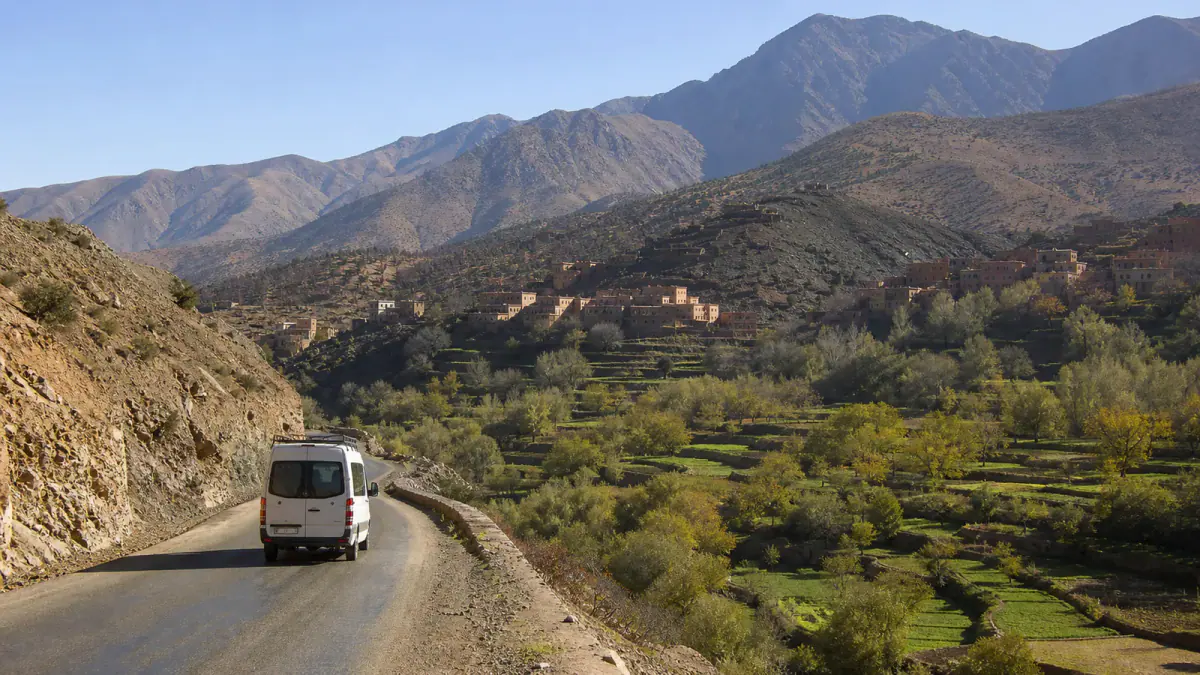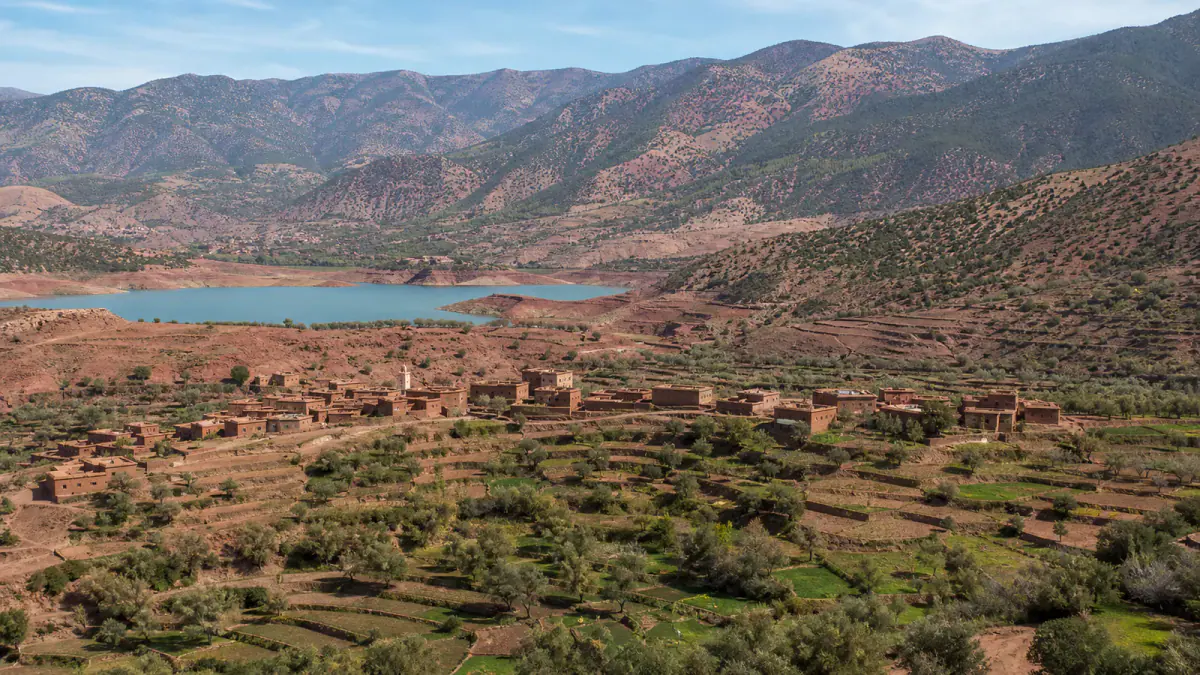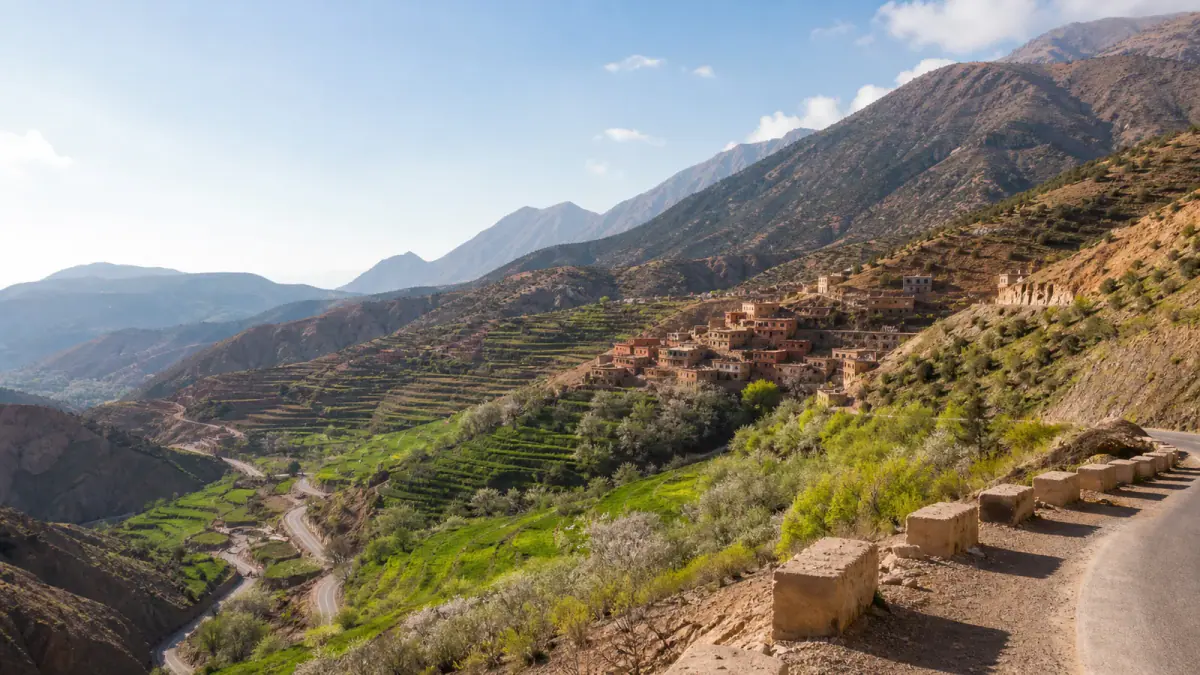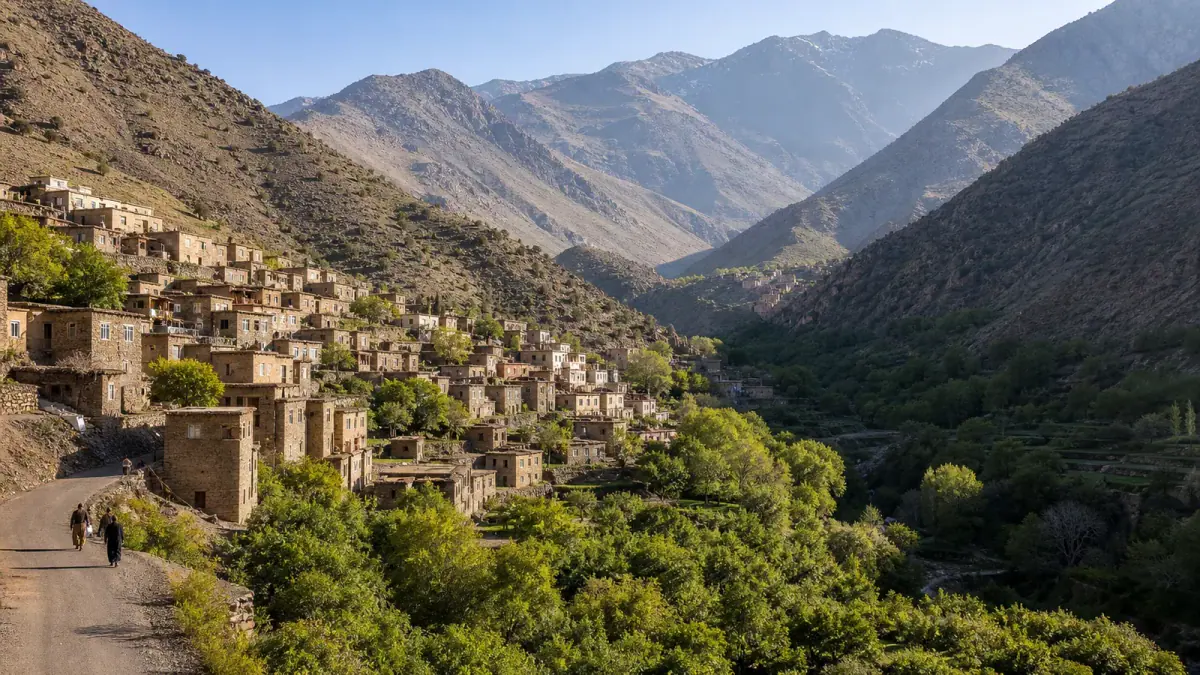
Imlil is worth visiting even if you have no intention of climbing Mount Toubkal. This High Atlas village is a practical base for terraced-valley walks, nearby Amazigh villages, guesthouse meals and guided day hikes, all within a road journey from Marrakech. Stay overnight for the mountain atmosphere; use a day trip only for a short walk and lunch.
The key is to match the outing to your fitness and the conditions. Walking around the village is not the same activity as trekking to a refuge or attempting a 4,000-meter summit. This guide separates those experiences so you can plan Imlil without underestimating the mountains or overcomplicating a gentle visit.
Imlil at a Glance
| Question | Practical answer |
|---|---|
| Where is Imlil? | In the High Atlas south of Marrakech, reached by road through the foothills |
| What is it known for? | Village walks and its role as a gateway to Toubkal National Park |
| Is it only for serious hikers? | No; short guided walks, valley views and guesthouse stays suit non-summit visitors |
| Day trip or overnight? | Day trip for a first look; overnight for a real mountain break |
| Do you need a guide? | Use a professional guide for mountain routes; local help also improves short walks when paths are unfamiliar |
| Is there a train? | No; the final journey is by road |
| Best general seasons? | Often spring and autumn, but conditions vary by altitude and year |
| Main risks | Weather, altitude, uneven paths, road conditions, flash floods and attempting a route beyond your experience |
What Imlil Is—and What It Is Not
Imlil is a mountain community and trekking base rather than a single compact attraction. Houses, guesthouses, shops and trail connections occupy slopes and valley levels, while nearby villages form part of the walking landscape.
The appeal is:
- clear mountain air and High Atlas views;
- walnut and fruit trees, terraces and irrigation channels;
- village-to-village paths;
- simple guesthouses and home-style meals;
- access to professional guides and longer treks;
- a dramatic change of pace from Marrakech.
It is not a polished alpine resort. Vehicle access may stop below a guesthouse, luggage may continue on foot or by mule, heating standards vary, and weather can change the plan. Those are not defects when expected; they become problems when a city-hotel experience is assumed.
Is Imlil Worth Visiting?
Yes, if you want mountains, walking or a quiet overnight stay. It is especially worthwhile when you let the valley set the pace instead of squeezing a waterfall, lunch, multiple villages and a return to Marrakech into a few rushed hours.
Imlil may be a poor fit if:
- nobody in the group wants to walk on uneven ground;
- the only goal is nightlife or luxury resort facilities;
- severe weather affects the access road or trail;
- you have less time than the road journey deserves;
- you expect to see the Sahara from the Atlas.
For a broad comparison with other regions, our Atlas Mountains guide explains the High, Middle and Anti-Atlas rather than focusing on this one valley.
Getting to Imlil From Marrakech
Imlil is reached by road. The route generally passes south from Marrakech toward the Atlas foothills and Asni before climbing into the valley. Travel time depends on the pickup point, traffic, road works, weather and stops, so treat “about two hours” as planning margin rather than a guaranteed transfer.
Private transfer
A prearranged car is the simplest option for an early start, overnight luggage or a group. Confirm:
- the exact pickup address;
- whether the quoted price is one way or return;
- waiting time for a day trip;
- the final vehicle-accessible point;
- child seats, large bags or trekking equipment;
- the cancellation plan for unsafe weather.
The driver is not automatically a mountain guide. Transport and route leadership are different services.
Shared or grand taxi
Independent travelers may combine a shared taxi or local transport toward Asni with another connection up the valley. This can reduce cost but adds uncertainty, waiting and negotiation. It is best for travelers with flexible time, limited luggage and enough French, Arabic or Tamazight support to confirm the route.
Arrange the return before a long walk. Late-afternoon availability should not be assumed.
Organized day tour
A tour can remove transport logistics, but read the itinerary carefully. “Imlil and Atlas Mountains” may mean a short village walk, a staged lunch, several shopping stops or a much more demanding hike.
Ask:
- How much walking is included?
- What is the elevation gain?
- Is the walk led by a professional mountain guide?
- How large is the group?
- Are lunch, guide and transport included?
- What happens in rain, snow or extreme heat?
The best tour is not the one with the longest list of stops. It is the one whose walking level and timing match the group.
Things to Do in Imlil Without Climbing Toubkal
1. Take a Guided Village Walk
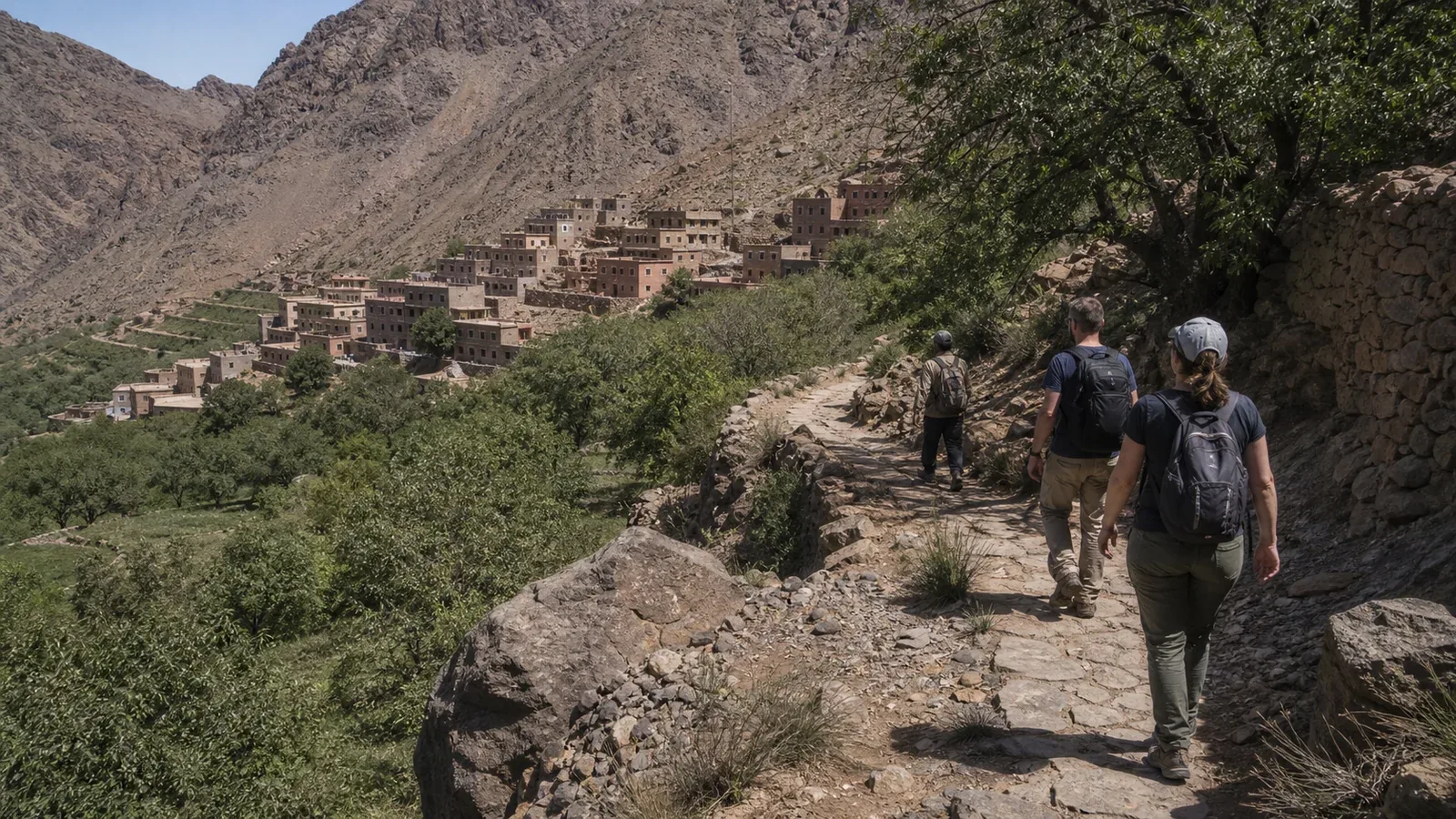
A short loop through terraces, walnut groves and neighboring settlements is the clearest introduction to Imlil. Paths can branch, cross fields or change after weather damage, so a local professional guide adds more than navigation: they can set a suitable pace and explain water systems, agriculture and village relationships without turning private homes into exhibits.
Before starting, agree on:
- expected duration;
- approximate ascent and descent;
- whether the surface includes loose rock or steep steps;
- planned rest points;
- what happens if someone wants to turn back.
2. Walk Toward Aroumd and the Upper Valley
Aroumd, also written Armed or Aremd, sits above Imlil within the wider valley landscape. The walk provides changing views of terraced slopes and settlement patterns, but route length and difficulty depend on the starting guesthouse and chosen path.
Do not enter cultivated terraces, shortcut switchbacks or photograph residents closely without permission. The goal is to move through a living landscape respectfully, not claim every attractive viewpoint.
3. Visit the Local Waterfall Carefully
The waterfall near Imlil is a popular short-walk objective, but flow, path condition and crowd levels vary. It should be treated as one element of a valley walk rather than proof that every visit includes a dramatic cascade.
Wear shoes with grip and avoid wet rocks or improvised shortcuts. After heavy rain, ask locally whether the path and river crossing are safe.
4. Have Lunch at a Guesthouse
A relaxed meal can be the main event for non-hikers. A guesthouse may serve tagine, couscous on appropriate days, soup, salads, bread and tea, but menus depend on supplies and advance notice.
Tell the host about allergies clearly and do not assume a dish is vegetarian because visible meat is absent; stock or shared preparation may be involved. Order before a longer walk when possible so the kitchen can plan.
5. Stay for Sunrise and a Quiet Morning
Day visitors often arrive and leave within the busiest part of the day. An overnight stay allows cooler walking hours, changing light and a quieter relationship with the valley.
The benefit is not a guaranteed sunrise photograph. It is the absence of a return deadline while you eat, walk and rest.
6. Book a Route That Fits Your Actual Fitness
Imlil offers more than one “hike.” A gentle village loop, a sustained ascent to a viewpoint, a refuge trek and a Toubkal summit are different undertakings.
Describe your recent walking experience honestly. “Generally fit” does not reveal how you handle loose descents, altitude, heat or six continuous hours on foot.
Imlil and Mount Toubkal
Mount Toubkal rises to 4,167 meters and is widely identified as the highest peak in North Africa. Imlil is the principal access base, but the summit is not a casual extension to a village day trip.
A typical summit program requires a trek to a mountain refuge, an early summit attempt and a long descent. Snow, ice, wind and low temperatures can turn a non-technical summer trail into a mountaineering objective requiring different equipment and experience.
Before considering Toubkal:
- hire a professional local mountain guide;
- confirm current route and checkpoint requirements;
- ask what equipment conditions require;
- use accommodation and refuge bookings appropriate to the plan;
- obtain insurance that explicitly covers the altitude and activity;
- leave buffer time for weather;
- understand altitude-illness symptoms and descent decisions.
The UK government’s current Morocco safety guidance specifically advises Atlas hikers to research trail difficulty, pack water, sunscreen and appropriate clothing, hire a professional guide and carry suitable insurance. Its health guidance also notes that altitude sickness is a risk in parts of Morocco.
Do not let a fixed flight or social-media goal pressure the guide into continuing. Turning around is a normal mountain decision.
Is Imlil Safe?
No destination or hike can be described as universally safe. Imlil receives many visitors, but village tourism, road travel and mountain activity have different risk profiles.
Village and property safety
Use normal travel precautions:
- keep valuables secure;
- use an identified transfer and guide;
- confirm the accommodation location before dark;
- avoid isolated paths alone after sunset;
- carry the guesthouse telephone number;
- ask before photographing people or private property.
Trail safety
The larger risks often come from terrain and conditions:
- rapid weather change;
- intense sun and dehydration;
- cold after sunset;
- loose rock and uneven mule paths;
- altitude on higher routes;
- snow and ice in winter;
- flash flooding after heavy rain;
- poor phone coverage away from villages.
Check the Morocco weather service and local mountain professionals close to departure. A Marrakech forecast does not describe conditions at Imlil or on a high pass.
Road and natural-hazard safety
Mountain roads can be affected by rain, snow, rockfall, construction and traffic. Government travel advice warns that secondary mountain routes become especially hazardous in poor weather and that heavy rain can cause flash flooding.
After the 2023 High Atlas earthquake, reconstruction and community recovery have continued across affected areas. Do not assume a map, path description or accommodation review from before the earthquake reflects current access. Confirm directly with the host or guide.
Best Time to Visit Imlil
There is no single season for every activity because Imlil village and Toubkal summit occupy very different elevations.
Spring
Spring can bring greener terraces, blossom and comfortable lower-valley walking. Snow may remain higher up, and rain can affect paths or streams.
Summer
Imlil is cooler than Marrakech but can still be hot in direct sun. Start walks early, carry more water than a city day requires and plan shade. High UV exposure remains important at altitude.
Autumn
Autumn often suits village walks and trekking, with cooler air after summer. Daylight shortens and early cold can return at higher elevations.
Winter
Winter can mean snow, ice, freezing nights and road disruption. A guesthouse described as “heated” may warm only a shared room or use a different system than you expect. Ask specifically about bedroom heating, hot water and access.
Use our Morocco weather-by-month guide for regional context, then replace general climate assumptions with a live mountain forecast.
Day Trip or Overnight Stay?
Imlil as a Day Trip
A realistic day trip includes:
- early departure from Marrakech;
- tea or orientation on arrival;
- one short or moderate guided walk;
- lunch;
- a safe return before fatigue and darkness.
It should not include a Toubkal summit, multiple distant valleys and several hours of shopping stops.
Choose a day trip when time is limited, the group wants a gentle introduction and everyone is comfortable with a long road-and-walk day.
Imlil Overnight
One night allows:
- a longer walk without watching the return transfer;
- quieter evening and morning hours;
- better adaptation to the village pace;
- a backup window if afternoon weather changes;
- a more meaningful guesthouse stay.
Two nights suit travelers who want a substantial non-summit hike, a slow recovery day or two different village routes.
Three Practical Imlil Plans
Easy day from Marrakech
Arrive in the morning, meet a guide, take a two- to three-hour village walk at the group’s pace, have lunch and return. Keep the waterfall optional.
One-night mountain break
Travel up before lunch, check in, complete a short afternoon orientation walk, eat at the guesthouse, then take a longer guided loop the next morning before returning to Marrakech.
Trekking base
Stay at least one night before a planned multi-day route, meet the guide, inspect equipment, confirm weather and discuss turnaround conditions. A summit program should be treated as its own expedition rather than squeezed into a general sightseeing itinerary.
For comparisons with Ourika and Ouirgane, read our guide to Atlas day trips from Marrakech.
Where to Stay in Imlil
Accommodation labels can be confusing. A “riad,” lodge, refuge and family guesthouse may offer very different access and facilities.
Central Imlil
Best for transport, shops and travelers with limited time. Ask whether the room faces the road and how many stairs separate it from the drop-off point.
Above the village
Best for views and quiet. The tradeoff may be a steep walk, luggage transfer and fewer casual dining options. Do not book from the panorama alone.
Aroumd or another nearby village
Best for a more immersive walking stay. Confirm the final access, evening meals, guide meeting point and how you will return with luggage.
Questions to ask before booking
- Can a car reach the door?
- If not, who handles luggage and what does it cost?
- Is the bedroom heated in the planned month?
- Is hot water reliable at the expected arrival time?
- Are dinner and breakfast available?
- Can the property arrange a credentialed professional guide?
- Is card payment accepted, or is cash required?
- What is the cancellation policy if the road is unsafe?
What to Pack
For a village day:
- shoes with tread;
- small daypack;
- water and simple snacks;
- sun hat, sunscreen and sunglasses;
- light warm or wind layer;
- phone, offline map and power bank;
- basic first-aid items;
- cash in small denominations.
For higher or longer routes, the guide should provide a condition-specific equipment list. That may include insulated layers, waterproof clothing, gloves, traction or technical equipment. Do not copy a summer packing list into winter.
Avoid a heavy cotton outfit that stays wet, brand-new shoes on a long route, and a single thin layer because Marrakech felt warm at breakfast.
Food, Cash and Connectivity
Guesthouses commonly organize breakfast and dinner, while simple shops serve local needs and hikers. Tell the host about dietary requirements in advance, especially for a late arrival.
Carry enough cash for meals, guide services, transport and small purchases. Do not rely on every property accepting cards or on an ATM being convenient in the valley.
Mobile coverage can be adequate around the main settlement and weaker on trails. Download maps, booking details, insurance contacts and the guesthouse number before leaving Marrakech.
Visiting Respectfully
Imlil’s paths cross working agricultural and residential land.
- Ask before photographing people.
- Keep drones packed unless you have the required Moroccan authorization.
- Stay on established paths and close gates.
- Do not pick fruit or enter terraces without invitation.
- Dress with village context in mind.
- Carry litter back to accommodation.
- Use water thoughtfully.
- Pay the agreed guide, mule and transport rate without creating a dispute at the end.
If animals carry luggage, choose an operator that limits loads, uses suitable tack, allows rest and treats handlers fairly. Convenience does not justify poor welfare.
Tourism supports guides, cooks, drivers, hosts and shops, but only when the visit respects local control and does not turn homes into scenery.
Imlil for Families and Non-Hikers
Families can enjoy Imlil when the plan is short, flexible and honest about terrain. A young child’s city walking endurance does not predict comfort on loose stone or steep paths.
Ask a guide for:
- a short loop with an easy turnaround;
- shade and rest opportunities;
- no exposed drop-offs;
- a lunch stop with toilets;
- a route that avoids the hottest hours.
Non-hikers can still stay at a reachable guesthouse, eat with a view, take a brief guided walk and enjoy the valley. Do not book an inaccessible panoramic lodge without understanding the final climb.
Common Imlil Planning Mistakes
Calling every walk “easy”
Difficulty depends on ascent, surface, heat, altitude and the individual. Ask for numbers and trail character, not one adjective.
Treating Toubkal as a day-trip attraction
It is a high-altitude mountain objective requiring preparation, time and professional guidance.
Booking a guesthouse without checking access
A beautiful room may require a steep walk with luggage. Confirm the last vehicle point.
Using the Marrakech forecast
Mountain conditions can be colder, windier and wetter. Check elevation-specific advice locally.
Leaving return transport uncertain
Arrange the pickup point and communication plan before beginning the walk.
Packing the itinerary with road stops
The valley deserves time. A day tour that spends more time at roadside commissions than walking is not an Imlil experience.
Frequently Asked Questions
Is Imlil worth visiting if I do not hike?
Yes, if you enjoy mountain scenery, guesthouse meals and a short village walk. Stay overnight or choose an accessible property so the visit is more than a vehicle stop.
How long should I stay in Imlil?
One day gives a first look; one night creates a better mountain break; two or more nights suit longer guided walks. A Toubkal trek follows its own schedule.
Can I visit Imlil independently?
You can arrange your own transport and accommodation. Hire a professional guide for mountain routes, and consider one even for village walks when trail branches and conditions are unfamiliar.
Can beginners visit Imlil?
Yes. Beginners should request a short low-elevation route with clear ascent, surface and turnaround information. Imlil’s presence below Toubkal does not make every trail beginner-friendly.
Is Imlil safe for solo travelers?
Solo travel is possible, but universal safety cannot be promised. Use identified transport and accommodation, tell someone the plan, avoid isolated trails alone, hire a professional guide and follow current government and local advice.
Does Imlil have snow?
Snow is possible in the High Atlas, especially in winter and at higher elevations. Village conditions and summit conditions can be very different. Check a live forecast and local reports.
Can you see Mount Toubkal from every guesthouse?
No. Valley orientation, nearby ridges, buildings and weather affect the view. Treat “mountain view” as a general description unless the property identifies the exact outlook.
Is Imlil the same as Toubkal National Park?
No. Imlil is a village and access base near routes into the national park. The park and mountain system cover a much larger area.
Final Imlil Planning Checklist
- Decide whether you want a village visit, day hike or high-mountain trek.
- Check weather, road and trail conditions close to departure.
- Book a professional guide appropriate to the activity.
- Confirm transport in both directions.
- Ask the guesthouse about final access, heating, meals and payment.
- Carry water, sun protection, layers, cash and offline information.
- Use insurance that covers the exact activity and altitude.
- Keep a flexible turnaround plan.
- Respect homes, terraces, water and animal welfare.
Imlil works best when it is treated as a mountain community rather than an excursion product. Give the valley enough time, choose a route below your maximum ability and let local professionals adapt the plan to the conditions.
For broader Morocco logistics before leaving Marrakech, continue with our first-time visitor guide.
Primary planning and safety sources
- Moroccan National Tourist Office: Toubkal National Park trekking
- Moroccan National Tourist Office: valleys and Imlil paths
- Moroccan National Tourist Office: Morocco trekking guide
- UK government: Morocco safety and Atlas hiking
- UK government: Morocco health and altitude
- Morocco General Directorate of Meteorology