Essaouira is not only a pretty coastal stop. It is also one of Morocco’s best cities for seafood, relaxed cafes and craft shopping. This page focuses on food, markets and what to buy, giving it a different purpose from our general Essaouira guides.
Use it if your priority is eating well, browsing the medina and bringing home something better than a rushed souvenir.
Seafood and the Fishing Port
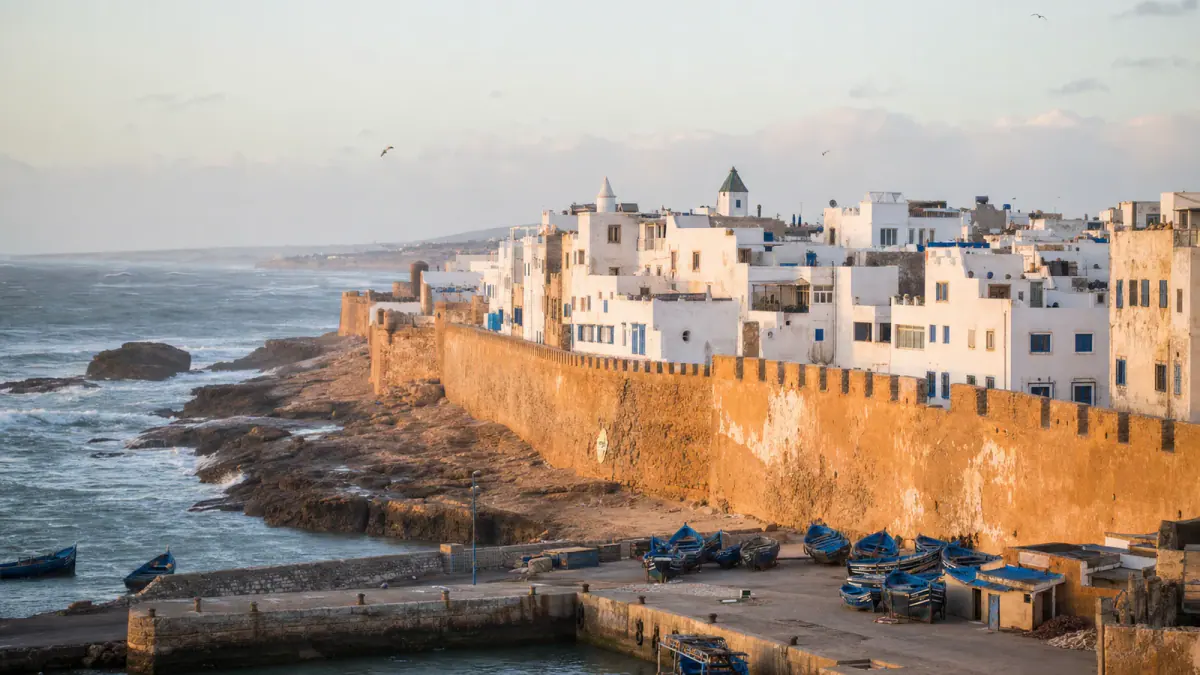
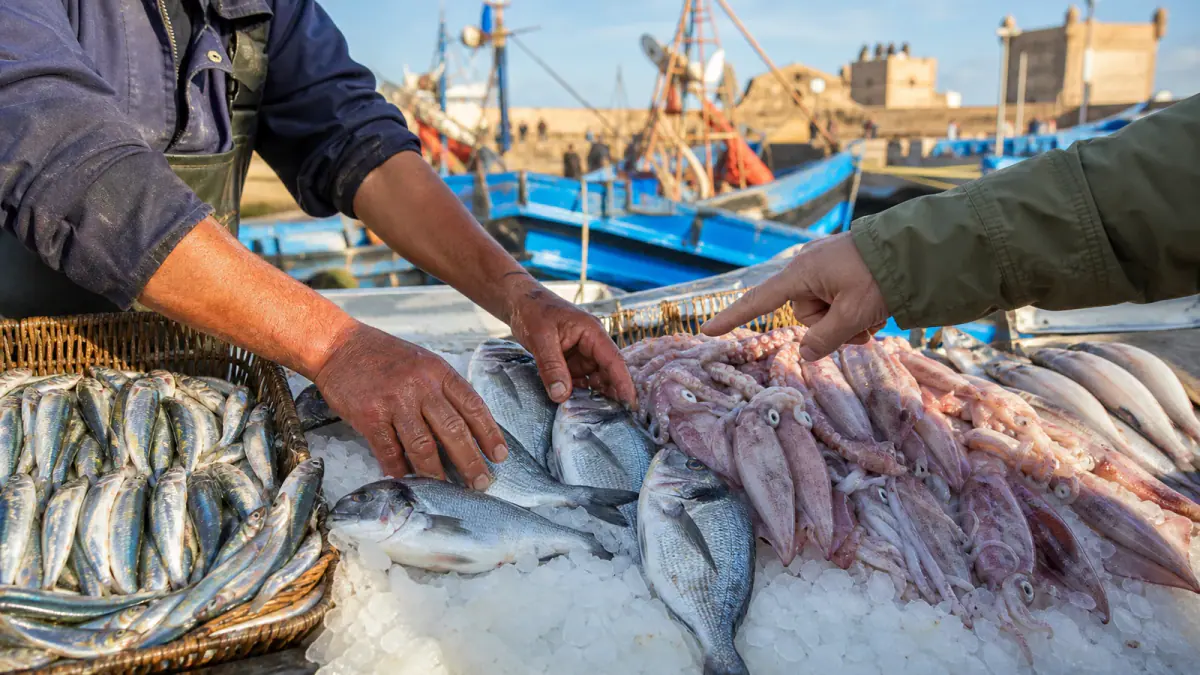
The fishing port is the heart of Essaouira’s food identity. Blue boats, market noise and fresh catches make it one of the city’s most memorable areas.
Ask prices before ordering grilled fish or seafood plates. Simple, fresh and clearly priced is usually better than the most aggressive sales pitch.
Cafes and Medina Meals
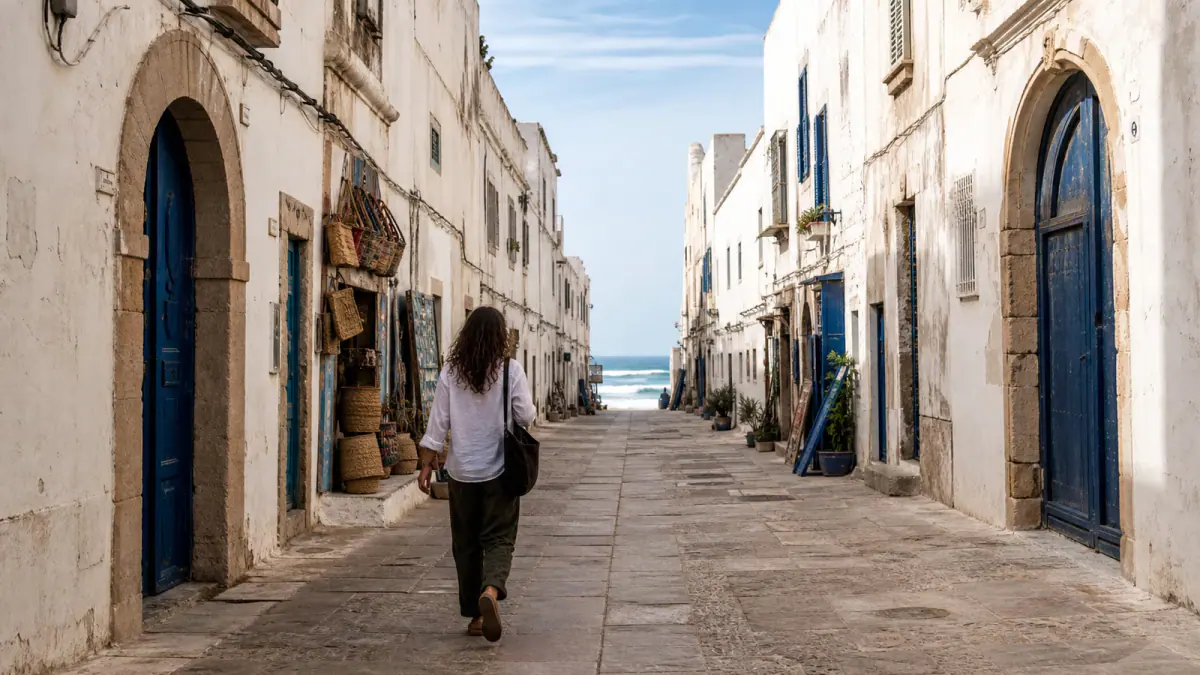
Inside the medina, look for Moroccan salads, tagines, harira, msemen and mint tea breaks. Essaouira has enough relaxed cafes that you can build the day around pauses.
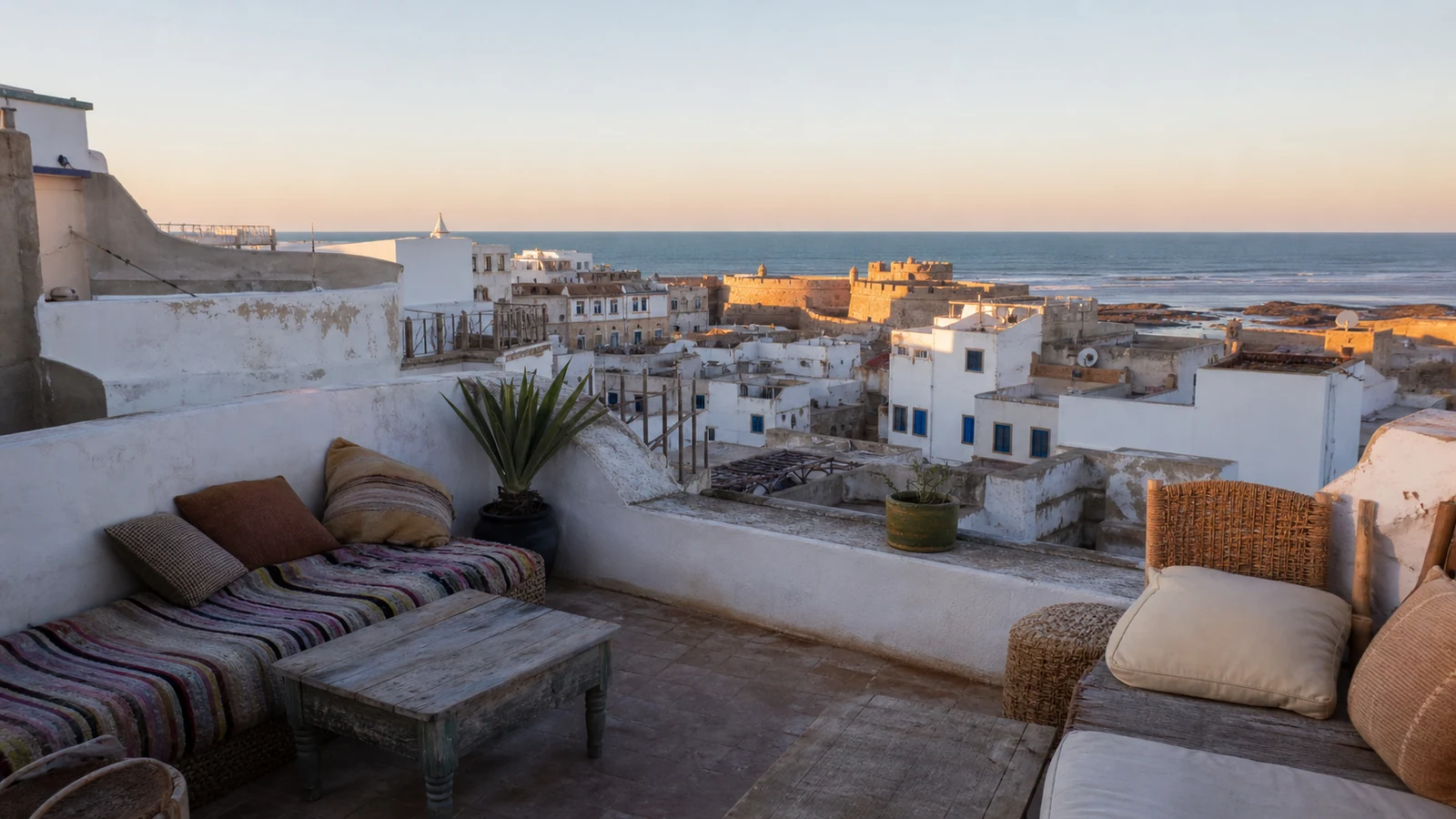
A rooftop or courtyard meal works especially well when the wind picks up near the beach.
What to Buy in Essaouira
Essaouira is known for thuya woodwork, but you will also find textiles, jewelry, art and small leather goods. Take time to compare quality instead of buying from the first shop.
Bargaining should stay friendly. If a price does not feel right, smile and move on.
How to choose thuya wood
Thuya has a warm color and distinctive grain, but quality varies. Check that a box closes cleanly, corners are smooth and the inside has been finished rather than hidden behind felt. Ask what the object is made from and where it was produced. A patient craftsperson should be able to explain the work without inventing a dramatic “today only” story.
Choose a piece you genuinely have room to carry. Large polished objects are not automatically better, and responsible buying means valuing skilled work rather than pushing every seller to the lowest possible price.
Culinary and cosmetic argan oil
Culinary argan oil is roasted and has a nutty aroma; cosmetic oil should not smell like toasted nuts. Look for a clear ingredient list, production or batch information and a bottle that protects the oil from strong light. “Cooperative” on a sign is not proof by itself, so ask who produces the oil and how payment reaches members.
Use our broader Moroccan food guide to understand amlou, tagines and ingredients you may see across the country.
Best Food Areas to Explore
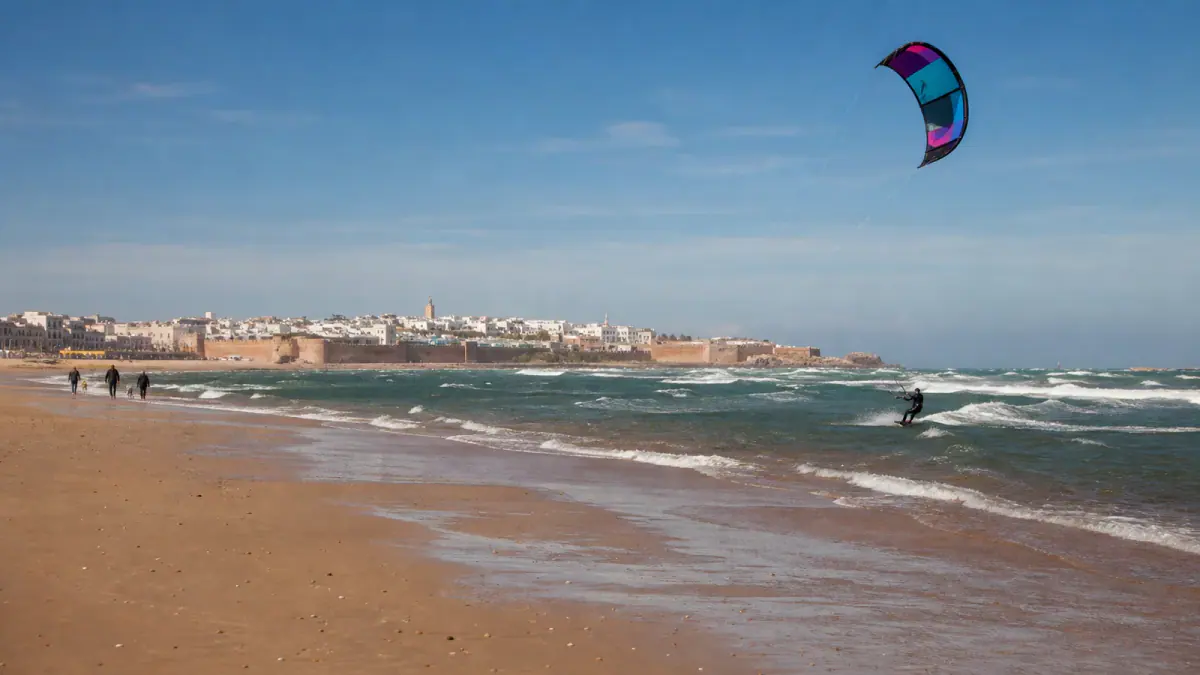
The port is best for fresh fish and a busy working atmosphere. The medina is better for slower meals, tea, pastries and restaurants where you can sit longer. The beach side works well when you want a view and a break from narrow streets.
If you only have one day, start with medina coffee, eat seafood for lunch, then save sunset for tea or dinner near the ramparts.
Ordering Seafood Without Confusion
At a restaurant, ask whether fish is priced per portion, per weight or as part of a set plate. Confirm the total before cooking begins, including salads, bread and drinks. Around the port, choose seafood that looks properly chilled and a cooking area with steady turnover.
Sardines are a local classic and often better value than a large mixed platter. Fish tagine is a good alternative on a windy day; it arrives hot and allows spices and vegetables to complement the catch. If you have a shellfish allergy, say so clearly because grills and utensils may be shared.
Food at the port is only one part of Essaouira. Slow breakfasts, bakery snacks, mint tea and small contemporary kitchens inside the medina can be equally memorable. Avoid trying to turn every meal into a famous “must-eat” stop.
Shopping Without Rushing
Essaouira is a good place to buy fewer, better items. Thuya wood boxes, small artworks, woven pieces and simple jewelry travel well, but quality varies from shop to shop.
Ask where items are made, compare finishing, and avoid pressure. The medina is compact enough that you can return later after checking a few options.
Packing Purchases for the Journey Home
Essaouira is a good place to browse thuya wood boxes, small carved items, textiles, jewelry, leather goods and art. Prices vary by quality, so compare before buying and look closely at finishing, stitching and weight. The town is usually calmer for shopping than Marrakech, which helps visitors make better choices.
If you want food gifts, consider sealed spices, argan products or packaged sweets from reputable shops. Avoid buying anything you cannot legally carry home. Ask for wood or ceramics to be wrapped before payment, keep liquids within airline rules and check your destination’s customs restrictions.
When to Shop
Morning browsing is calmer, while late afternoon brings more street life and better light. If you are serious about buying, return to a shop after comparing rather than negotiating hard at the first stop.
Keep small cash for cafes and small shops, because not every place is card-friendly. For larger purchases, ask about packing before you pay.
Final Takeaway
For food and shopping, Essaouira rewards slow browsing. Eat seafood, stop for tea, look for real craft and let the medina decide the pace.
For a route through the city, use our Essaouira one-day guide.
Sources and responsible buying
The tourism office’s Essaouira shopping guide provides destination context. UNESCO documents both argan practices and know-how and the city’s wider setting in its Medina of Essaouira listing. These references explain traditions; they do not certify an individual shop or product.