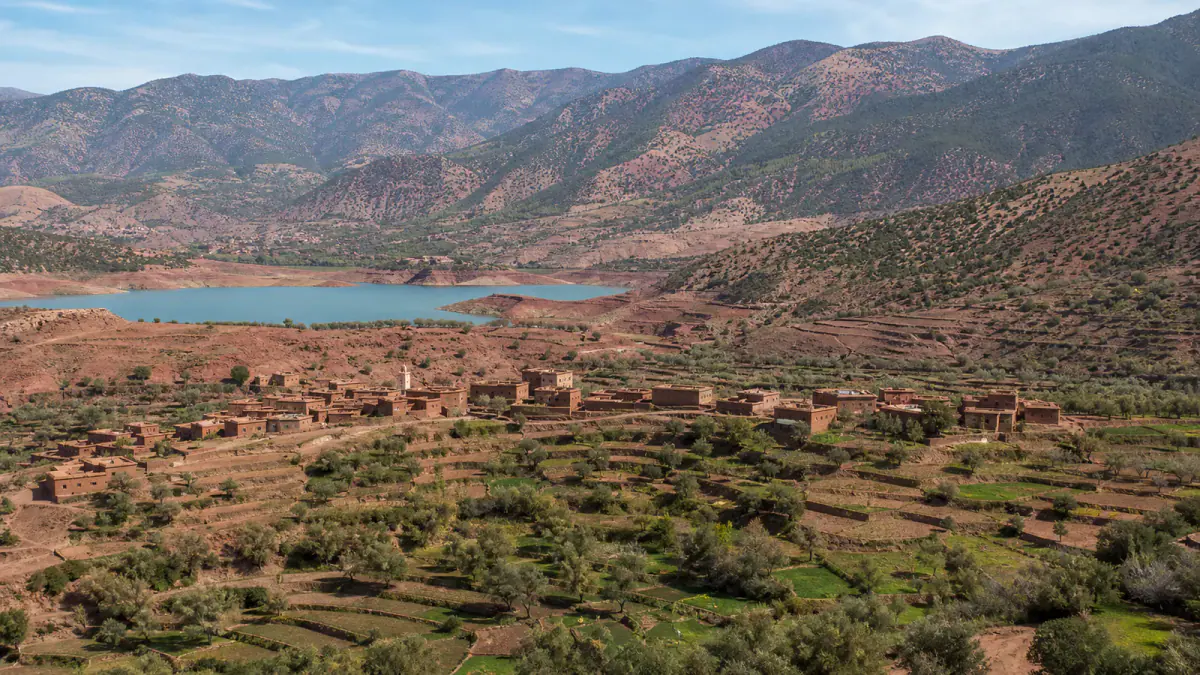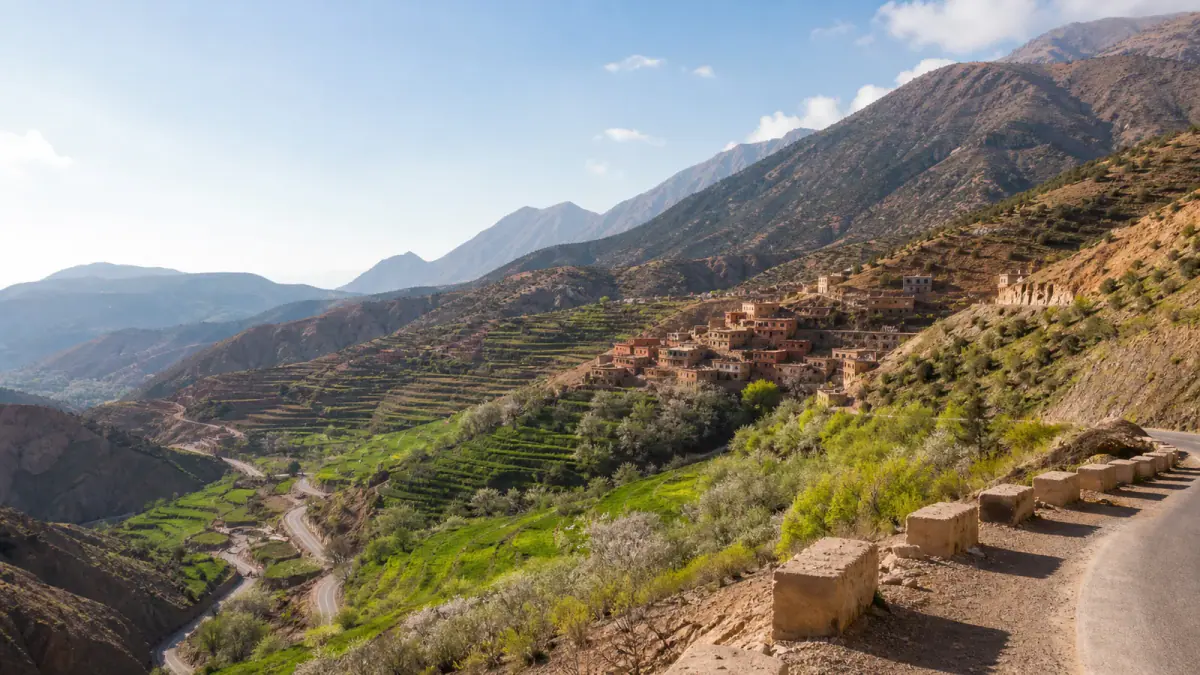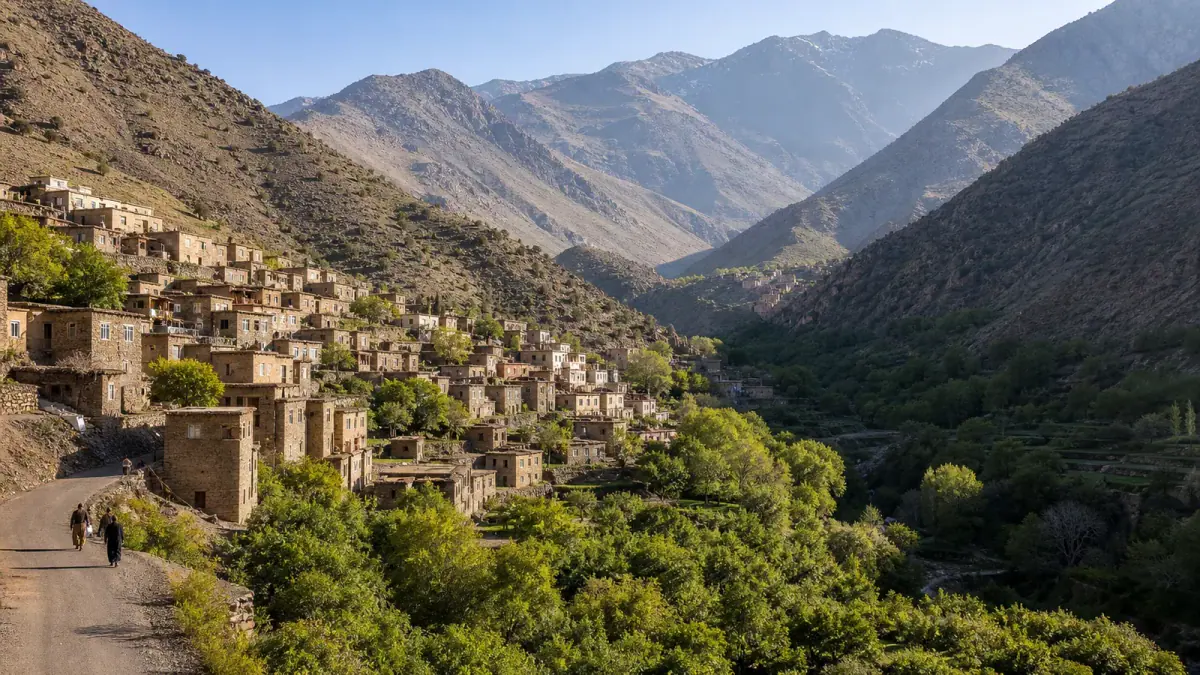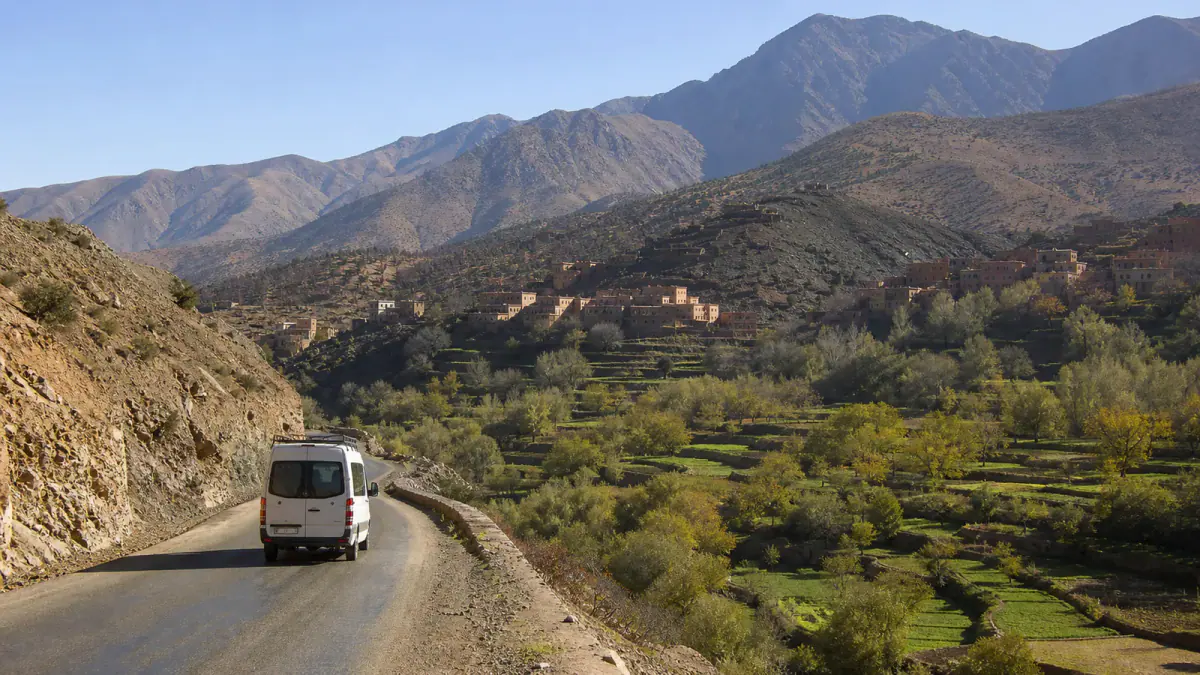
The best Atlas Mountains day trip from Marrakech depends on what you want to do after the drive. Choose Imlil for a real mountain walk, Ourika Valley for a shorter and livelier river outing, or Ouirgane for quiet scenery and a gentle pace. None of them is a Toubkal summit, and no honest itinerary can combine every valley meaningfully in one day.
This comparison helps you select one destination, understand the physical demands and question a tour operator before booking. It replaces a duplicated generic guide while preserving this page’s original indexed URL.
For a multi-region explanation beyond Marrakech, read our complete Atlas Mountains Morocco guide.
Quick Comparison: Imlil, Ourika or Ouirgane?
| Destination | Best for | Typical day | Main tradeoff |
|---|---|---|---|
| Imlil | Mountain views and guided walking | Transfer, 2–4 hour walk, guesthouse lunch | More physical; surfaces and ascent matter |
| Ourika | River scenery, shorter transfer and flexible stops | Valley drive, Setti Fatma area, lunch, optional waterfall walk | Popular and busy; waterfall path is not an easy promenade |
| Ouirgane | Quiet scenery, gentle walk and slow lunch | Scenic transfer, valley route, lodge or guesthouse meal | Softer mountain drama; better with an overnight |
If your group cannot agree, choose by the least-mobile traveler’s comfort rather than the strongest walker’s ambition.
Which Atlas Day Trip Should You Choose?
Choose Imlil if walking is the main purpose
Imlil sits below the high ridges associated with Toubkal National Park and has the clearest trekking identity of the three. A day can include a guided village loop, terraced fields, a waterfall detour where conditions allow, and lunch at a guesthouse.
Choose it when everyone can manage uneven paths and wants to spend meaningful time on foot. Do not choose it simply because a tour promises “Toubkal views.” Weather and valley orientation affect visibility.
Our dedicated Imlil guide covers accommodation, trail questions, summit context and current-condition checks.
Choose Ourika for an easy-to-organize valley day
Ourika is a popular escape from Marrakech, with river scenery, roadside viewpoints, restaurants and the Setti Fatma area. It suits travelers who want flexibility: a short stroll and lunch can replace a longer hike.
However, the common waterfall route includes rock, steps, wet surfaces and crowds. “Ourika is easy” describes access to the valley, not every walk within it.
The Moroccan National Tourist Office describes Ourika as a fertile valley near Marrakech and notes the popularity of Setti Fatma and its waterfall walks. Read the official valleys overview, then verify current route conditions locally.
Choose Ouirgane for quiet
Ouirgane offers red hills, orchards, fields, villages and reservoir landscapes. A day visit works best as a short guided walk and long lunch, not a search for one famous attraction.
Choose it for mixed fitness, lower intensity or a peaceful change from Marrakech. If you can spare a night, the valley becomes more rewarding. Our Ouirgane Valley guide explains overnight planning.
What an Atlas Day Trip Can Realistically Include
A good day generally has four parts:
- A direct morning transfer with one useful stop.
- One clearly defined walk.
- A real lunch and rest.
- Return to Marrakech before fatigue and darkness.
It should not claim:
- a Mount Toubkal summit;
- Imlil, Ourika and Ouirgane in depth;
- Ait Ben Haddou plus a substantial mountain hike;
- seven waterfalls without explaining the route;
- an “authentic village visit” that is actually compulsory shopping.
A limited itinerary is not poor value. It leaves time for the place you paid to visit.
Imlil Day Trip: What the Day Feels Like
The road leaves Marrakech toward Tahanaout and Asni before climbing into the Imlil valley. Traffic, road work, stops and pickup location change the transfer time, so treat any precise duration as an estimate.
On arrival, meet the guide and agree on the route before walking. A useful day route might take two or three hours and include village paths, terraces and a guesthouse lunch. The guide should adjust the ascent and surface to the group.
Ask:
- What is the walking distance?
- How much ascent and descent?
- Is the route rocky, exposed or slippery?
- Can someone return early?
- Is the waterfall included or optional?
- Where is lunch?
Imlil is the wrong choice for a traveler expecting to step from the minibus directly onto a flat viewpoint. It is the right choice for a group that views the walk as the day’s main activity.
Ourika Day Trip: River, Lunch and Waterfall Choices
Ourika’s road follows a developed valley with homes, cafes, restaurants and shops. That accessibility creates both convenience and pressure from weekend or excursion traffic.
Decide whether the waterfall walk matters. If it does, ask for a local guide and wear shoes with grip. If it does not, design the day around river views, a shorter village walk and lunch.
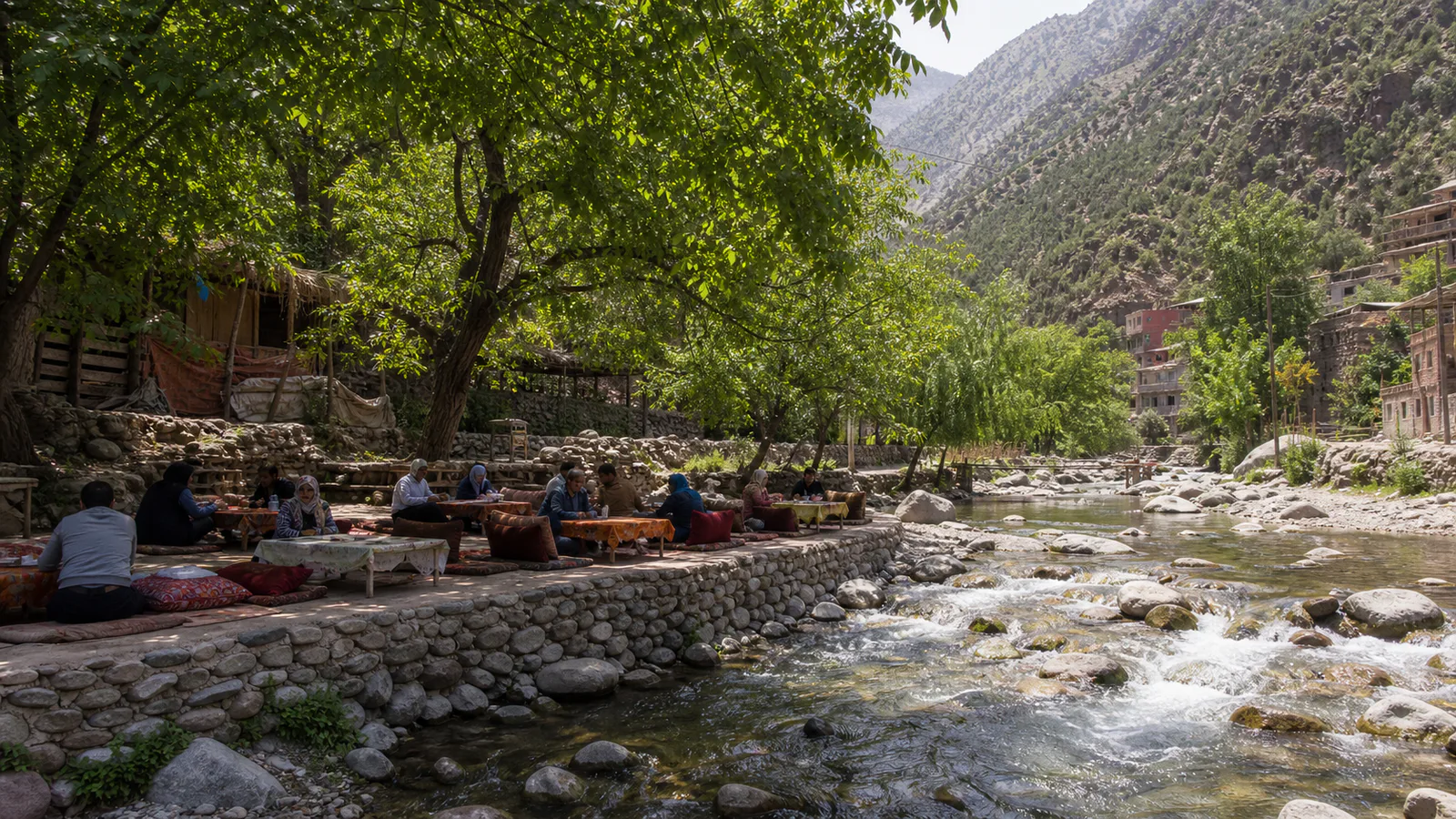
An illustrative Ourika riverside setting; restaurant layouts and water conditions change.
Tables beside water can look attractive, but recent rain changes risk. Use established seating and follow local instructions. Never enter a flooded channel or treat a low current as proof the area cannot flood.
Ourika is often the best option for travelers who want to decide their walking effort on arrival, provided the operator does not force the group into one waterfall schedule.
Ouirgane Day Trip: The Slow Alternative
Ouirgane’s day is less about arrival at a crowded endpoint. A driver can take you to a guesthouse or meeting point, where a guide leads a valley route through cultivated landscapes and established paths.
The best version includes:
- a route agreed to the group’s ability;
- time to understand agriculture and water;
- lunch ordered in advance;
- a quiet break;
- no unnecessary detour to another valley.
The official Marrakech tourism board describes Ouirgane as a peaceful valley about 60 kilometers south of the city. Confirm access with the specific host because properties use different roads and tracks.
What About Ait Ben Haddou?
Tours often combine the phrase “Atlas Mountains” with Ait Ben Haddou. The road crosses the High Atlas, but the day is primarily a long road trip to a fortified settlement, not an Imlil-style walking day.
Choose that route when Ait Ben Haddou is the goal and you accept many hours in a vehicle. Do not choose it for a relaxed first experience of mountain villages and trails.
For a Sahara route, crossing the Atlas may be transport rather than the destination. Our Morocco desert routes guide explains the longer southbound sequence.
Group Tour, Private Driver or Independent Trip?
Small group tour
Usually the lowest per-person cost and easiest booking. The tradeoffs are fixed timing, varied fitness and possible commission stops.
Before booking, ask for maximum group size, vehicle type and whether the hiking guide is included.
Private driver
Provides control over departure and roadside stops, but a driver is not automatically a mountain guide. Confirm whether a separate professional guide meets you.
Private transport is especially useful for a family, mixed-fitness group or traveler who needs a particular pickup and return time.
Independent transport
Independent arrangements may be possible through taxis or local connections, but they require comfort with negotiation, pickup points and uncertain return capacity. Do not rely on finding a vehicle late in the day without a plan.
For a first trip, prearranged return transport is often worth the extra cost.
How to Evaluate an Atlas Tour
Ignore adjectives such as “authentic,” “hidden” and “once in a lifetime.” Ask operational questions.
Route
- Which named valley and village?
- How long is the drive each way?
- How many non-walking stops?
- Is there a guaranteed return time?
Walk
- Who leads it?
- How long and how much ascent?
- What surface?
- Is there an alternative for non-walkers?
- What conditions cancel or shorten it?
Money
- Is the price per person or vehicle?
- Are guide, lunch and entrance fees included?
- Are tips expected?
- Are shopping stops optional?
Vehicle and safety
- Are seat belts available for every passenger?
- Can a child restraint be provided?
- Is the vehicle insured for passengers?
- What happens after a breakdown or road closure?
Community benefit
- Is the guide local to the valley?
- Is lunch provided by a local business or household that opted in?
- Are photography and home visits based on consent?
If the seller cannot answer, the low price has hidden uncertainty.
How Much Walking Is Involved?
There is no universal Atlas day-trip distance.
Gentle: up to roughly two hours, limited ascent, regular stops and an easy turnaround. Even this can include uneven ground.
Moderate: several hours with sustained ascent, loose sections or a longer descent. Suitable shoes and recent walking fitness matter.
Demanding: a full hiking day with substantial elevation, altitude or remote terrain. This should not be disguised as a standard sightseeing excursion.
Ask for ascent in meters and route character. Distance alone does not capture difficulty.
Are the Atlas Mountains Safe for a Day Trip?
No outdoor trip can be guaranteed safe. Risk depends on road conditions, weather, route, guide, equipment and decisions.
The UK government’s current Morocco safety guidance advises Atlas hikers to research trail difficulty, carry water and suitable clothing, hire a professional guide and hold insurance that covers the activity. It also warns about hazardous mountain roads in poor weather and flash flooding after heavy rain.
Practical habits:
- use identified transport and a professional guide;
- tell someone the route and return time;
- check conditions close to departure;
- turn back before the group is exhausted;
- keep children away from traffic and river edges;
- avoid isolated trails after dark;
- carry insurance contacts offline.
After the 2023 High Atlas earthquake, reconstruction and access can still differ by community. Confirm the current road, accommodation and route directly.
Weather and Season
Spring
Spring often brings comfortable lower-valley walking and greener vegetation. Rain can make waterfall and river routes slippery or unsafe.
Summer
Valleys are popular escapes from Marrakech heat, but lower paths still become hot. Start early, carry water and protect skin. A mountain backdrop does not guarantee cool conditions.
Autumn
Autumn can offer clear walking weather. Shortening daylight should influence return time.
Winter
Higher elevations can receive snow and ice while Marrakech remains mild. Road and trail conditions may require a different route or cancellation.
Check the Morocco General Directorate of Meteorology and local professionals. A city forecast is insufficient for a mountain walk.
Our Morocco weather-by-season guide provides broader context.
What to Pack for One Day
- shoes with tread;
- water and snacks;
- sun hat, sunscreen and sunglasses;
- warm or wind layer;
- rain shell when relevant;
- small first-aid kit and personal medicine;
- cash for lunch, guide and tips;
- offline maps and contact numbers;
- charged phone and power bank;
- reusable bag for litter.
Do not wear new shoes for the first time. In winter or on a higher route, obtain a condition-specific equipment list from the guide.
Atlas Day Trips for Families
For young children, choose a shorter transfer and a route with a clear turnaround. Ourika can provide flexible river stops, while Ouirgane may suit a quiet meal and short walk. Imlil works for children used to uneven terrain when a guide selects the route.
Ask about:
- child restraints in the vehicle;
- exposed edges or water crossings;
- toilets;
- shade;
- meal timing;
- animal welfare if mule transport is proposed;
- minimum ages for activities.
Do not let the strongest adult set the whole family’s difficulty.
Atlas Day Trips for Non-Hikers or Reduced Mobility
A non-hiker can enjoy scenery and lunch, but “vehicle tour” does not automatically mean step-free. Guesthouses may sit above stairs, viewpoints can have loose surfaces, and toilets may not be accessible.
Request:
- vehicle-to-seat distance;
- number and height of steps;
- firm-surface options;
- accessible toilet details;
- a route that remains worthwhile without the main hike.
Ouirgane is often the easiest destination to design slowly, but the exact property determines access.
Food and Dietary Needs
Many tours include or offer a guesthouse lunch. Clarify whether it is part of the price and whether drinks are included.
Tell the organizer about allergies in advance. A vegetarian tagine may still be prepared near meat, nuts or shared utensils. Carry a translated allergy card for serious needs.
Avoid interpreting a hosted lunch as unlimited access to a family’s home. Follow the host’s lead and ask before photographs.
Respectful Amazigh Village Visits
Atlas communities are not scenery outside Marrakech.
- Ask before photographing people.
- Stay on paths and out of fields.
- Keep drones packed without Moroccan authorization.
- Dress respectfully.
- Pay agreed guide and meal rates.
- Do not give sweets or money casually to children.
- Avoid tours that stage uninvited home visits.
- Buy only when you want the product.
- Carry all waste out.
A good guide adds context while protecting privacy.
Sample Day Plans
Imlil walking day
Leave Marrakech early, meet the guide, walk two to three hours, eat at a guesthouse and return with daylight. Keep waterfall or extra ascent optional.
Ourika flexible day
Drive into the valley, choose a short route or waterfall walk based on conditions, eat by the river in a safe established area and make one scenic stop on return.
Ouirgane slow day
Travel directly to a guesthouse, take a gentle guided valley walk, eat a long lunch and return without adding another destination.
These are frameworks, not fixed commercial itineraries.
Common Booking Mistakes
Choosing by the cheapest photo
The advertised image may not show the actual route. Read the inclusion list.
Confusing a driver with a guide
Driving and leading a mountain route are different roles.
Assuming lunch is included
“Lunch stop” may mean you pay separately at a selected restaurant.
Accepting “easy” without details
Ask for time, ascent, surface and turnaround.
Combining too many valleys
One well-paced valley is a better Atlas day.
Ignoring return conditions
Confirm pickup, communication and backup plan before walking.
Frequently Asked Questions
What is the closest Atlas day trip from Marrakech?
Ourika is commonly chosen for its relative proximity and developed valley road, but actual travel time depends on pickup, traffic and destination within the valley.
Which trip has the best mountain views?
Imlil usually gives the strongest high-mountain setting. Visibility and weather cannot be guaranteed.
Which is easiest?
Ouirgane can support the gentlest schedule; Ourika supports flexible short stops. Exact walking surface and property access decide suitability.
Can I climb Toubkal in one day from Marrakech?
No responsible general day trip should promise that. Toubkal is a high-altitude trek requiring professional guidance, preparation and a multi-day plan for most travelers.
Can I visit independently?
Yes, but return transport and trail guidance require planning. Independent arrival does not remove the value of a local professional guide.
Is a waterfall guaranteed in Ourika?
The route and water conditions vary. Setti Fatma’s waterfall walk is popular, but access and appearance depend on conditions.
Final Decision
Choose Imlil when you want to walk, Ourika when you want a flexible river-valley day, and Ouirgane when you want quiet. Then book one valley honestly.
The best Atlas Mountains day trip from Marrakech is not the itinerary with the most stops. It is the one whose walking, road time and safety match your group—and still leaves enough time to understand where you went.