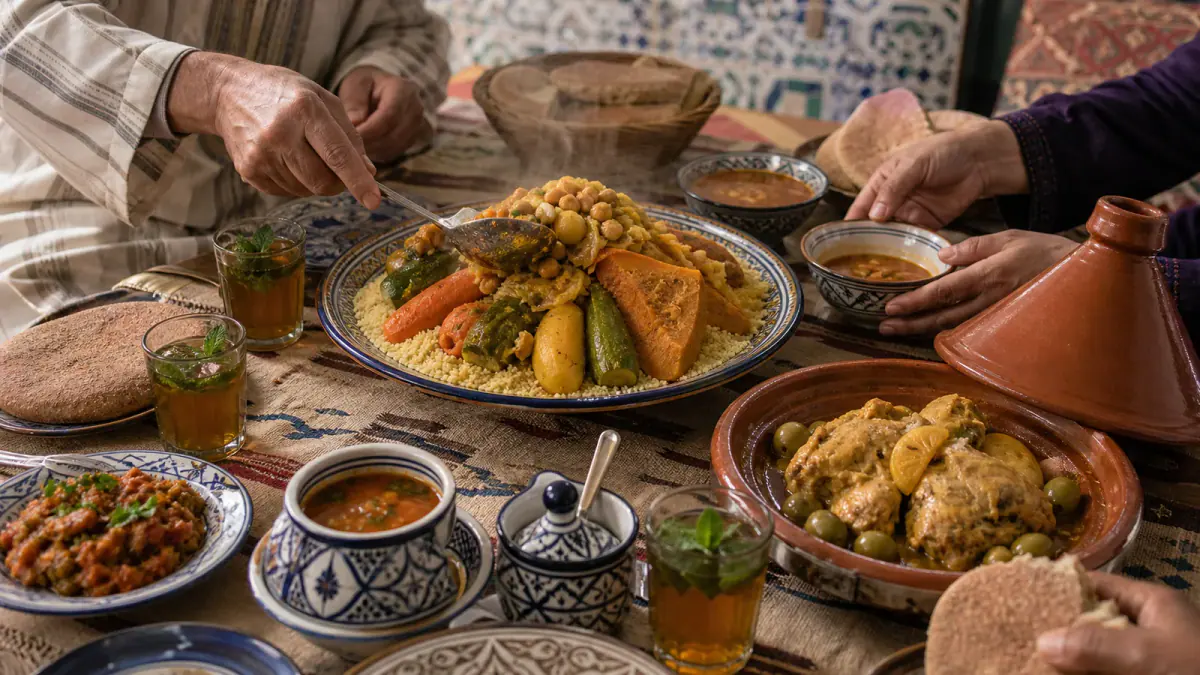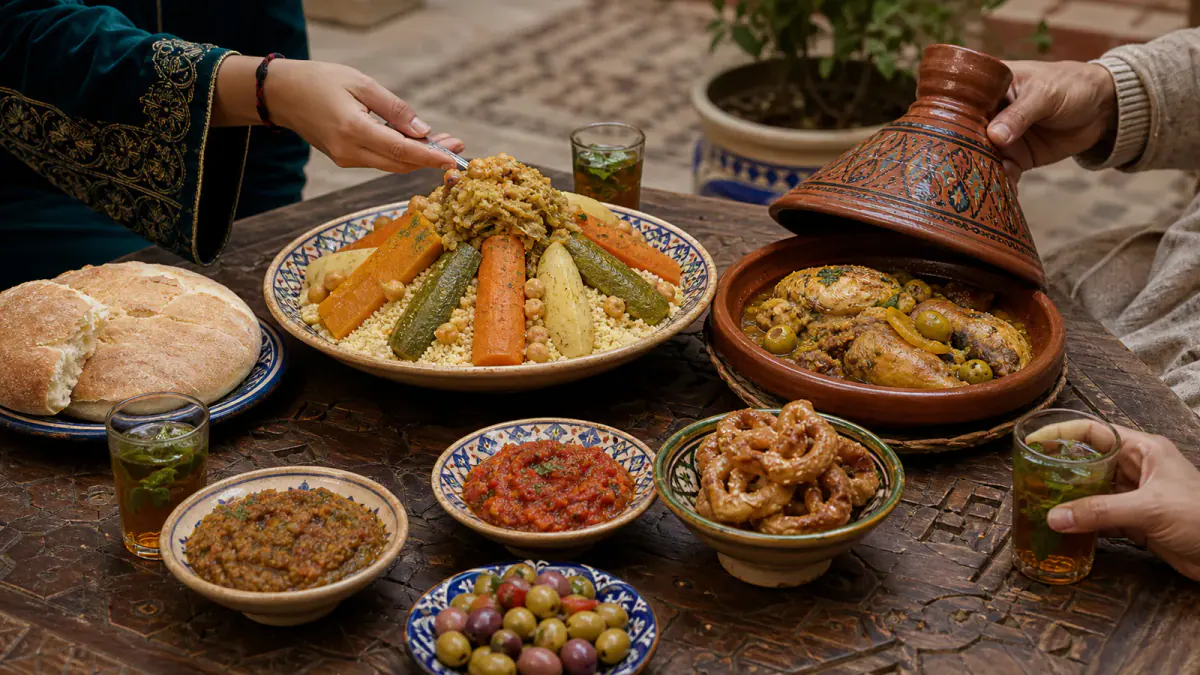
Moroccan food is not one flavour and it is not simply “spicy.” It is a cuisine of contrasts: preserved lemon against rich chicken, cinnamon in a savoury meat dish, fresh herbs over slow-cooked pulses, and crisp bread used to collect a deeply reduced sauce.
For a first taste, order chicken tagine with preserved lemon and olives, a properly steamed couscous, a bowl of harira, one local street snack and mint tea. Then go beyond the familiar names. Morocco’s most revealing meals often come from a neighbourhood grill, a family-run lunch room, a bakery window or a dish associated with one city.
This guide explains what Moroccan cuisine tastes like, which dishes to try, how food changes by region and how to eat with confidence during a trip.
What is Moroccan food?
Moroccan cuisine developed through the country’s Amazigh foundations and centuries of Arab, Andalusian, Jewish, Mediterranean, Saharan and sub-Saharan exchange. The result is not a single fixed menu. Coastal cooking may centre on sardines, while an inland family meal may feature lamb, vegetables and bread; Fes and Marrakech also claim distinctive ceremonial and city dishes.
The Moroccan National Tourist Office identifies couscous, tagine, pastilla, mrouzia and rfissa among the country’s emblematic dishes. Yet the character of the cuisine is just as visible in techniques: hand-rolling and steaming couscous, preserving lemons, baking bread in communal ovens, grinding spice blends and cooking patiently over low heat.
The flavours to expect
Moroccan food tends to be aromatic rather than aggressively hot. Common building blocks include:
- cumin, ginger, turmeric, paprika and black pepper;
- coriander and parsley used generously as fresh herbs;
- saffron in selected regional and celebratory dishes;
- cinnamon with meat, fruit or pastry;
- preserved lemon for salty citrus depth;
- green and purple olives;
- onions cooked slowly into sauces;
- dried fruit, honey or sugar in sweet-savoury combinations;
- toasted almonds, sesame and orange-blossom water.
Ras el hanout is not one universal recipe. It means a spice merchant’s house blend, and its ingredients and balance vary. Likewise, not every tagine contains the same “Moroccan spices.” The protein, season, region and household determine the seasoning.
Essential Moroccan dishes at a glance
| Dish | What it is | When to try it |
|---|---|---|
| Tagine | Meat, fish or vegetables slowly cooked in a shallow clay vessel with a conical lid | Lunch or dinner |
| Couscous | Hand-rolled semolina steamed until light, then served with broth, vegetables and sometimes meat | Traditionally Friday lunch; also restaurants |
| Harira | Tomato-based soup with pulses, herbs and often small pasta or flour thickening | Evening, especially during Ramadan |
| Pastilla | Crisp layered pastry combining savoury filling, almonds and warm sweet spice | Celebration meal or traditional restaurant |
| Rfissa | Chicken, lentils and fenugreek over shredded trid pastry or msemen | Family and celebratory meals |
| Tanjia | Marrakech-style meat cooked slowly in an earthen jar | Marrakech lunch |
| Mechoui | Very slowly roasted lamb | Markets, specialist restaurants and celebrations |
| Bissara | Thick split-pea or broad-bean soup, usually finished with olive oil and cumin | Inexpensive breakfast |
| Msemen | Layered square flatbread cooked on a griddle | Breakfast or tea |
| Grilled sardines | Whole or stuffed sardines, grilled or fried | Coastal towns and market grills |
For a dish-by-dish introduction with more detail, see our guide to 10 traditional Moroccan dishes. This page stays broader: it helps you understand the cuisine and choose well across a full trip.
Tagine is a cooking method, not one recipe
A tagine is both the clay cooking vessel and the dish prepared inside it. Its conical lid returns condensed steam to the food, allowing ingredients to cook gently with relatively little added liquid. In home cooking, the pot may sit over charcoal or a low gas flame; restaurants also use other heat sources and sometimes transfer food into a decorative tagine for serving.
Popular combinations include:
- chicken with preserved lemon and olives;
- lamb or beef with prunes, almonds and sesame;
- kefta meatballs in tomato sauce, sometimes finished with eggs;
- fish with chermoula, peppers and potatoes;
- seasonal mixed vegetables;
- peas and artichokes when in season.
A good tagine should have tender ingredients and a concentrated sauce, not a bowl full of thin liquid. Bread is the natural accompaniment. If a restaurant has a very long list of tagines, ask which ones are actually cooking; many need to be started well before you order.
Couscous is technique, tradition and a shared meal
Authentic couscous is not made by pouring boiling water over instant grains. Semolina is moistened, rolled and steamed—often several times—until each grain is separate and light. It is then arranged with vegetables, chickpeas, broth and, depending on the household, lamb, beef or chicken.
Friday couscous after communal prayer remains an important rhythm for many families, although visitors can find it on other days. Some places serve seven-vegetable couscous; others make sweet tfaya with caramelised onions, raisins and cinnamon. Regional versions may use fish or different grains and garnishes.
In 2020, UNESCO inscribed the knowledge and practices surrounding couscous, in a joint nomination by Morocco, Algeria, Mauritania and Tunisia. The inscription focuses not on ownership of a recipe, but on transmitted skills and the dish’s connection to sharing and togetherness.
Soups, salads and bread are part of the main story
It is easy to focus on centrepiece dishes and miss the everyday foundations of Moroccan eating.
Harira combines tomatoes, chickpeas or lentils, fresh herbs and varying additions such as meat, vermicelli or flour thickening. During Ramadan it commonly helps break the fast alongside dates and sweets, but it is available year-round in many simple restaurants.
Moroccan “salads” may be cooked, warm or room temperature. Look for zaalouk made with aubergine and tomato, taktouka with peppers and tomato, carrots seasoned with cumin, marinated olives and fresh chopped salads. Several small plates with bread can make an excellent light lunch.
Khobz, the round daily loaf, is used to scoop food from a shared dish. Other breads include flaky msemen, hole-speckled baghrir pancakes, semolina harcha and regional loaves. Bread is not decorative; it is a basic eating utensil and a central part of the meal.
Moroccan street food worth trying
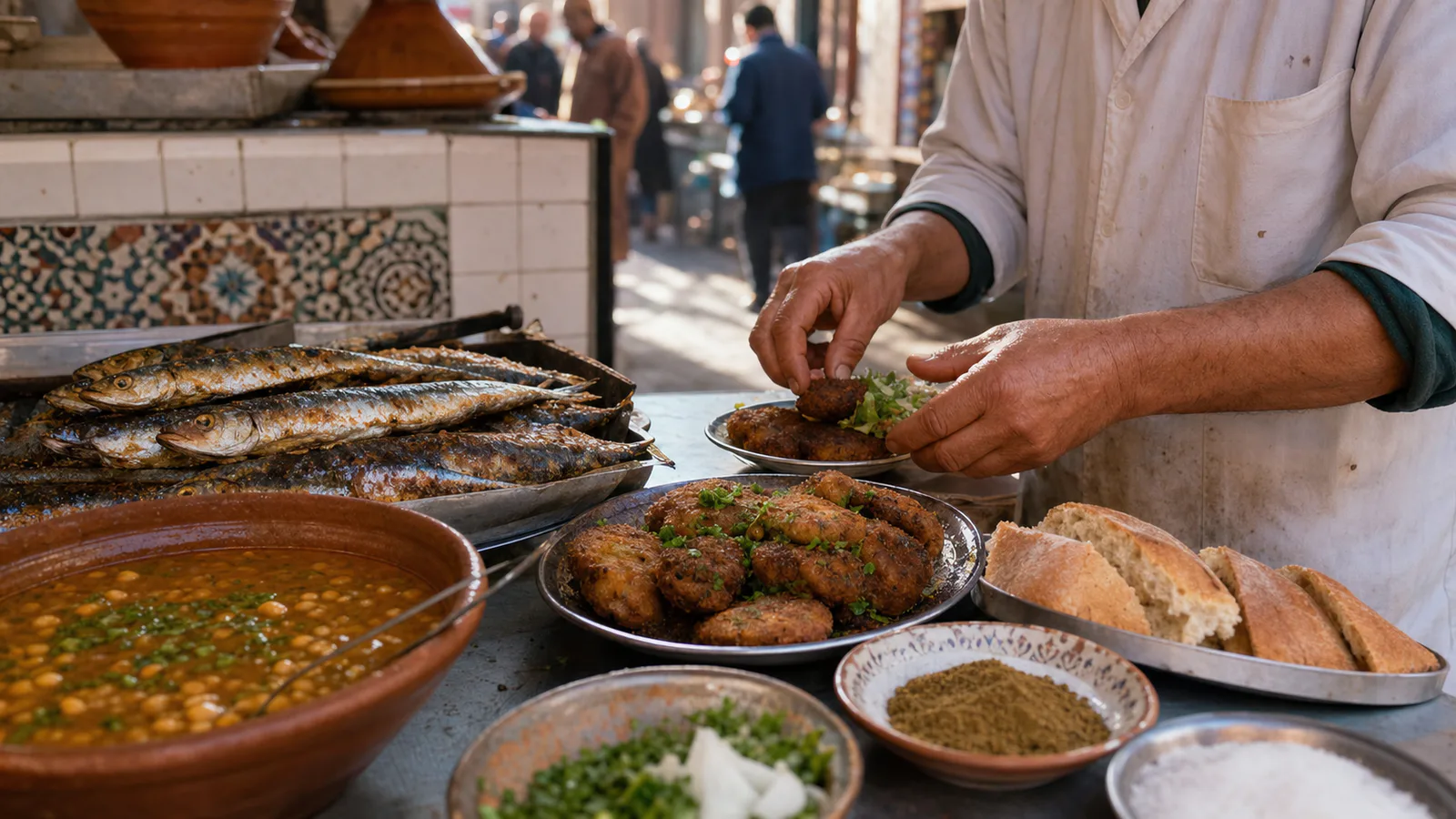
Street food varies more by neighbourhood and time of day than a tourist checklist suggests. Morning stalls may sell msemen or bissara. Near lunch, you might see sardines, skewers and potato fritters. Harira, snails and grilled foods become more visible toward evening in busy areas.
Good first choices include:
- maakouda: crisp potato cakes, eaten alone or tucked into bread;
- brochettes: small seasoned meat skewers grilled to order;
- sardines: grilled whole or stuffed with chermoula and fried;
- bissara: inexpensive pulse soup with cumin, olive oil and bread;
- msemen: layered griddle bread served plain, with honey or filled;
- sfenj: airy Moroccan doughnuts, best when freshly fried;
- harira: a filling bowl rather than just a restaurant starter;
- roasted nuts and chickpeas: simple snacks sold in paper cones.
Choose stalls with steady local turnover and food cooked in front of you. A busy counter is not a guarantee, but it is usually more informative than an empty stall displaying food for hours. Check the price before ordering when it is not posted, especially for fish sold by weight.
What to eat in each Moroccan region
Marrakech
Look for tanjia marrakchia, meat seasoned and sealed in an earthen jar for slow cooking. The city also has evening grills and soup stalls, particularly around its busy market areas. High-traffic squares are atmospheric, but quieter neighbourhood restaurants may offer a calmer meal and clearer prices. Pair your food plans with our Marrakech travel guide.
Fes
Fes is known for refined sweet-savoury cooking, pastilla, preserved foods, pastries and dishes connected to old urban households. The medina offers everything from tiny snack counters to elaborate riad dining. Reserve at least one traditional meal, then balance it with simple local lunches.
Essaouira and the Atlantic coast
Choose fish according to the day’s catch rather than insisting on one species. Sardines, sole, sea bream, calamari and shellfish may appear depending on place and season. Confirm whether the displayed price is per portion or per kilogram before the fish reaches the grill. Our Essaouira food guide places the harbour and markets within a fuller visit.
Agadir and the Souss
The Souss region is closely associated with argan oil and amlou, a spread made from almonds, culinary argan oil and honey. It appears at breakfast with bread and is worth tasting from a producer or reputable food shop. Agadir also has strong seafood and produce markets; use our Agadir travel guide to plan the rest of the stay.
Northern Morocco
Tangier, Tetouan and Chefchaouen reflect Mediterranean and Andalusian connections in pastries, seafood and lighter vegetable dishes. In the Rif, goat cheese is another regional product to look for.
Desert and oasis regions
Dates, bread, couscous, meat dishes and tea take on local forms across the southeast. Tourism camps sometimes serve a simplified national menu, so a meal in an oasis town or family guesthouse may reveal more regional character than an isolated camp buffet.
Mint tea, coffee and Moroccan sweets
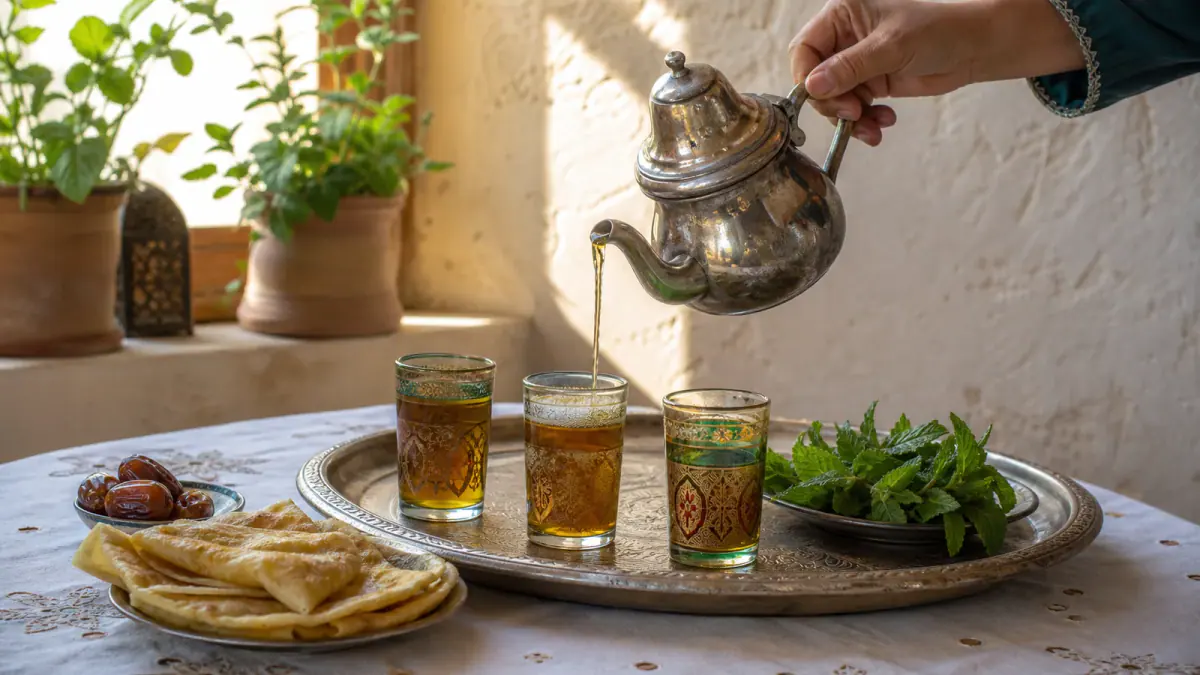
Moroccan mint tea usually combines green tea, fresh spearmint and sugar. It is hospitality, a pause in the day and often the beginning or end of a conversation. Accepting one glass does not require drinking several, and it is fine to ask for less sugar when tea is being prepared for you. For the method and etiquette, read our guide to making Moroccan mint tea.
Coffee is widely available too. A café noir is espresso-style; nous-nous is roughly half coffee and half milk and is especially common in urban cafés.
Sweets often lean on almonds, sesame, honey, dates and orange-blossom water:
- chebakia, sesame dough folded, fried and coated in honey;
- ghriba, crumbly round biscuits in several flavours;
- kaab el ghazal, delicate crescent pastries filled with almond paste;
- sellou, a dense toasted flour, almond and sesame mixture;
- briouat, small pastry triangles that can be sweet or savoury.
Chebakia and sellou are strongly associated with Ramadan, while almond pastries often appear at weddings, Eid celebrations and family occasions. Bakeries sell them year-round in many cities.
How a shared Moroccan meal works
At home or in a traditional restaurant, a tagine or couscous may arrive as one central platter. Wash your hands before eating. If everyone is using bread rather than individual utensils, eat from the section directly in front of you instead of reaching across the dish. Use a small piece of bread to pinch food and sauce.
The host may place good pieces of meat or vegetables in front of a guest as a gesture of generosity. Meals can move slowly, with conversation and tea as part of the experience. Follow your host’s rhythm rather than treating the shared plate like a race.
Many modern restaurants provide individual plates and cutlery, so there is no need to perform “traditional” etiquette when the setting clearly uses another style.
Practical ordering tips for travellers
- Ask for the day’s speciality. A short answer often leads to fresher food than choosing from a huge menu.
- Order slow dishes early. A truly cooked-to-order tagine can take time.
- Clarify fish prices. Ask whether the number is per plate, item or kilogram.
- Learn useful words. Bla lham means without meat; bla sokkar means without sugar, although dietary details deserve fuller clarification.
- Mention allergies clearly. Do not assume a dish is free of nuts, gluten or another allergen because the ingredient is not visible.
- Carry cash for small stalls. Neighbourhood counters may not accept cards.
- Try different settings. Combine one traditional restaurant with a bakery, market grill, breakfast café and family guesthouse.
Vegetarian travellers can eat well, but “vegetable tagine” does not always guarantee that meat stock or shared cooking surfaces were avoided. Explain your needs rather than relying only on the dish name. Vegans should also ask about butter, honey and egg.
A simple one-day Moroccan food plan
If you have only one day, this sequence gives a better overview than ordering three heavy restaurant meals:
- Breakfast: msemen or harcha with amlou, olives, cheese and tea or coffee.
- Mid-morning: seasonal fruit or fresh juice from a clean, busy shop.
- Lunch: Friday couscous if available; otherwise a regional tagine with salads and bread.
- Afternoon: mint tea and one almond or sesame pastry.
- Early evening: harira, maakouda or grilled sardines from a high-turnover counter.
- Dinner: a lighter grill, vegetable dish or shared plates rather than repeating another large tagine.
This is a tasting framework, not a strict national routine. Moroccan households, cities and individual schedules differ widely.
Frequently asked questions
What is the most famous food in Morocco?
Tagine and couscous are the best-known internationally. Couscous carries particularly strong family and Friday traditions, while tagine describes many different slow-cooked dishes rather than one recipe.
Is Moroccan food spicy?
It is usually richly spiced but not necessarily hot with chilli. Cumin, ginger, turmeric, paprika, cinnamon, herbs, preserved lemon and saffron build aroma and depth. Harissa may be served separately.
What is Morocco’s national dish?
Couscous is commonly described as Morocco’s national dish, but no single plate represents every region. Its preparation and social meaning are shared across the wider Maghreb, as reflected in the multinational UNESCO inscription.
What should a first-time visitor eat?
Start with couscous, chicken tagine with preserved lemon and olives, harira, zaalouk, fresh bread, one street snack, mint tea and a local pastry. Add seafood on the coast or a city speciality such as tanjia in Marrakech.
Is it easy to find vegetarian Moroccan food?
Yes, but communicate clearly. Vegetable tagines, couscous, cooked salads, bissara and breads are common; ask whether broth, meat, butter or eggs are used if you avoid them.
Do Moroccans eat with their hands?
Many shared meals are eaten with the right hand and bread, while utensils are also normal in restaurants and homes. Follow the setting and eat from your side of a communal dish.
The best way to understand Moroccan cuisine
Do not judge Moroccan food by one hotel buffet or one rushed medina dinner. Taste a slow-cooked dish, a steamed grain, a soup, fresh bread, cooked salads, a market snack and tea. Ask what belongs to the city you are visiting.
That combination reveals the heart of Moroccan cuisine: careful technique, regional variation, generous hospitality and food designed to be shared.