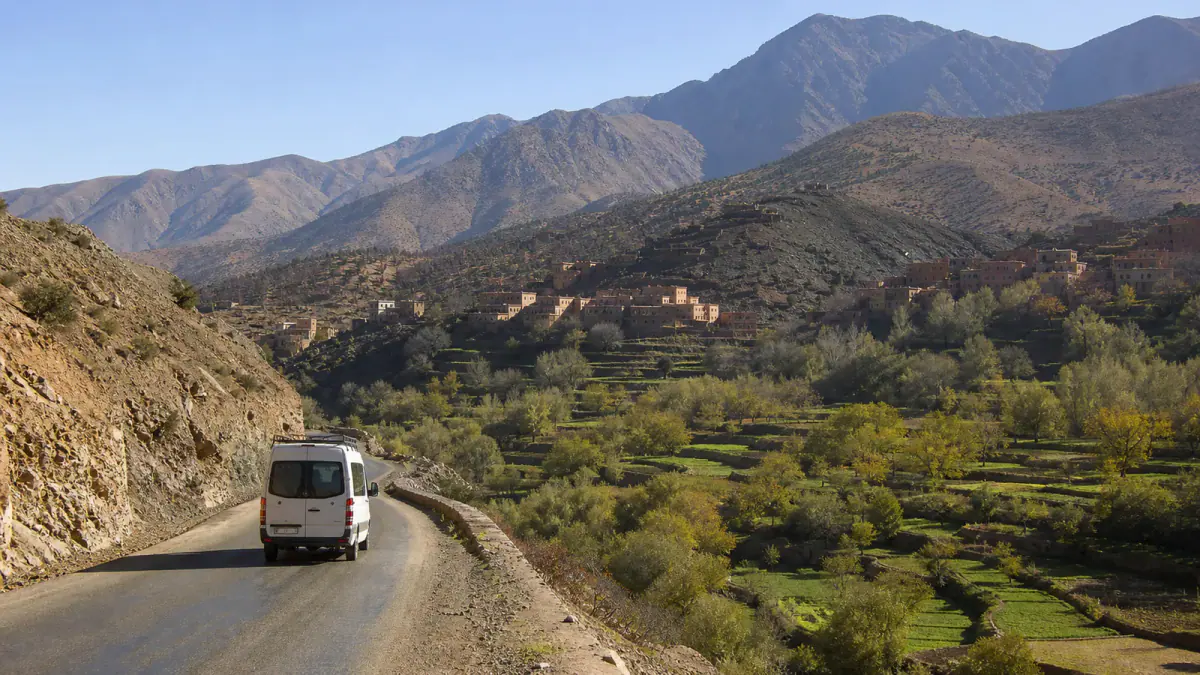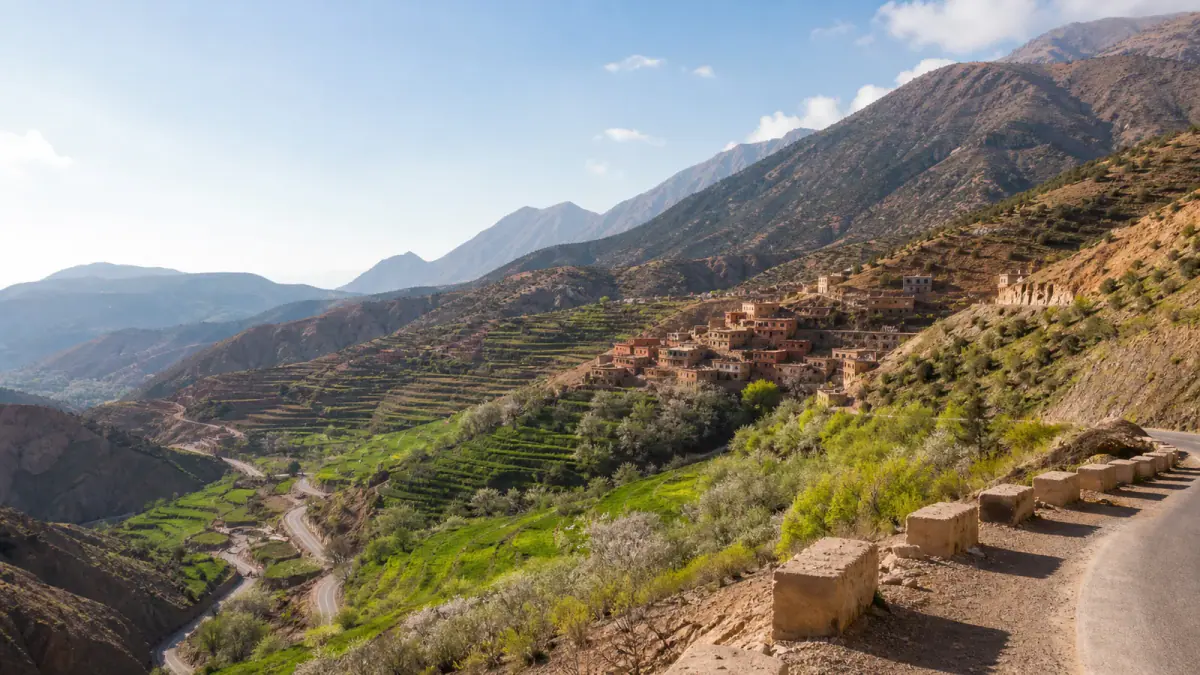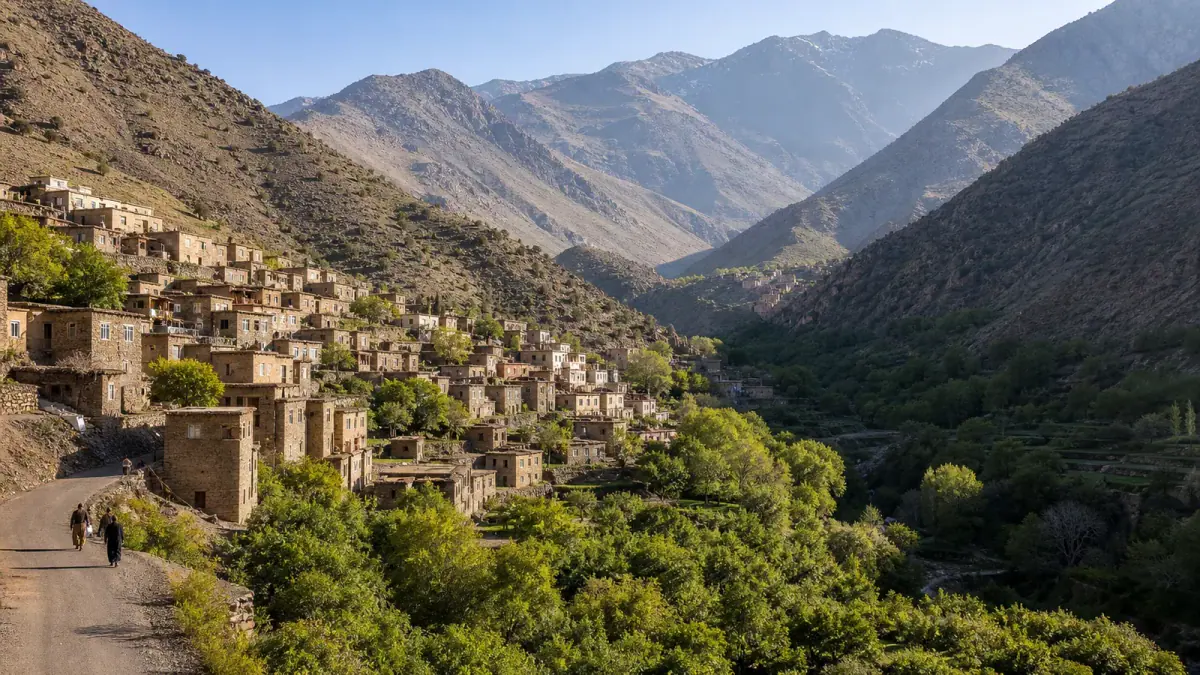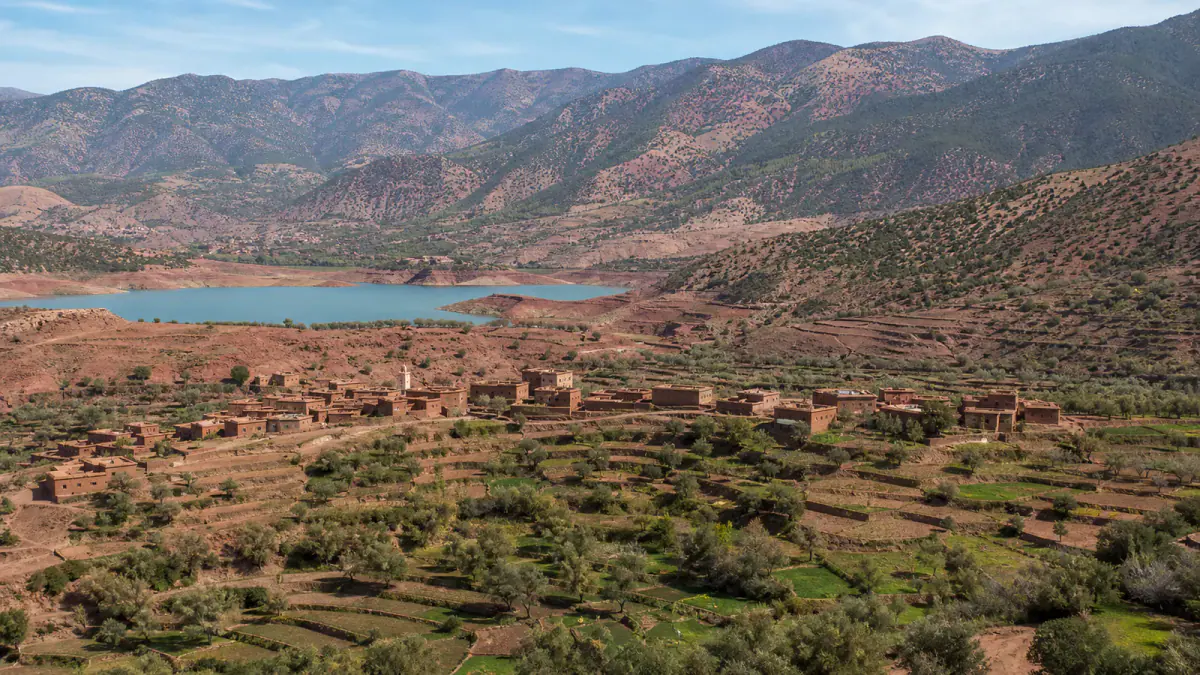
Ouirgane Valley is a quieter High Atlas escape southwest of Marrakech, known for red-earth hills, olive groves, cultivated terraces, reservoir views and small villages rather than a single headline attraction. It suits travelers who want a gentle walk, a guesthouse meal and an unhurried night in the mountains without treating the visit as preparation for a summit.
The valley can be visited in a day, but one or two nights reveal its real advantage: silence after the excursion vehicles leave, cooler walking hours, and enough time to adapt a route to weather and energy. Ouirgane is not as dramatic as the upper ridges around Imlil, nor as busy as parts of Ourika. That difference is the reason to choose it.
This page focuses only on Ouirgane. For a national comparison of the High, Middle and Anti-Atlas, read our Atlas Mountains regions guide.
Ouirgane Valley at a Glance
| Question | Practical answer |
|---|---|
| Best for | Slow travel, gentle walks, guesthouse stays and a quiet break from Marrakech |
| Typical stay | One or two nights; possible as a full-day trip |
| Main activities | Valley walks, village paths, olive-grove scenery, meals and reservoir viewpoints |
| Hiking level | From easy strolls to longer guided routes; surface and ascent still matter |
| Useful base | A lodge or guesthouse with confirmed road access and meals |
| Best broad seasons | Spring and autumn, with live conditions checked before departure |
The official Marrakech tourism listing places Ouirgane about 60 kilometers south of Marrakech and highlights its orchards, cultivated fields and walking opportunities. See the official Ouirgane overview for destination context, while confirming practical details directly with your host.
Why Choose Ouirgane Instead of Imlil or Ourika?
Choose Ouirgane when rest matters as much as scenery.
Imlil is the stronger choice for high-mountain walking, Toubkal access and a larger trekking infrastructure. It also includes steeper paths and more summit-oriented traffic. Our Imlil guide explains that valley in detail.
Ourika is convenient for a lively river day and the Setti Fatma area. It can be busy, and the waterfall route is less gentle than some advertisements imply.
Ouirgane offers a softer landscape and a more natural overnight rhythm. You can walk for two hours, have lunch, read, and take another short stroll without feeling that the day failed because you did not reach a named viewpoint.
The comparison is not about which valley is objectively best. It is about matching the destination to your desired pace.
Is Ouirgane Worth Visiting?
Ouirgane is worth visiting if you enjoy landscape, rural accommodation and quiet time. It is less suitable for someone who wants a dense list of monuments, nightlife or a guaranteed dramatic hike.
A satisfying visit might contain only:
- one guided valley walk;
- a long lunch at the guesthouse;
- time overlooking fields or water;
- tea and conversation;
- a cool morning before returning to Marrakech.
That apparent simplicity is the destination’s strength. Ouirgane works poorly when sold as five rushed photo stops.
Day Trip or Overnight?
Ouirgane as a day trip
A day trip works when your Marrakech schedule is fixed. Leave early, complete one walk before the warmest hours, eat lunch and return with daylight.
Ask the driver or operator for the exact village, walk duration and stops. “Ouirgane day trip” can describe anything from a restaurant visit to several hours on foot.
The weakness of a day trip is the road deadline. You see the valley in its busiest central hours and may spend nearly as much time transferring as walking.
One night
One night is the best first choice. Arrive before lunch or early afternoon, take an orientation walk, eat at the property, then use the cooler morning for the main route.
This schedule is forgiving. If afternoon weather changes, the morning remains available.
Two nights
Two nights suit slow travelers, families, writers, photographers and mixed-fitness groups. Use one day for a longer guided route and the other for a short village walk, garden visit or rest.
Do not automatically add more driving. Staying in one valley can provide more depth than collecting Ourika, Imlil and Ouirgane in one loop.
Getting to Ouirgane From Marrakech
There is no rail journey into the valley. Most visitors use a private transfer, arranged excursion, grand taxi arrangement or rental vehicle.
Private transfer
A prearranged transfer is simplest for an overnight stay. Confirm:
- pickup address and time;
- whether the price is per vehicle;
- luggage allowance;
- final road access to the property;
- return date and meeting point;
- waiting charges if stops are added;
- the plan if weather affects the road.
Have the accommodation send a map pin and driver instructions. A property described as “Ouirgane” may sit outside the center or above a final track.
Organized day trip
Ask for the actual itinerary before paying. A responsible description should identify the walk, meal arrangement, guide, group size and excluded costs.
Avoid an operator that cannot explain where you will walk or treats compulsory shopping as a cultural visit.
Rental car
Driving gives flexibility, but mountain-road conditions can change. Use daylight, avoid relying on a city driving estimate, and confirm parking at the accommodation.
The current UK Morocco travel advice notes that secondary and mountain roads can be especially hazardous in poor weather. Read the official road and Atlas safety guidance and your own government’s advice.
What to Do in Ouirgane
1. Take a Guided Valley Walk
The most useful first activity is a locally guided walk matched to your group. A route may pass orchards, fields, village edges and reservoir viewpoints, but access and conditions are not fixed.
Agree on:
- walking time;
- approximate ascent and descent;
- surface type;
- shade and rest;
- water requirements;
- whether toilets exist;
- turnaround options.
“Easy” is not a measurement. A rocky mule path can challenge someone comfortable on a flat five-kilometer city walk.
2. Understand the Reservoir Landscape
Water is part of the Ouirgane landscape, but reservoir level changes with rainfall, season and management. Do not book a room or route based on one old image that shows a particular shoreline.
View water from established paths and public viewpoints. Avoid walking across exposed sediment, approaching infrastructure or assuming a dry-looking channel is safe after rain.
Heavy rain can produce rapid flooding in mountain areas. The safest plan is to ask the host and guide about recent conditions rather than judging only the sky above the guesthouse.
3. Walk Through Olive and Cultivated Landscapes
Olive trees, orchards and small fields are working land. Stay on paths, close gates and do not pick fruit. A guide can explain seasonal agriculture and water use without turning private farms into attractions.
The landscape changes through the year. Spring green, summer dryness and autumn harvest activity create different visits; none should be promised on an exact date without local confirmation.
4. Make Lunch Part of the Day
A guesthouse meal can be more meaningful than another roadside stop. Ask whether lunch needs advance ordering and what dietary needs the kitchen can accommodate.
Menus depend on the household or property. Tagine, salads, bread, soup and couscous may appear, but do not demand a supposedly “authentic” set menu regardless of season and supplies.
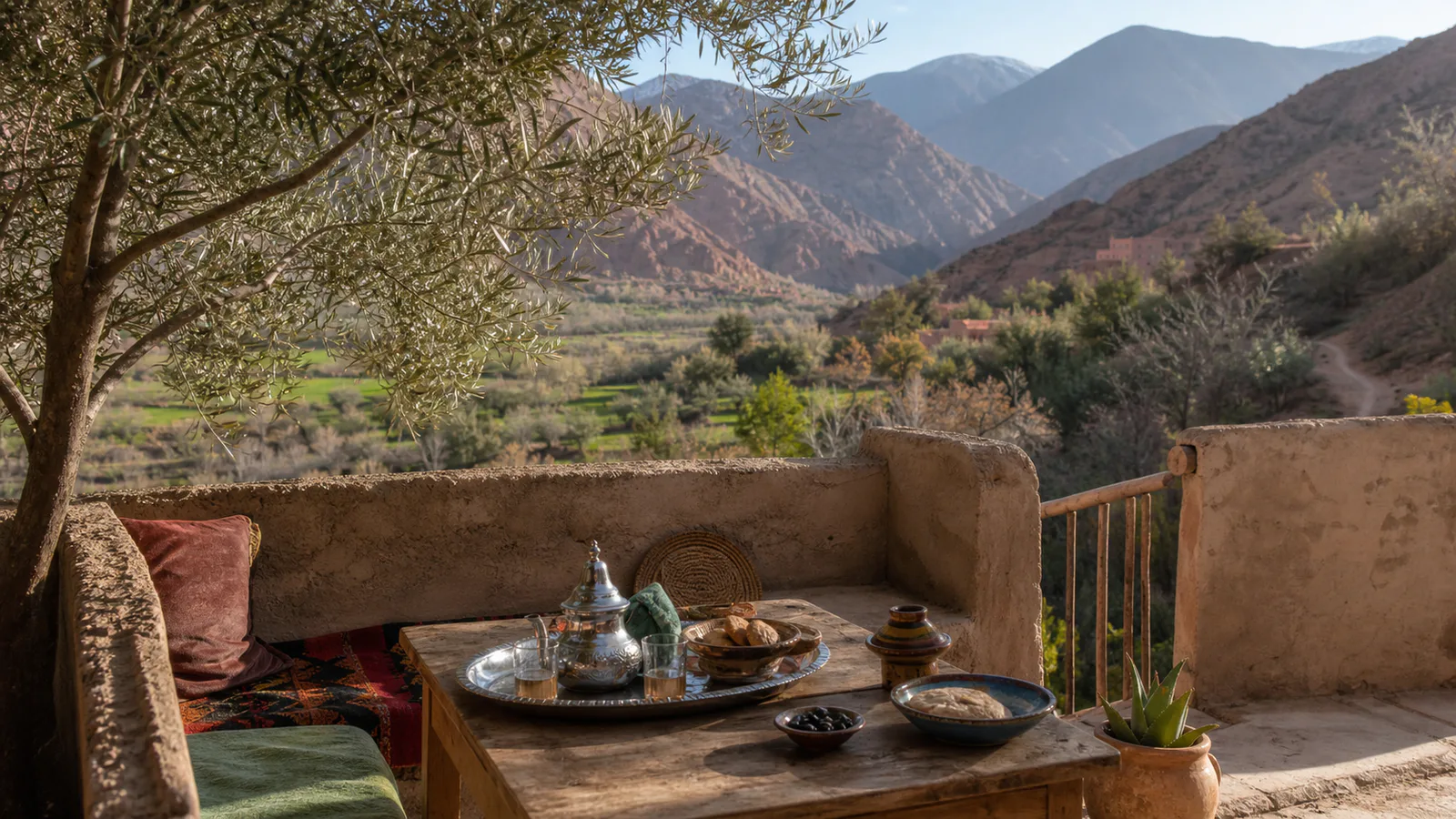
An illustrative Ouirgane-style guesthouse terrace; it does not depict or advertise a specific property.
5. Visit a Garden or Local Producer Carefully
The official tourism listing mentions aromatic and medicinal plants in the Ouirgane area. Programs, opening and access can change. Confirm directly rather than arriving because an old itinerary names a garden.
At a cooperative or producer:
- ask whether the visit has a fee;
- understand whether purchases are optional;
- check product labeling;
- avoid medical claims about herbs or oils;
- pay for an actual service or product rather than photographing workers without consent.
6. Watch the Light Without Chasing a “Sunset Spot”
Ouirgane’s ridges and valley orientation mean sunlight leaves parts of the landscape at different times. Ask the property where evening light is visible in the current season.
Do not enter fields or climb an unstable slope for an unobstructed image. A terrace, established path or road viewpoint is enough.
Easy Ouirgane Walks for Families and Older Travelers
Ouirgane can suit a mixed group, but destination labels do not guarantee accessibility.
Request a route with:
- limited ascent;
- firm surface;
- a short vehicle transfer;
- regular shade;
- seating or a lunch stop;
- a turnaround at any point;
- no exposed edges or river crossing.
Families should ask the transfer provider about child restraints. Guesthouses may have stairs, unprotected terraces or pools, so check the exact property rather than assuming rural accommodation is childproof.
Travelers with mobility needs should request photographs or a description of the path from parking to room, dining area and garden. “Ground floor” can still involve outdoor steps.
Our Marrakech family guide includes broader transport and child-safety questions that also apply here.
Where to Stay
Ouirgane accommodation ranges from simple guesthouses to polished lodges. Compare access and service, not only views.
Village or road-accessible property
Best for shorter stays, luggage and travelers who want simple pickup. Ask about road noise and walking routes from the door.
Secluded lodge
Best for quiet and spending most of the stay on site. Confirm meals, transport, final track condition and whether walking without a guide is possible.
Family guesthouse
Best for a personal atmosphere and local meals. Facilities can be simpler, so ask about private bathroom, heating, hot water, payment and dietary needs.
Booking questions
- Can a normal car reach the entrance?
- Is parking secure and included?
- Are dinner and breakfast served?
- Is the bedroom heated in winter and cooled in summer?
- Does Wi-Fi reach the room?
- Is card payment accepted?
- Can the host arrange an identified local guide?
- What happens if road conditions prevent arrival?
- Has current access changed during reconstruction?
Earthquake Recovery and Responsible Visiting
The September 2023 earthquake caused severe damage and loss across parts of the High Atlas and Al Haouz. Recovery has not followed one identical timetable in every community.
Do not assume a pre-earthquake route, property or road description remains accurate. Contact the host close to travel and ask specifically about current access. Avoid entering damaged structures or treating reconstruction as a photography subject.
Tourism can support local employment, but only when businesses and residents are ready to receive visitors. Book directly where practical, use local guides, pay agreed rates and respect closures.
Best Time to Visit Ouirgane
Spring
Spring can bring greener fields and comfortable walking, but rain can affect paths and watercourses. Check recent conditions.
Summer
The valley may feel cooler than Marrakech, yet direct sun remains strong. Walk early, carry water and choose shade. A guesthouse pool is not a substitute for heat planning.
Autumn
Autumn often offers a good balance for walking and an overnight stay. Agricultural activity and landscape color depend on timing.
Winter
Nights can be cold, and mountain weather can affect roads. Ask whether the bedroom itself is heated. A fireplace in a common room does not answer that question.
Use the Morocco General Directorate of Meteorology for current forecasts, then ask your host about local road and path conditions. Our Morocco weather guide provides broader seasonal context.
What to Pack
For a gentle one-night visit:
- shoes with tread;
- daypack;
- water and snacks;
- sun hat, sunglasses and sunscreen;
- warm or wind layer;
- rain protection when relevant;
- personal medicine;
- power bank and offline booking details;
- cash in small denominations;
- reusable bag for litter.
Add condition-specific gear for a longer hike. Do not copy a Toubkal equipment list for a village stroll—or assume village shoes are enough for a steep trail.
Food, Cash and Connectivity
Arrange meals ahead if the property is isolated. Tell the kitchen about allergies and clarify cross-contact rather than relying on a single translated ingredient.
Carry cash for guides, meals, tips and small purchases. Do not expect a convenient ATM or card terminal at every stop.
Mobile coverage and Wi-Fi vary by exact property and weather. Download maps, insurance contacts and the host’s phone number before departure.
Respectful Village Travel
Ouirgane is an inhabited valley.
- Ask before photographing people.
- Keep drones packed unless you hold the required Moroccan authorization.
- Stay out of private courtyards and cultivated plots.
- Dress with village context in mind.
- Keep noise low near homes.
- Do not distribute gifts or sweets casually to children.
- Carry waste out.
- Use water thoughtfully.
- Agree guide and transport prices before the service.
Hospitality does not make a home public. A respectful visitor notices where access is invited and where it is not.
Sample Ouirgane Itineraries
One-day escape
Leave Marrakech early, meet a guide for a two-hour route, eat lunch, pause at an established viewpoint and return before dark. Keep shopping stops optional.
One-night slow stay
Arrive before lunch, settle in and take a short orientation walk. Use the next morning for a longer guided route, then eat before returning to Marrakech.
Two-night reset
Day one is arrival and rest. Day two includes the main walk and long lunch. Day three allows a garden, short village route or quiet morning before departure.
The two-night version is intentionally simple. Ouirgane is a place to reduce movement.
Common Planning Mistakes
Expecting an Imlil-style mountain panorama
Ouirgane’s appeal is its lower, softer valley landscape. Choose Imlil for a stronger high-mountain objective.
Calling every path accessible
Gentle does not necessarily mean step-free. Ask for exact surfaces and gradients.
Booking accommodation without meals or transport
An isolated lodge can become expensive or inconvenient if these are unclear.
Trusting an old reservoir image
Water level changes. Book for the valley experience, not a guaranteed shoreline.
Treating a day trip as five destinations
Ouirgane improves when walking, lunch and rest receive time.
Frequently Asked Questions
How far is Ouirgane from Marrakech?
The official tourism listing describes it as roughly 60 kilometers south of Marrakech. Driving time depends on pickup, traffic, road conditions and the final property access.
Can I visit without hiking?
Yes. Choose a reachable guesthouse, enjoy a meal and take a short guided stroll or viewpoint visit. Confirm vehicle access.
Is Ouirgane good for children?
It can be, with short routes, heat planning and appropriate transport restraints. Check pools, stairs, terraces and room setup at the actual accommodation.
Do I need a guide?
A guide is valuable beyond obvious village roads, especially when paths branch or recent conditions matter. Hire a professional appropriate to the planned route.
Can Ouirgane be combined with Imlil?
It is possible by road, but combining them in one day often produces more driving than experience. Give each valley its own day or stay.
Is the reservoir always full?
No. Water level varies, and no article should promise a particular view. Confirm recent conditions if the reservoir is central to your plans.
Final Takeaway
Ouirgane Valley is for travelers who want the Atlas without a summit agenda. Stay one night if possible, choose one guided route, verify road and property access, and let meals and quiet hours be part of the trip.
Its value is not the number of sights. It is the chance to enter a lived mountain landscape at a respectful pace, then leave without turning the valley into a backdrop for a rushed Marrakech excursion.