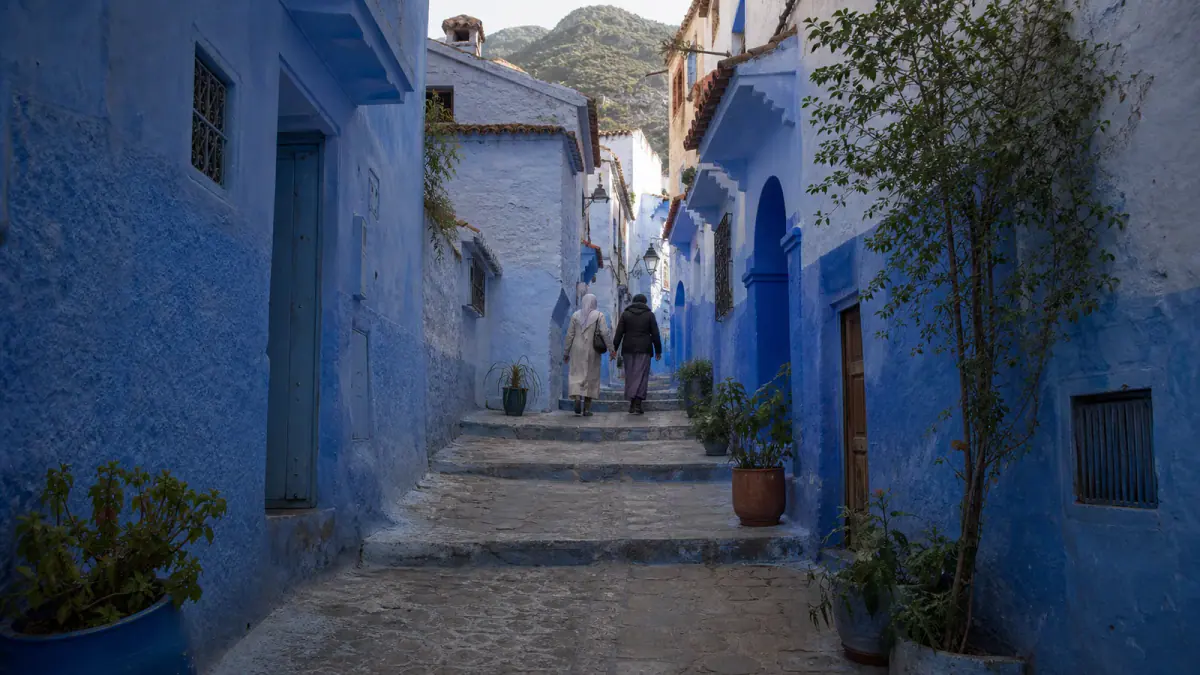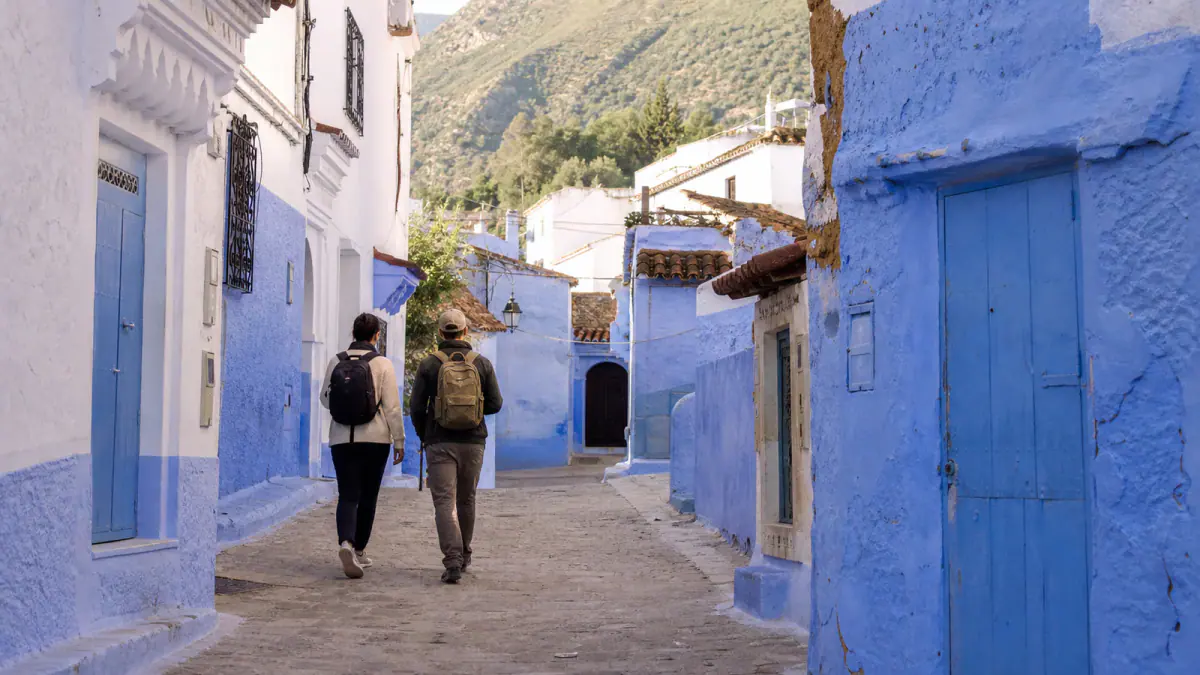
Chefchaouen is small enough to explore on foot but difficult to enjoy as a rushed photo stop. The blue medina climbs a Rif Mountain slope, buses arrive below the historic centre and the town becomes noticeably calmer after day visitors leave.
This guide handles the practical first-trip questions: how many nights to stay, how to arrive from Tangier or Fes, where to book a room, what fits into two days and when Akchour deserves a separate day. It treats Chefchaouen as a mountain town with residents, crafts and weather—not a blue outdoor studio.
Quick answer: Stay at least one night and preferably two. Arrive by bus or road transfer because Chefchaouen has no train station. Choose a room near the lower medina if luggage or stairs are a concern, explore the main medina and kasbah on day one, then use day two for a slower upper-town walk or a properly planned Akchour trip.
Chefchaouen Trip Planning at a Glance
| Decision | Best first-time choice |
|---|---|
| Minimum stay | 1 night |
| Better stay | 2 nights |
| Main arrival method | Bus, shared taxi or private transfer |
| Train station | None in Chefchaouen |
| Best convenient base | Lower medina / near a vehicle-accessible gate |
| Best atmospheric base | Inside the medina |
| Car needed in town? | No |
| Main walking challenge | Slopes, steps and polished paving |
| Nature extension | Akchour / Talassemtane National Park |
| Best town rhythm | Early morning and after day-trip groups leave |
The Moroccan National Tourist Office’s official Chefchaouen page places the medina, kasbah, Ras El Maa, crafts and surrounding mountain paths at the centre of a visit.
Is Chefchaouen Worth Visiting?
Yes, when the trip allows time for more than one midday circuit. The town offers:
- a compact medina with blue-washed streets;
- mountain light and changing views;
- the kasbah and central square;
- small-scale weaving, wool, wood and leather crafts;
- a relaxed evening compared with Morocco’s major cities;
- access to Rif landscapes and Talassemtane National Park.
The visual reputation creates the main risk: arriving with hundreds of saved photographs and spending the entire visit reproducing them. Chefchaouen becomes more interesting when you observe how the medina changes through the day and where ordinary town life continues beyond the most polished lanes.
It is not an untouched village. Tourism shapes shops, cafes, accommodation and street behavior. Visit with realistic expectations and the town still has a distinctive scale and setting.
How Many Days Do You Need?
Day Trip
A day trip from Tangier or Tetouan is possible. It gives you the central square, kasbah area, medina lanes and perhaps Ras El Maa.
The disadvantage is timing. You arrive with other groups, walk during the busiest hours and leave before evening. A road delay can reduce the useful visit significantly.
Choose a day trip when the wider route cannot spare a night—not because Chefchaouen itself needs only four hours.
One Night
One night is the minimum satisfying stay. Arrive around midday, explore after checking in, enjoy the evening and walk again before breakfast.
The early-morning contrast alone justifies sleeping over. Lanes are cooler, deliveries and school routines replace photo queues, and light reaches the walls differently.
Two Nights
Two nights provides the best first visit:
- arrival without panic;
- one full medina day;
- sunrise or early-morning walking;
- a quiet afternoon break;
- time for a short local walk or a separate nature outing.
If Akchour is a priority, two nights is the minimum and three may work better. A full hiking day should not be squeezed between a morning bus arrival and an evening departure.
How to Get to Chefchaouen
Chefchaouen is not connected to Morocco’s rail network. Most visitors arrive by intercity bus, shared taxi, private transfer or rental car.
From Tangier
Tangier is the most common gateway, especially for travelers arriving by ferry, flight or high-speed rail from the south. Road travel passes through Rif foothills and can feel winding near the final approach.
A bus is straightforward when its timetable matches your arrival. A private transfer helps families, groups, late arrivals and travelers with luggage or motion sensitivity.
Do not schedule a flight or ferry with a tight same-day road connection. Traffic and road conditions can change the journey.
From Tetouan
Tetouan is closer and makes a logical pairing. Shared road transport may be available, but departure points and fill-up procedures can vary.
If combining the two cities, spend enough time to treat Tetouan as its own destination rather than only a vehicle change.
From Fes
Fes–Chefchaouen is a popular bus route but still a substantial road journey. Book a direct service when possible and confirm the exact station.
Avoid planning a deep-medina checkout, long bus ride and international departure on the same day. Our first-trip Fes guide explains how luggage and gate access affect the morning before leaving.
Bus Booking
Use the current official operator website or station for schedules and tickets. Services can sell out on weekends, holidays and busy travel dates.
Before buying, verify:
- departure city and station;
- arrival station in Chefchaouen;
- baggage conditions;
- whether the journey is direct;
- cancellation or change rules;
- how early to arrive.
Screenshots of an old timetable are not reliable planning tools.
Shared Taxi
Shared grand taxis can connect regional cities and towns. They may leave when seats are filled and can involve a change.
Confirm:
- destination;
- price per seat;
- whether you are paying for extra seats;
- luggage arrangement;
- exact drop-off;
- expected vehicle change.
Use an authorized taxi and wear a seat belt where provided. Travelers who value fixed departure times may prefer a bus.
Rental Car
A car gives flexibility for a wider Rif route, but it is unnecessary inside Chefchaouen. Ask the hotel where legal parking is located and never assume a medina booking has door access.
Avoid late-night mountain driving when possible. The UK government’s current Morocco safety advice notes poor lighting and additional risk on secondary and mountain roads during bad weather.
Arriving at the Bus Station
The bus station sits below the medina. The final journey to accommodation may involve an uphill taxi ride followed by walking.
Send the hotel your arrival time and ask for:
- the best taxi drop-off;
- a map pin, not only a street name;
- the walking time from that point;
- help with heavy luggage;
- late check-in instructions.
The medina’s short map distances hide elevation. A five-hundred-meter walk can include steps and steep paving.
Pack so you can manage your own bag for at least a short climb. If mobility is limited, choose vehicle-accessible accommodation outside or at the lower edge of the medina.
Where to Stay in Chefchaouen
Lower Medina
The lower medina around the central access points is easiest for a first visit. Restaurants, Plaza Uta el-Hammam and taxi drop-offs are relatively convenient.
Choose it for:
- a one-night stay;
- heavy luggage;
- an early departure;
- limited climbing;
- easy evening meals.
The tradeoff is activity and potential noise. Ask whether the room faces the lane, square or internal courtyard.
Inside the Upper Medina
Upper lanes feel quieter and offer stronger rooftop views. They also require more climbing.
Choose the upper medina when:
- you travel light;
- stairs are not a problem;
- early photography matters;
- you value atmosphere over rapid taxi access.
Ask for the exact number of stairs from the nearest drop-off. “Panoramic” often means the final approach is steep.
Outside the Medina
Hotels and guesthouses outside the walls can provide parking, easier luggage handling and less lane noise. You trade immediate blue-street access for practical comfort.
This can be the better choice for:
- rental-car travelers;
- families with strollers;
- reduced mobility;
- late arrival;
- larger modern rooms.
Rooftop and Mountain Views
A rooftop view is valuable only when the property can be reached comfortably and the room itself meets your needs. Check heating, air conditioning, hot water and stair access before paying for the view.
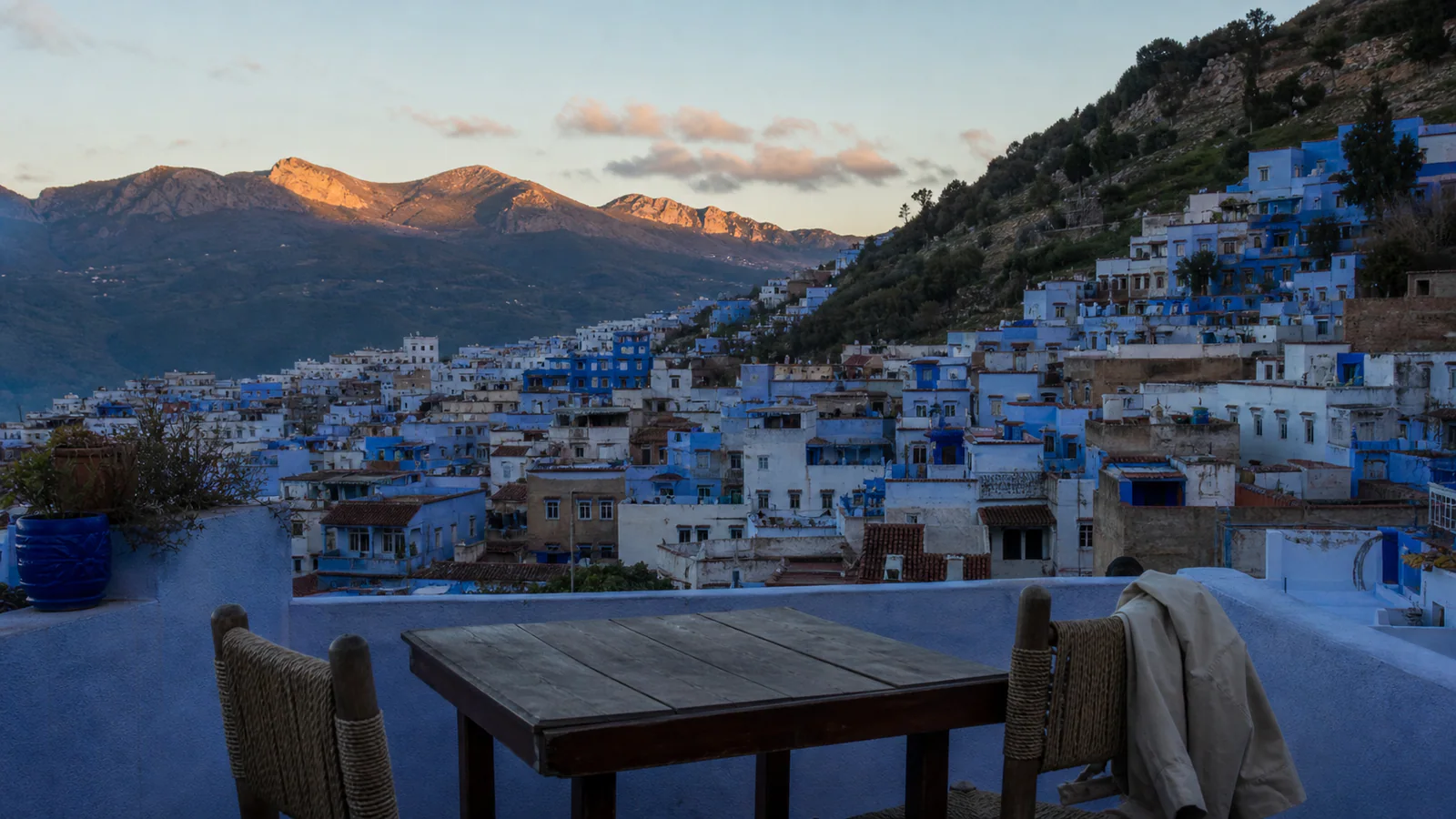
Mountain evenings can be cool outside summer. Traditional rooms may also feel colder than the forecast suggests.
A Practical Two-Day Chefchaouen Itinerary
Arrival Afternoon: Learn the Town
Check in, leave luggage and begin at Plaza Uta el-Hammam. The square gives you a reliable anchor before the lanes rise and split.
Use the afternoon for:
- the kasbah if open;
- a first medina circuit;
- Ras El Maa;
- a cafe break;
- an early dinner;
- finding the route back to the hotel before dark.
Do not immediately chase the highest viewpoint. Arrival day should build orientation.
Day One Morning: Main Medina and Kasbah
Start early in the lower medina and walk before shops fully open. Return toward the square when the kasbah or museum begins admitting visitors.
The tourism office’s Chefchaouen medina guide highlights the kasbah, its garden and collections of photographs, textiles and historic objects. Verify current hours locally because restoration and seasonal schedules can change.
After the kasbah, follow public lanes without trying to complete every color-coded pin. Use the square, mosque minaret and slope direction as anchors.
Day One Afternoon: Rest and Upper Lanes
Take a real lunch break. The steeper lanes feel harder after several hours, especially in heat.
In late afternoon, explore upper residential areas respectfully or follow our separate quiet Chefchaouen walking route. That page owns the detailed half-day route, Ras El Maa sequence, respectful photography stops and optional Spanish Mosque finish.
Return before the final descent becomes uncomfortable in fading light.
Day Two Option A: Slow Town Morning
Choose this option when travel continues later that day.
- breakfast;
- one craft-shopping focus;
- a final cafe;
- short view walk;
- early lunch;
- collect luggage and transfer to the station.
Do not add Akchour before an afternoon bus. Nature trips deserve a margin for transport and weather.
Day Two Option B: Akchour
Use a full day for Akchour when conditions, transport and your fitness are suitable. Start early and arrange both outbound and return travel.
Akchour is not one guaranteed waterfall photo. Water levels, trail conditions, heat and crowds vary. Ask locally about:
- the route currently open;
- recent rain;
- river crossings;
- walking time;
- return transport;
- food and water;
- whether a guide is recommended.
The official Chefchaouen nature page places Akchour within a wider protected Rif landscape. Treat it as an outdoor day, not an add-on attraction.
Main Places Without Overplanning
Plaza Uta el-Hammam
The central square is useful for orientation, meals and the relationship between medina, kasbah and mosque. Prices may be higher than in side streets, but location has value when you are tired.
Kasbah
The kasbah provides historical context and a green pause from the blue lanes. Check current access and allow enough time for the museum material rather than using it only as a viewpoint.
Blue Medina
Blue washing varies in shade, condition and extent. Some lanes are bright and freshly maintained; others show ordinary wear. That variation is part of a living town.
Ras El Maa
Ras El Maa sits toward the upper edge of the medina and provides a transition from dense lanes toward mountain water and paths. It can be busy later in the day.
Spanish Mosque View
The viewpoint across from town is popular near sunset. The route is exposed in places and returns after the light fades. Wear proper shoes, carry a light and avoid standing on unstable edges.
Photography Without Turning Homes Into Props
Chefchaouen’s visual fame creates difficult behavior: visitors blocking doors, arranging clothing on residential steps, photographing children and expecting residents to leave a frame.
Use these rules:
- ask before photographing a person;
- do not sit on private thresholds;
- keep doorways clear;
- avoid tripods in narrow working lanes;
- do not photograph inside open windows;
- move after taking a few frames;
- never pay or direct children to pose;
- respect a clear refusal.
Some decorated corners are maintained specifically for visitors and may request a small fee. Decide whether to participate before entering, and do not argue after using the setup.
Blue surfaces can fool camera white balance. Keep skin and neutral walls realistic rather than pushing every photograph toward electric cyan.
Food and Cafe Rhythm
Chefchaouen works well for simple meals and long pauses. Look for:
- Moroccan breakfast;
- soup and bread;
- tagines;
- salads;
- grilled dishes;
- goat cheese when locally available and safely stored;
- pastries and tea.
Not every restaurant serves every regional specialty daily. Ask what is freshly prepared rather than ordering from a giant laminated menu.
The central square is convenient, while side streets may offer quieter seating. A rooftop does not guarantee better food, so choose between view and meal quality honestly.
Our Moroccan dishes guide explains common menu terms and eating context.
Shopping and Crafts
The official medina guide identifies wool, weaving, wood and leather among Chefchaouen’s craft traditions. Look for material and workmanship rather than assuming every blue product was made locally.
Ask:
- where the item was made;
- what fiber, leather or wood was used;
- whether dye may transfer;
- how the piece should be cleaned;
- how long production takes.
For a higher-priced textile, inspect edges, weave consistency and finishing. Bargain calmly where appropriate, but do not turn an artisan’s time into entertainment when you have no interest in buying.
Shipping large purchases requires written dimensions, cost, carrier and responsibility for customs.
Best Time to Visit
Spring and autumn often offer comfortable walking temperatures. Summer brings more visitors and strong daytime sun, although evenings may remain pleasant. Winter can be cold and rainy, with occasional mountain conditions affecting roads and trails.
Chefchaouen’s elevation and Rif setting make it different from a beach forecast.
Pack:
- shoes with grip;
- rain layer outside dry periods;
- warm evening layer;
- sun protection;
- compact umbrella when useful;
- small day bag;
- refillable water bottle.
Polished blue-painted steps can become slippery when wet. Slow down and use handrails where available.
Akchour and Talassemtane National Park
Talassemtane is a protected mountain landscape, not merely the background for a waterfall selfie. Morocco’s biodiversity clearing-house describes Talassemtane National Park as a 60,000-hectare Rif area with forests, cliffs, gorges and rare Moroccan fir habitat.
Protect that landscape:
- carry rubbish out;
- stay on established routes;
- do not feed wildlife;
- avoid loud music;
- respect barriers and closures;
- use a local guide for uncertain or longer routes;
- do not enter floodwater;
- keep enough time for the return.
Heavy rain can change streams and roads quickly. A clear morning in town does not guarantee safe conditions in every gorge.
Accessibility and Family Travel
Chefchaouen is challenging for wheelchairs, strollers and limited mobility because of slopes, steps and uneven paving.
Improve the trip by:
- staying near a vehicle-accessible lower gate;
- asking for a ground-floor room;
- using a baby carrier instead of a wide stroller where appropriate;
- planning shorter walking loops;
- taking breaks in the central square;
- skipping the highest viewpoints;
- verifying Akchour suitability separately.
Families should watch children around steep lanes, low walls, streams and viewpoints. The town is compact, but compact does not mean flat.
Common Planning Mistakes
Visiting Only at Midday
Stay overnight to experience early morning and evening.
Booking a “View” Without Checking Stairs
Ask for the exact luggage route and room level.
Treating Akchour as a Two-Hour Add-On
Allow a separate day or skip it.
Assuming There Is a Train
Chefchaouen requires road transport. Build that into the itinerary.
Photographing Every Blue Door
Some doors belong to homes. Keep access clear and ask before including residents.
Making a Tight Onward Connection
Road travel through mountain terrain needs a delay buffer.
Frequently Asked Questions
Is one day enough for Chefchaouen?
One day covers the central medina, kasbah area and Ras El Maa. One night is much better, and two nights allows a relaxed visit or nature day.
How do you get to Chefchaouen?
Use bus, shared taxi, private transfer or rental car from Tangier, Tetouan, Fes or another road-connected city. There is no train station.
Where should a first-time visitor stay?
The lower medina or its accessible edge offers the best balance of atmosphere, restaurants and manageable luggage transfer.
Is Chefchaouen safe to walk at night?
Central areas are often active in the evening, but ordinary awareness still applies. Use lit public lanes, keep valuables controlled and ask the accommodation about the safest return route.
Why is Chefchaouen blue?
Several explanations circulate, involving local aesthetic, cultural and practical traditions. The exact origin is often simplified into one neat legend. It is safer to understand the blue washing as a town practice that evolved and expanded over time.
Can I visit Akchour without a guide?
Some visitors follow common routes independently, but conditions change. Check the current route, weather and river levels locally; hire a qualified guide when the path or your experience makes that prudent.
Is Chefchaouen good for people with limited mobility?
The medina is difficult because of slopes and stairs. A useful visit is possible with careful accommodation choice, vehicle-accessible viewpoints and shorter lower-town routes.
Final Takeaway
Chefchaouen is best as a two-night mountain-town stay, not a race through blue lanes between bus rides. Book for access as well as beauty, walk early, leave doorways clear and give Akchour its own day.
The photographs will come naturally. The stronger memory is the shift between medina, mountain and evening quiet after the day-trip crowds leave.