The idea of a Morocco Formula 1 circuit near Tangier is real as a reported proposal, but a Moroccan Grand Prix is not confirmed. Morocco is not on the official 2026 Formula 1 calendar, and as of July 28, 2026, Formula 1 and the FIA have not announced a Morocco race for 2027.
That is the short answer for readers searching for “F1 Morocco 2027” or a “Morocco F1 track.” A substantial project was reported in 2025, but a proposal, an FIA-standard design and an actual place on the F1 calendar are three different milestones.
Current status: a privately backed motorsport and leisure concept has been reported south of Tangier. No official race date, ticket sale, promoter agreement, completed circuit or FIA Grade 1 licence has been announced.
Morocco F1 project: reported versus confirmed
| Question | Status in July 2026 |
|---|---|
| Is a circuit project near Tangier being discussed? | Yes. A detailed private proposal was reported in May 2025. |
| Is the circuit built? | No public confirmation. We found no authoritative completion announcement. |
| Does it have an FIA Grade 1 licence? | Not publicly confirmed. A planned standard is not the same as a licence. |
| Is Morocco on the 2026 F1 calendar? | No. |
| Is a Morocco Grand Prix confirmed for 2027? | No official announcement found. |
| Can fans buy official Morocco F1 tickets? | No. Any listing should be treated cautiously until Formula 1 publishes the event. |
This status-first approach matters because early headlines often compress “a project wants to host Formula 1” into “Formula 1 is coming.” The first statement may be accurate; the second requires a contract and an official calendar announcement.
What was reported about the Tangier circuit proposal?
In May 2025, RacingNews365 reported plans for a large motorsport development roughly 20 kilometres south of Tangier. The report described:
- an estimated investment of about US$1.2 billion;
- a permanent circuit intended to meet FIA Grade 1 requirements;
- ambitions to host Formula 1, endurance racing and motorcycle competition;
- hotels, a marina, a shopping area and a theme park around the track;
- approximately US$800 million in private financing said to have been assembled;
- involvement from former McLaren and Lotus racing director Éric Boullier;
- a wider employment target reportedly reaching 10,000 jobs.
Those details explain why the story travelled quickly. They describe much more than a racetrack: the commercial idea appears to be a year-round destination that could earn revenue when no race is taking place.
However, they originated in reporting about a proposal awaiting decisive approval. They should not be read as evidence that land work has begun, that the FIA has licensed a circuit, or that Formula 1 has signed a Moroccan promoter.
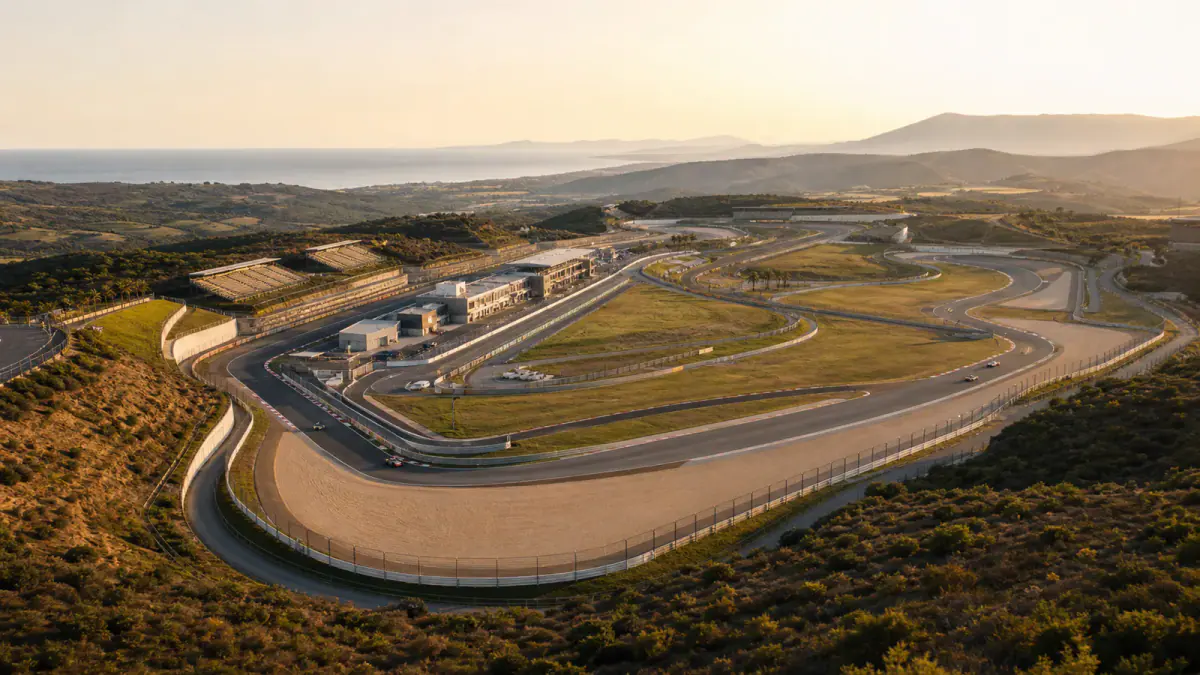
The header image is an editorial visualization created for this article. It is not an official circuit plan or architectural rendering.
Where would the Morocco F1 track be?
The reported location is around 20 kilometres south of Tangier, rather than inside the historic city centre. No authoritative public source we reviewed provides a final circuit address, approved site plan or spectator map, so travellers should not treat unofficial map pins as definitive.
Tangier is a plausible candidate on logistics alone. It sits close to Europe, has an international airport, motorway and rail connections, substantial hotel capacity and access to the Tangier Med port complex. That combination could help move spectators, teams, equipment and hospitality staff.
For overseas visitors, our guide to airports in Morocco explains the main gateways. Anyone combining a future race trip with a longer holiday can also start with our first-time Morocco travel guide.
Still, a strategically sensible location is not proof of approval. A credible next update would identify the developer, exact land parcel, planning decision and construction timetable through named official sources.
What does FIA Grade 1 actually mean?
“Grade 1” is often treated as shorthand for “Formula 1 confirmed,” but that is incorrect. Under the FIA’s circuit-licensing framework, Grade 1 is the highest circuit grade and the grade required for contemporary Formula 1 cars in competition. It concerns elements such as layout, safety installations, barriers, runoff, medical facilities, race control and operational standards.
A circuit can be designed with Grade 1 in mind without holding a Grade 1 licence. The FIA must inspect and approve the completed venue. Even a licensed circuit does not automatically receive a Grand Prix; the event promoter also needs a commercial agreement with Formula 1 and a calendar slot approved through motorsport’s governing process.
The practical sequence is closer to this:
- Secure land, planning permission and financing.
- Finalise the circuit and venue design with FIA requirements in mind.
- Build and commission the track and its safety systems.
- Complete FIA inspection and licensing.
- Sign the necessary commercial and promoter agreements.
- Receive an official place on the Formula 1 calendar.
Skipping from an early design goal to step six creates the confusion surrounding many proposed F1 venues.
Is Morocco joining Formula 1 in 2027?
There is no confirmed Morocco F1 race in 2027 as of this update. Formula 1 has separately announced returns to Portugal and Türkiye for 2027, showing the kind of direct, named announcement a confirmed race receives. No comparable Formula 1 or FIA announcement names Morocco.
The complete 2027 calendar had not been formally published in the official sources reviewed for this update. That leaves room for future announcements in general, but it is not evidence for Morocco specifically. Until an event appears on Formula 1’s official calendar, “Morocco F1 2027” is a possibility discussed by fans and media—not a date around which to book flights or accommodation.
Do not buy supposed Morocco Grand Prix tickets from an unofficial seller. Official event pages identify the venue, dates and ticketing channels once a race is confirmed.
Morocco has hosted a Formula 1 championship race before
Morocco’s connection to Formula 1 is historical, not hypothetical. The 1958 Moroccan Grand Prix took place on October 19 at the Ain-Diab road circuit in Casablanca. The official Formula 1 result records Stirling Moss as the winner and Mike Hawthorn in second place.
It was the final round of the 1958 World Championship. Moss won the race, while Hawthorn’s second place was enough to secure the drivers’ title by a single point. The event also ended in tragedy: Stuart Lewis-Evans suffered severe burns in a crash and died several days later.
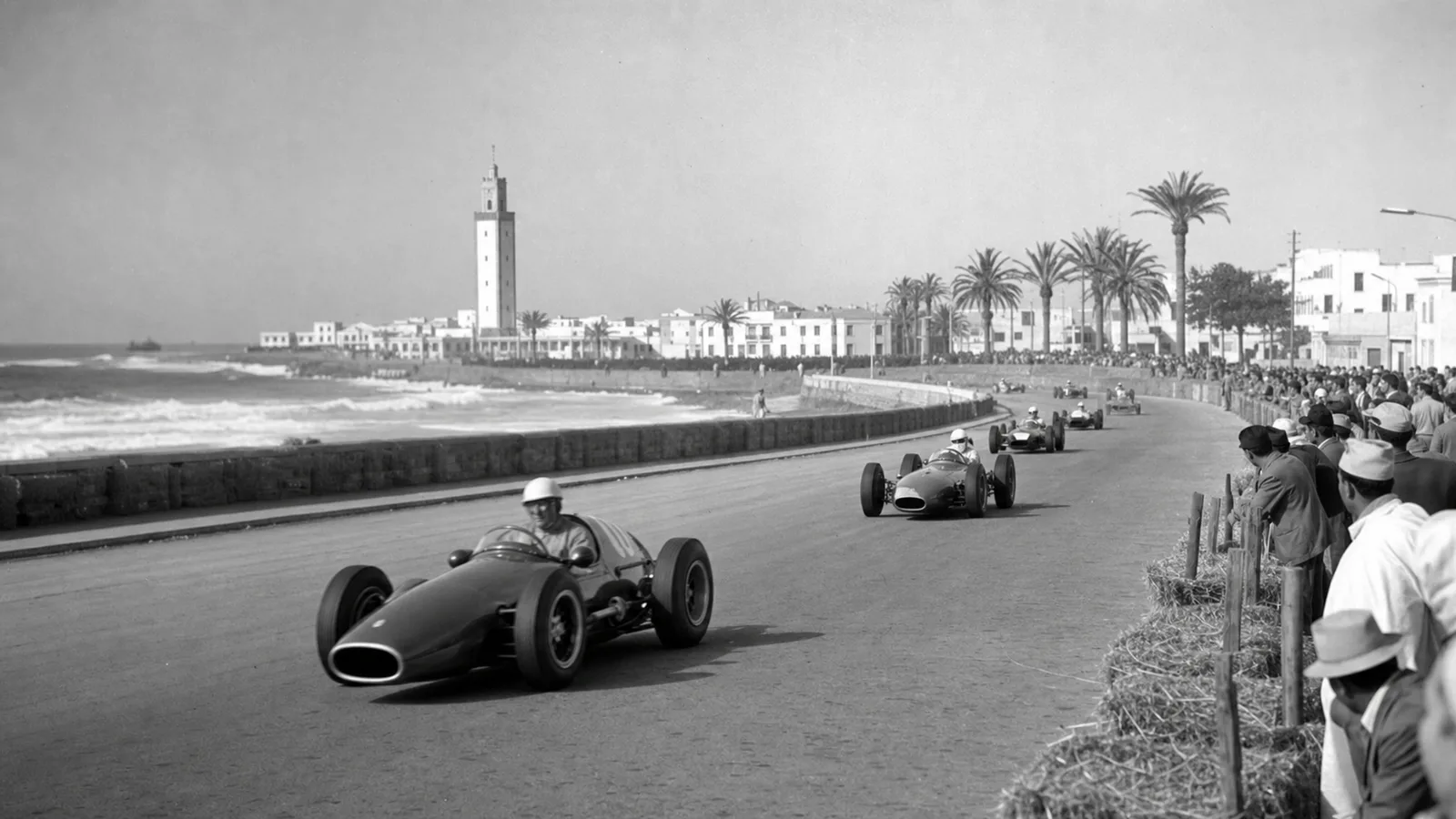
Editorial historical illustration inspired by the 1958 Ain-Diab road race; it is not an archival photograph.
The race gives Morocco a genuine place in F1 history, but it should not be used to imply that a modern return is already contracted. Ain-Diab was a fast temporary road circuit; the reported Tangier proposal is for a purpose-built permanent complex in a different city and era.
Why Tangier could work—and why that is not enough
Tangier offers several qualities that an international event promoter would value:
- proximity to Spain and wider European markets;
- established air, rail, motorway and maritime connections;
- a growing tourism and business base;
- room outside the urban centre for a large mixed-use development;
- Morocco’s experience investing in major sports infrastructure.
The country is already undertaking a much more visible stadium programme connected to the 2030 FIFA World Cup. Our Morocco 2030 stadium guide shows how official projects differ: named host cities, government-backed programmes, construction updates and fixed tournament requirements are publicly traceable.
Formula 1 presents a different business challenge. Building the circuit is only the initial expense. A promoter must fund operations, staffing, maintenance, transport planning, security and likely annual hosting costs. A complex that also supports endurance races, national championships, manufacturer testing, conferences and tourism would have a stronger year-round case than a venue dependent on one weekend.
Seven signals that would make the project credible
Rather than treating every recycled headline as progress, watch for evidence in this order:
- A named Moroccan approval: a ministry, regional authority or municipality publishes a decision.
- A confirmed site: land ownership and a precise location become public.
- A formal developer structure: investors, operators and funding terms are independently verifiable.
- Planning documents: environmental, transport and construction approvals appear.
- Visible construction milestones: contracts, ground works and completion dates are documented.
- FIA licensing progress: the circuit is inspected and its grade is officially recorded.
- A Formula 1 announcement: the promoter agreement and calendar dates are published by F1 and the FIA.
The seventh signal confirms a Grand Prix. The earlier signals only make it increasingly plausible.
Frequently asked questions
Is Formula 1 coming to Morocco?
Not officially. A major circuit and leisure development near Tangier was reported in 2025, but Morocco has no confirmed Formula 1 race date as of July 28, 2026.
Will Morocco host F1 in 2027?
No official Formula 1 or FIA announcement confirms a 2027 Moroccan Grand Prix. Treat predicted dates as speculation until they appear on the official calendar.
Where is the proposed F1 circuit in Morocco?
Reporting placed it approximately 20 kilometres south of Tangier. A final public address, approved master plan and spectator map have not been confirmed by an authoritative source.
Is the Tangier circuit already FIA Grade 1?
No Grade 1 licence has been publicly confirmed. Reports said the proposed circuit was intended to meet Grade 1 standards, which is different from a completed venue passing FIA inspection.
When was the last Moroccan Grand Prix?
The only Moroccan round of the Formula 1 World Championship was held at Ain-Diab in Casablanca on October 19, 1958. Stirling Moss won, and Mike Hawthorn secured the championship.
Are Morocco F1 tickets on sale?
No official Morocco Grand Prix exists on the current calendar, so there is no authorised Morocco F1 ticket sale. Avoid sending money based only on a speculative event listing.
The bottom line
Morocco has a real Formula 1 history and the reported Tangier concept is ambitious enough to deserve attention. But the accurate status remains proposal, not confirmed Grand Prix. A race becomes real only when approvals, construction, licensing and a Formula 1 promoter agreement produce an official calendar date.
We will update this guide when the FIA, Formula 1, Moroccan authorities or an identified project developer publishes verifiable progress. Until then, enjoy the idea—but do not plan a 2027 race trip around it.