This Moroccan mint tea recipe makes a strong, fragrant pot from Chinese gunpowder green tea, fresh spearmint, sugar and boiling water. For a 750-milliliter teapot, start with 10 grams of tea, 30–50 grams of mint and 30–60 grams of sugar. Rinse the leaves briefly, infuse, mix by pouring tea out and returning it to the pot, then serve in small glasses.
Moroccan tea—often called atay—is a method as much as a list of ingredients. The same four ingredients can taste harsh, watery or balanced depending on the leaf quantity, water temperature, mint quality and mixing. The recipe below is designed for a home kitchen and clearly marks where Moroccan households use different techniques.
Recipe at a Glance
| Detail | Amount |
|---|---|
| Yield | About 750 ml, or 6–8 small glasses |
| Preparation | 5 minutes |
| Infusion and mixing | 8–15 minutes |
| Green tea | 10 g (about 1 level tablespoon) |
| Fresh spearmint | 30–50 g, one generous loose bunch |
| Sugar | 30–60 g, adjustable |
| Water | About 850 ml, including the rinse |
The sugar range produces tea from lightly sweet to recognizably Moroccan in style. Some households use considerably more. Begin lower when you do not know your guests’ preference; more sugar can be dissolved later, but it cannot be removed.
Moroccan Mint Tea Ingredients
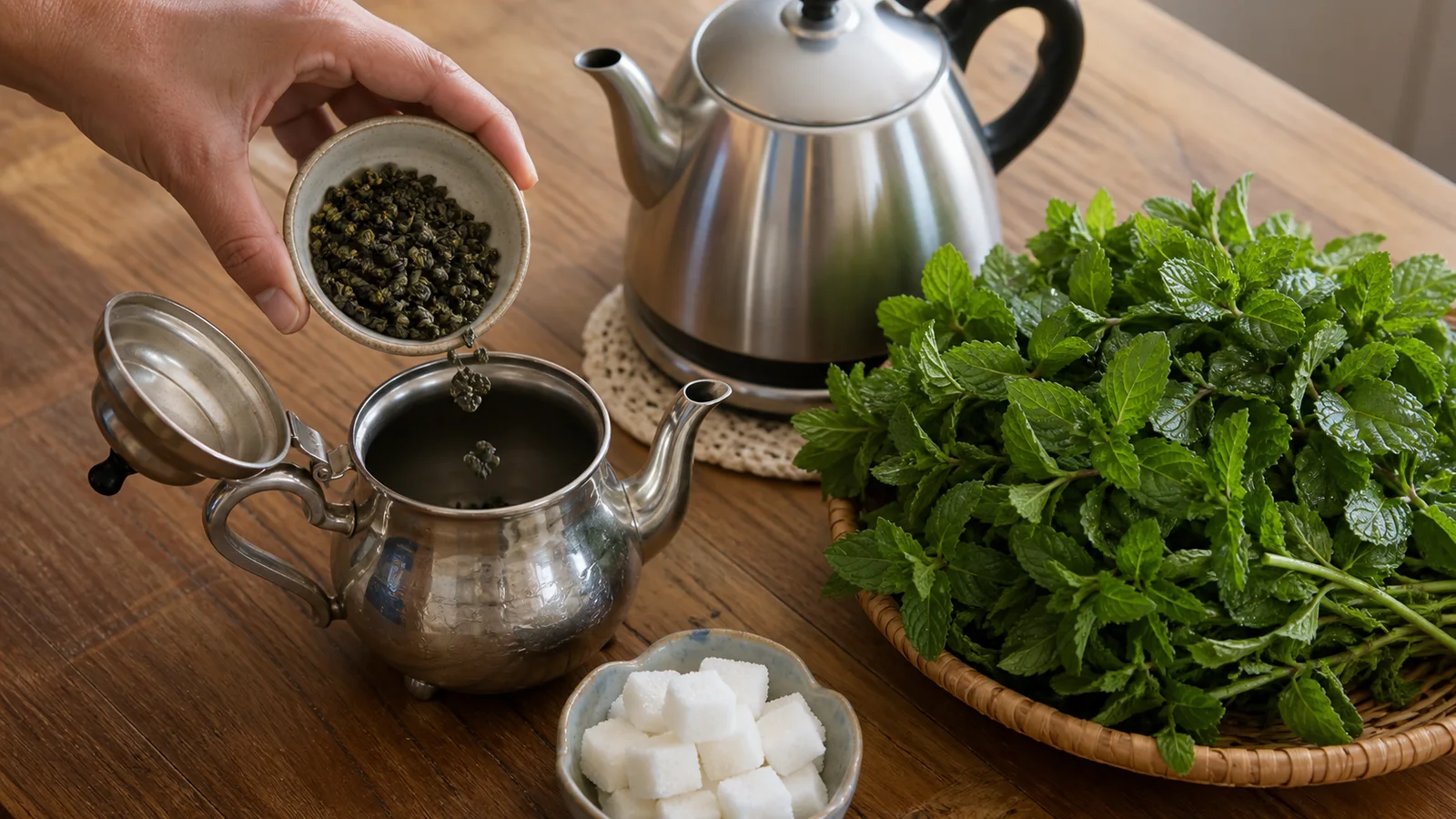
Original editorial visualization of the core ingredients and preparation; exact household equipment varies.
Gunpowder green tea
Use Chinese gunpowder green tea: leaves rolled into small pellets that open during infusion. The name describes the rolled appearance, not an added flavor. A fresh packet should smell clean and vegetal rather than dusty or stale.
Ten grams per 750 milliliters creates a firm base that can stand up to mint and sugar. If your tea repeatedly tastes astringent, reduce the leaf to 7–8 grams before changing every other variable.
Fresh spearmint
The familiar flavor comes closest with fresh spearmint, often sold as Moroccan mint or na’na. Choose upright stems with fragrant green leaves. Avoid bunches that smell fermented or have widespread black, slimy patches.
Rinse the mint thoroughly in cool water and drain it. Keep tender stems attached; they carry flavor and help hold the bunch together. A few imperfect leaves are normal, but discard damaged sections.
Sugar
White granulated sugar or sugar cubes dissolve cleanly and do not compete with the tea. Moroccan service is often sweet, but there is no single national number of cubes. Pot size, region, family and occasion all matter.
For this pot:
- 30 g gives a lightly sweet cup;
- 45 g gives a clear sweet balance;
- 60 g gives a fuller traditional-style sweetness;
- more can be offered separately rather than assumed.
Honey changes the flavor and is not a direct substitute for the classic method, though you can use it for a personal variation.
Water
Use fresh drinking water brought to a full boil. Strongly chlorinated or mineral-heavy water can flatten the mint or make the green tea taste rough. Filtered water is useful when your tap water has an obvious odor, but special bottled water is unnecessary.
Equipment
- A 750–900 ml teapot.
- Kettle.
- Kitchen scale or measuring spoon.
- Small heatproof tea glasses or cups.
- Tray for safer pouring.
- Fine strainer only if your pot has no internal filter.
A Moroccan metal teapot can often be heated directly, but do not place decorative or unknown metalware on a burner. Some pots are only for serving. If you are unsure, complete the infusion with kettle water off the heat.
Glassware must be heatproof. Thin decorative glasses can crack from thermal shock; warm them with a little hot water first if their suitability is uncertain.
How to Make Moroccan Mint Tea
1. Boil and measure the water
Bring about 850 milliliters of fresh water to a boil. The extra amount covers the leaf rinse and small losses during pouring.
Warm the teapot with a splash of hot water, swirl, then empty it. This prevents a cold pot from dropping the brewing temperature too quickly.
2. Add and rinse the gunpowder tea
Put 10 grams of gunpowder green tea in the empty warm pot. Add about 100 milliliters of boiling water, swirl gently for 15–20 seconds and pour the liquid away.
This quick rinse wets and opens the pellets and softens the first harsh edge. Do not leave the tea sitting in rinse water for several minutes.
There are multiple Moroccan household methods. In one common variation, the first clear amber extraction is reserved because it contains valued aroma, a second wash is discarded, and the reserved liquid returns to the pot. The simple single-rinse method above is easier at home and produces a reliable result. Neither technique should be presented as the only authentic one.
3. Add most of the brewing water
Pour about 650 milliliters of boiling water over the rinsed leaves. Close the pot and infuse for 4–5 minutes before adding the mint. This establishes the tea base without cooking the fresh herb for the entire brew.
The Moroccan National Tourist Office’s gastronomy guide describes a longer traditional infusion of around 15 minutes before mint and sugar are fully mixed. Pot material, heat and household practice differ; judge the cup by strength rather than treating one timer as law.
4. Add sugar and fresh mint
Add 30–60 grams of sugar. Push the rinsed mint into the pot so the leaves contact the hot liquid rather than floating dry above it. Use a generous bunch without packing the pot so tightly that pouring becomes impossible.
If the pot is confirmed stovetop-safe, some cooks briefly return it to low heat until the liquid approaches a gentle simmer. This helps open the leaves and dissolve sugar. Do not walk away: green tea can become harsh, and mint boiled hard for a long time loses its fresh character.
For a serving-only pot, simply top up with boiling water, close it and rest for another 4–6 minutes.
5. Mix without stirring
Pour one small glass, then return it to the pot. Repeat two or three times. This circulates tea from the bottom, dissolves sugar and distributes the mint.
Morocco’s official gastronomy guide describes this pour-and-return sequence as part of the ceremony. It is more effective than stirring only the top of a full pot.
After mixing, pour a tasting glass. The tea should have:
- a clear amber-green color;
- a firm green-tea backbone;
- obvious fresh mint aroma;
- sweetness that rounds the bitterness rather than hiding all flavor.
Adjust only one variable at a time. Add a little hot water if too strong, a small amount of dissolved sugar if too dry, or several fresh mint sprigs if the aroma is weak.
6. Pour into small glasses
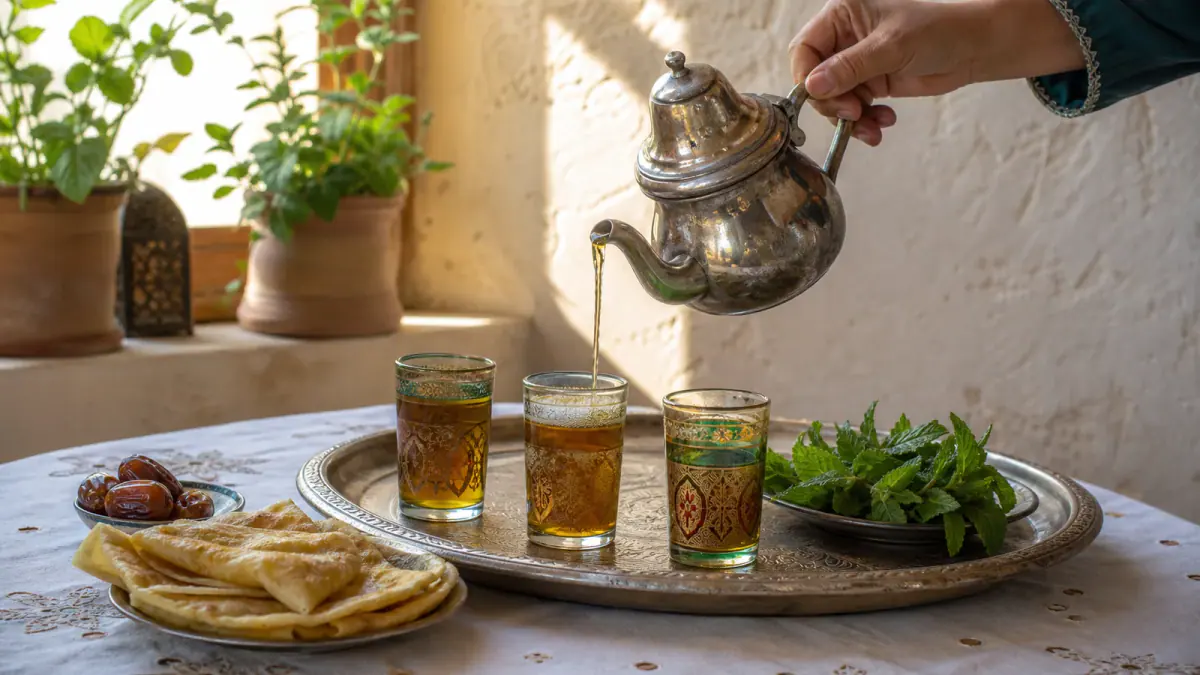
Set the glasses on a tray. Begin pouring close to the glass, then raise the pot gradually only if you have control. A thin stream from height introduces air and helps form a light foam—the “crown” associated with good service.
There is no need to imitate exaggerated one-meter pours in a home kitchen. The official tourism description emphasizes the high pour as tradition, but safety comes first. Hot sweet tea can cause serious burns.
Why Moroccan Tea Is Poured From Height
The high pour has practical and social effects:
- it aerates the tea;
- it can produce a surface foam;
- it displays control and hospitality;
- it mixes the pot during repeated service;
- it cools the stream slightly before it reaches the glass.
Foam is not proof of quality by itself. Detergent residue can also create bubbles, so rinse glasses completely. A balanced cup without dramatic foam is better than bitter tea poured as a stunt.
The Two-Pot Question
Online recipes sometimes show one pot for brewing and another for serving. Moroccan homes use different setups. A single metal pot may perform both roles; another household may brew, strain or transfer.
At home, choose the setup that safely controls leaves and heat:
- use one pot if it pours cleanly and is appropriate for heating;
- use a kettle plus serving pot if the teapot is decorative;
- strain only when loose leaf escapes excessively;
- never substitute an unsafe vintage vessel simply for appearance.
How Sweet Is Traditional Moroccan Tea?
Usually quite sweet, especially when made for a group, but “traditional” does not require ignoring health needs or preference. Sugar historically balances the bitterness of a concentrated green-tea base and signals generosity. Modern households also make lighter pots.
Three sensible approaches are:
- Sweeten the pot: closest to the shared mixing ritual.
- Use a moderate baseline: 30–45 grams, then offer more.
- Leave individual glasses adjustable: less traditional in method but practical for mixed needs.
Sugar substitutes may taste different and do not always dissolve or foam like sugar. Follow their heat and serving guidance rather than matching gram for gram.
Moroccan Tea Without Mint
Fresh mint may be seasonal or unavailable. The tea base can still be served, and Moroccan regional variations use other aromatic plants.
Depending on place and season, additions can include:
- sheba (wormwood), used sparingly for a pronounced bitter aroma;
- lemon verbena;
- sage;
- orange blossom;
- rosebuds;
- saffron in some regional or special preparations.
The Moroccan tourism gastronomy guide specifically notes rosebuds, saffron and verbena as regional additions. These are variations, not ingredients to combine all at once.
Wormwood requires particular caution. Plant identity, quantity, pregnancy, medication and health conditions matter. Do not treat a strongly active herb as a casual one-for-one mint replacement; consult reliable medical guidance when relevant.
Troubleshooting Moroccan Mint Tea
The tea is too bitter
Likely causes:
- too much gunpowder tea;
- rinse or infusion left too long;
- hard boil after adding leaves;
- old leaf with a rough flavor;
- too little water for the pot.
For the current batch, dilute with hot water and rebalance with a little sugar. Next time reduce tea by 2 grams or shorten the first infusion.
The tea tastes weak
Use fresher gunpowder tea, weigh a full 10 grams and ensure water is truly boiling. Give the tea base its first 4–5 minutes before adding mint. Adding more mint will not replace missing tea strength.
The mint flavor is dull
Check freshness first. Rinse but do not leave mint soaking for hours. Add a small fresh handful late in the infusion and keep the pot covered. Mint that has been boiled aggressively can taste cooked rather than bright.
The sugar sits at the bottom
Repeat the pour-and-return sequence with a heatproof glass. If cubes are very large, dissolve them in a little hot tea before returning the liquid.
Leaves block the spout
Do not cram the pot. Arrange the mint stems together and leave space near the spout. Use a small internal strainer if needed, but avoid pressing leaves until they release harsh flavors.
There is no foam
Use a clean, detergent-free glass and a steady thin stream. The tea may be underfilled or the pour too close, but do not prioritize foam over safe control.
Scaling the Recipe
Use this starting ratio:
- 13 g gunpowder tea per liter of final tea
- 40–65 g fresh mint per liter
- 40–80 g sugar per liter
For a 500 ml pot, start with 6–7 grams of tea. For a 1-liter pot, start with 13 grams. Large pots do not always need perfectly linear steep times; taste after mixing and dilute as needed.
Do not fill to the rim. Leaves expand, mint occupies space and the pot needs room for circulation.
Make-Ahead and Storage
Moroccan mint tea is best freshly brewed. Mint darkens and green tea becomes more astringent as it sits hot.
If you have leftovers:
- cool within a reasonable food-safety window;
- refrigerate in a clean covered container;
- use within about 24 hours for best flavor;
- serve cold over ice or reheat gently rather than boiling repeatedly;
- add fresh mint after reheating if needed.
Do not leave a sweet pot at room temperature all day and then serve it as fresh.
What to Serve With Moroccan Tea
Tea fits breakfast, afternoon hospitality and the end of a meal. Good pairings include:
- homemade msemen with honey or amlou;
- baghrir;
- dates and almonds;
- ghriba or fekkas;
- bread, olive oil and honey;
- small savory pastries.
For a broader tasting plan, our traditional Moroccan dishes guide explains where tea fits among tagines, couscous, soups, breads and sweets.
Our wider Moroccan food guide covers regional flavors, meal rhythm and ordering advice for travelers who want more than a recipe.
Tea Etiquette for Visitors to Morocco
The Moroccan National Tourist Office describes mint tea as a ceremonial drink of welcome and afternoon tea as an icon of hospitality. In practice, context matters.
- Accepting a glass is often a friendly gesture, not a legal obligation.
- If you need less sugar, ask before the pot is mixed when possible.
- Drink at your own pace; small refills are normal.
- Compliment the tea sincerely without inventing expertise.
- A shopkeeper’s tea can be hospitality, part of negotiation, or both—clarify prices for purchases independently.
- People differ, so avoid rigid claims that refusing tea is always insulting.
Tea is social because time and attention are shared, not because a visitor performs every rule perfectly.
Is Moroccan Mint Tea Healthy?
It contains green tea and mint, but it also contains caffeine and often substantial added sugar. “Traditional” does not make unlimited sweet tea suitable for everyone.
Consider:
- reducing sugar for diabetes management or personal preference;
- using a smaller portion later in the day if caffeine affects sleep;
- checking medication or pregnancy guidance for caffeine and added herbs;
- remembering that mint tea is not a treatment for digestive or other medical conditions.
For individualized advice, consult a qualified health professional. This recipe is culinary guidance.
Frequently Asked Questions
What is Moroccan mint tea made of?
The core ingredients are Chinese gunpowder green tea, fresh spearmint, sugar and boiling water. Regional and seasonal versions may use other aromatics.
What kind of mint is used?
Fresh spearmint gives the closest familiar flavor. Products sold as Moroccan mint may be spearmint or a related cultivar; aroma and freshness matter more than a perfect English label.
Can I use a tea bag?
You can make a mint-flavored green tea with bags, but it will not reproduce the body and method of rolled gunpowder leaf. Use loose tea when possible.
Do you boil Moroccan tea?
Some stovetop-safe pot methods briefly heat the tea after water or sugar is added; others infuse off heat. Do not boil mint aggressively, and never heat a decorative pot not designed for a burner.
Why rinse gunpowder tea?
A brief rinse wets the rolled leaves and softens the first harsh extraction. Household procedures differ: some preserve the first aromatic liquid and discard a later wash.
How long should it steep?
For this home method, give the tea base 4–5 minutes, then another 4–6 minutes with mint and sugar before mixing and tasting. Traditional descriptions and household pots may use a longer total infusion.
Can I make Moroccan tea without sugar?
Yes, though it changes the familiar balance and shared-pot ritual. Brew slightly less tea to avoid an overly astringent unsweetened cup.
Is atay Arabic or Amazigh?
Atay is a widely used Moroccan word for tea across everyday speech contexts. Morocco’s linguistic traditions are diverse, and spelling in Latin characters varies.
Final Recipe Checklist
- Weigh 10 g gunpowder green tea.
- Wash and drain 30–50 g fresh spearmint.
- Boil about 850 ml fresh water.
- Warm the pot and rinse the leaves briefly.
- Add 650 ml water and infuse 4–5 minutes.
- Add mint and 30–60 g sugar.
- Rest or heat gently only in a stovetop-safe pot.
- Mix by pouring out and returning two or three glasses.
- Taste and adjust one variable.
- Pour safely into small heatproof glasses.
Good Moroccan mint tea is strong enough to support the mint, sweet enough for the chosen table and mixed thoroughly from the pot. Once you learn to taste before serving, the recipe stops being a performance and becomes what it is meant to be: a generous shared pause.