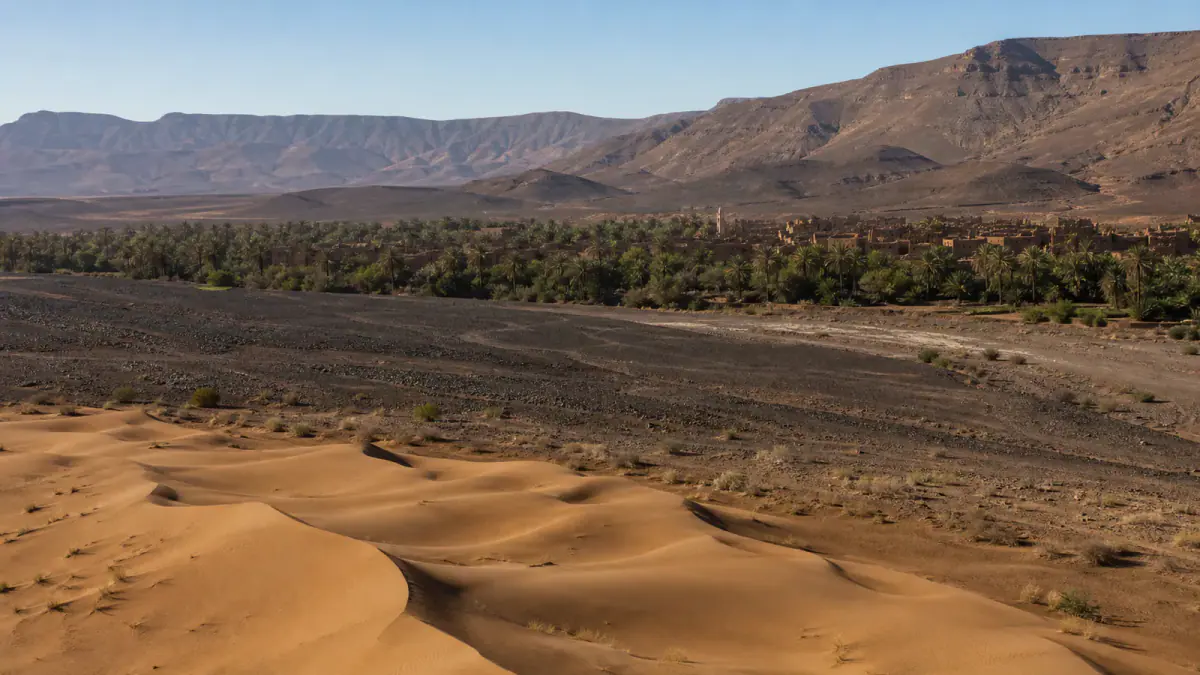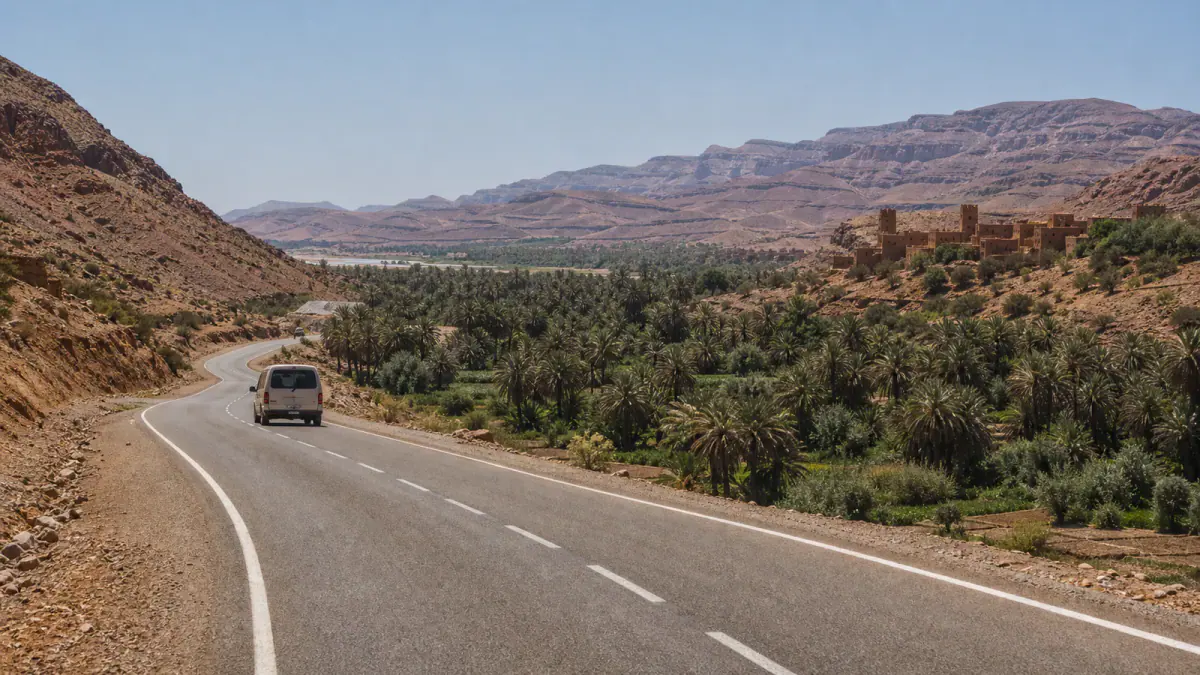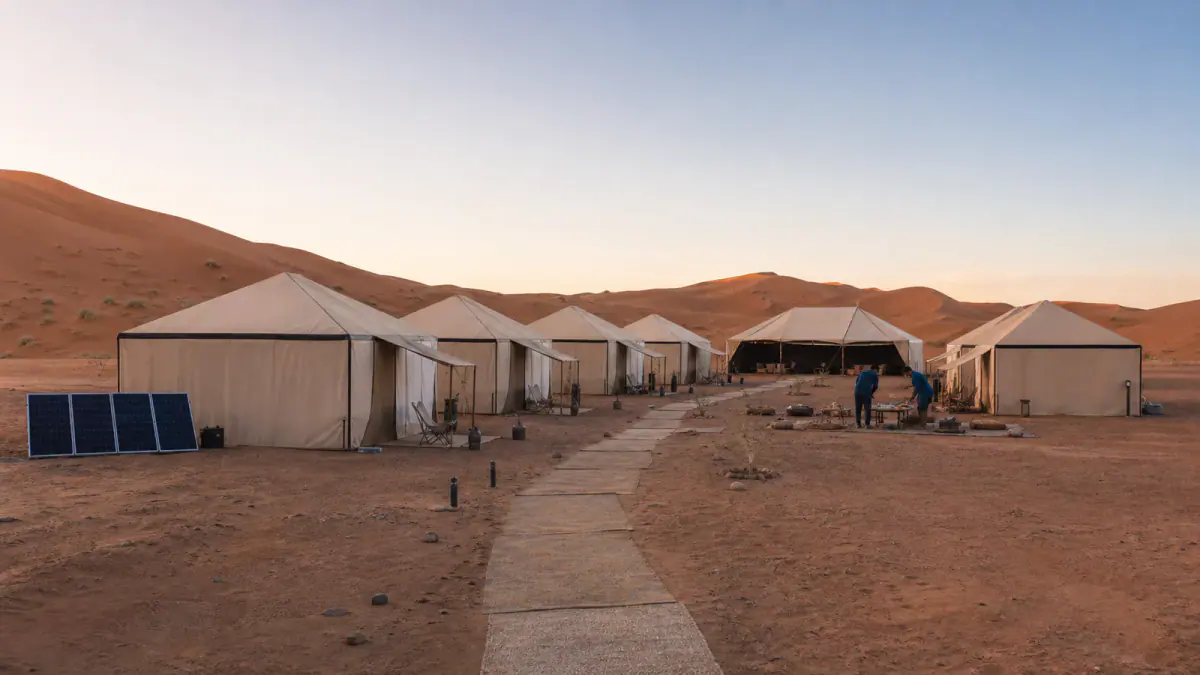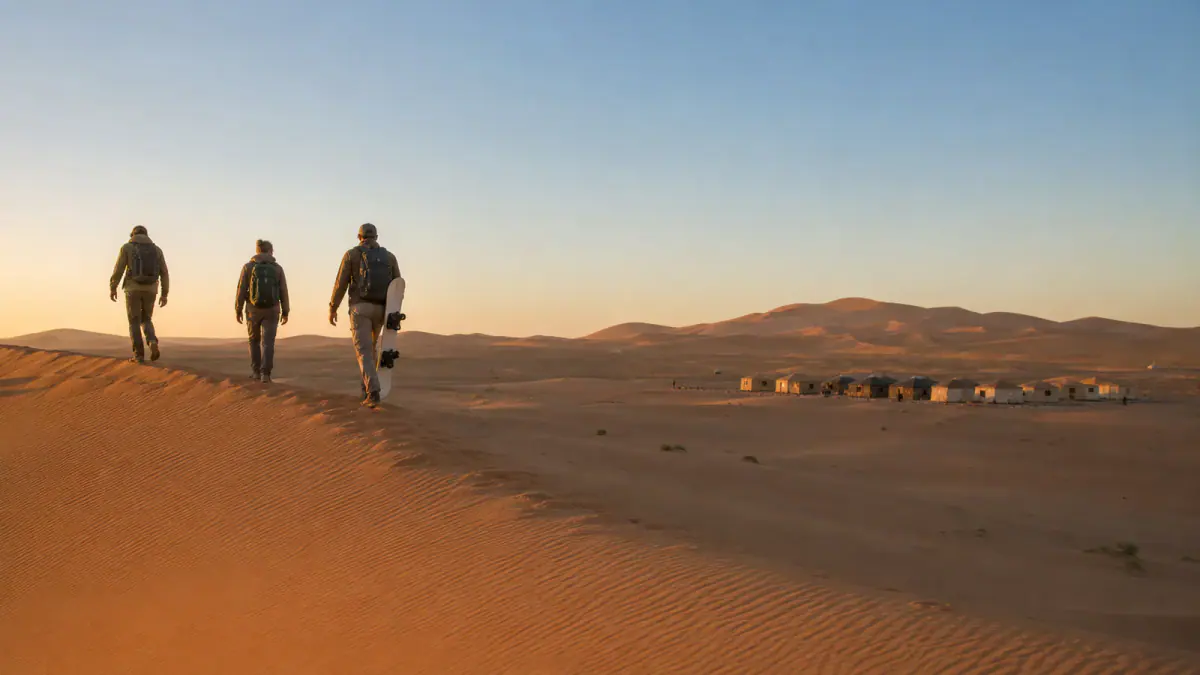
The best Morocco desert activities are often the simplest: walking onto a dune before sunrise, watching wind redraw the sand, sharing a quiet tea and seeing the night sky away from city light. A camel ride or sandboard can be fun, but neither is required for a meaningful Sahara trip.
This guide helps you choose what to do once you reach the desert. It focuses on experience quality, time, comfort, animal welfare, heat, safety and environmental impact. For Merzouga-versus-Zagora decisions and long-distance routes, use the separate planning guides linked below.
Quick answer: Prioritize one sunrise or sunset walk, unstructured time in the dunes and stargazing when skies are clear. Add a short camel ride only after checking the animals and handler, try sandboarding on a safe slope if your knees tolerate climbing, and choose cultural visits that are hosted—not staged intrusions into private life.
Desert Activities at a Glance
| Activity | Best time | Effort | Worth it when | Skip it when |
|---|---|---|---|---|
| Dune walk | Sunrise or late afternoon | Moderate | You want silence and landscape | Heat, poor mobility or strong wind |
| Camel ride | Cool morning or evening | Low–moderate but awkward | Animals appear well cared for | Injury, pregnancy, discomfort or welfare concerns |
| Sandboarding | Morning | High because of climbing | Safe board and gentle slope available | Knee/back issues or hot sand |
| Stargazing | After full darkness | Low | Clear sky and limited moonlight | Cloud, dust, bright moon or camp lighting |
| Camp dinner and music | Evening | Low | Small group and genuine hosting | Forced performance or extreme volume |
| 4x4 transfer | Arrival/departure | Low | Needed for access or mobility | Recreational dune driving without purpose |
| Village or music visit | Daytime | Low | Community-led and fairly paid | People treated as scenery |
| Photography | Golden hour and night | Varies | Permission and time are available | Sensitive sites, drones without authorization |
No camp can guarantee every condition. Wind may erase the sunset, cloud may hide the stars and summer heat may cancel daytime activity. A good operator adapts instead of pretending the brochure controls the desert.
1. Sunrise or Sunset Dune Walk
If you choose only one activity, walk into the dunes with enough time to stop. The experience is not reaching the tallest ridge. It is watching light, wind and shadow change the landscape.
The Moroccan National Tourist Office lists dune hiking, sunrise and sunset among Merzouga’s characteristic experiences in its Great South desert guide.
Sunrise
Sunrise is cooler, quieter and often easier for photography. The difficult part is leaving a warm bed in winter. Put clothes, shoes, water and headlamp beside the tent before sleeping.
Begin early enough to reach a low ridge before the light changes. You do not need the highest dune. Walking directly up a steep face is exhausting, and every climb must be repeated on the return.
Sunset
Sunset fits naturally after camp arrival, but popular ridges may attract several groups. Walk sideways from the main line rather than racing upward behind everyone else. A lower empty dune usually creates a better memory than a crowded summit.
Return before full darkness unless a guide accompanies you. Dune shapes become difficult to distinguish, and a camp that looks obvious in daylight can disappear behind one ridge.
Dune-walking safety
- Tell camp staff where you are going.
- Carry water even for a short walk.
- Wear shoes or sandals until you know the sand temperature.
- Avoid steep slip faces and crumbling edges.
- Turn back during strong wind or blowing sand.
- Use a headlamp after sunset.
- Do not walk far alone at night.
The desert is not an empty theme park. Scorpions, snakes and other wildlife exist, even if most visitors never see them. Shake out shoes, use a light and follow local guidance.
2. Camel Ride: Optional, Not Obligatory
Camel trekking is part of the classic Merzouga image. Morocco’s tourism office includes it among the region’s outdoor activities on its official trekking page. That does not mean every traveler needs to ride.
A short ride during the cool part of the day can provide a slow approach to camp. A long ride can become uncomfortable quickly, especially for knees, hips and lower backs. The mounting and dismounting movement is abrupt even when the handler works carefully.
Check the animal before agreeing
Look for:
- alert behavior and a generally healthy body condition;
- no obvious open wounds around the saddle, mouth or legs;
- a saddle and padding that sit securely;
- calm handling without repeated hitting or shouting;
- a load that appears reasonable;
- rest and water practices explained by the operator.
One photograph cannot prove a complete welfare system, but visible neglect is enough reason to refuse.
Ask these questions
- How long is the ride?
- Is a 4x4 transfer available instead?
- How are riders matched to animals?
- Can a child ride alone, and what is the safety rule?
- What happens if I want to stop?
- Does the camel return immediately with another group?
Do not climb on if you feel pressured. The desert remains worthwhile without the ride.
Who should consider another transfer?
Ask for a 4x4 or camp-edge stay if you have recent surgery, significant back or hip pain, mobility limitations, balance concerns or pregnancy. Seek personal medical advice when needed; an operator’s reassurance is not a medical assessment.
Wear long trousers to reduce rubbing, keep the camera secured and follow the handler during mounting. Never wrap a strap around your wrist where it could tighten during a sudden movement.
3. Sandboarding Without the Hype
Sandboarding looks effortless in short videos. In reality, the ride down is brief and the climb back is the workout. Soft sand absorbs energy, and carrying a board up a dune can be harder than expected.
Try it when:
- the camp provides a board in good condition;
- staff identify a suitable, obstacle-free slope;
- the sand is not dangerously hot;
- your knees, ankles and back tolerate falls and climbing;
- you have enough water and daylight.
Start on a gentle slope. Sit or use the method shown by staff rather than copying a snowboarding stance immediately. Check the landing area for rocks, vegetation, animals and people.
Do not wax a rental board without permission. Do not leave broken equipment or packaging in the sand. If a board has loose bindings or sharp damage, return it.
Sandboarding is a fun extra, not a reason to choose one desert destination over another. Twenty good minutes is often enough.
4. Stargazing: Set Realistic Expectations
Desert darkness can reveal far more stars than a city sky, but a visible Milky Way is not guaranteed. Results depend on cloud, dust, humidity, moon phase, season, camp lighting and the time you look.
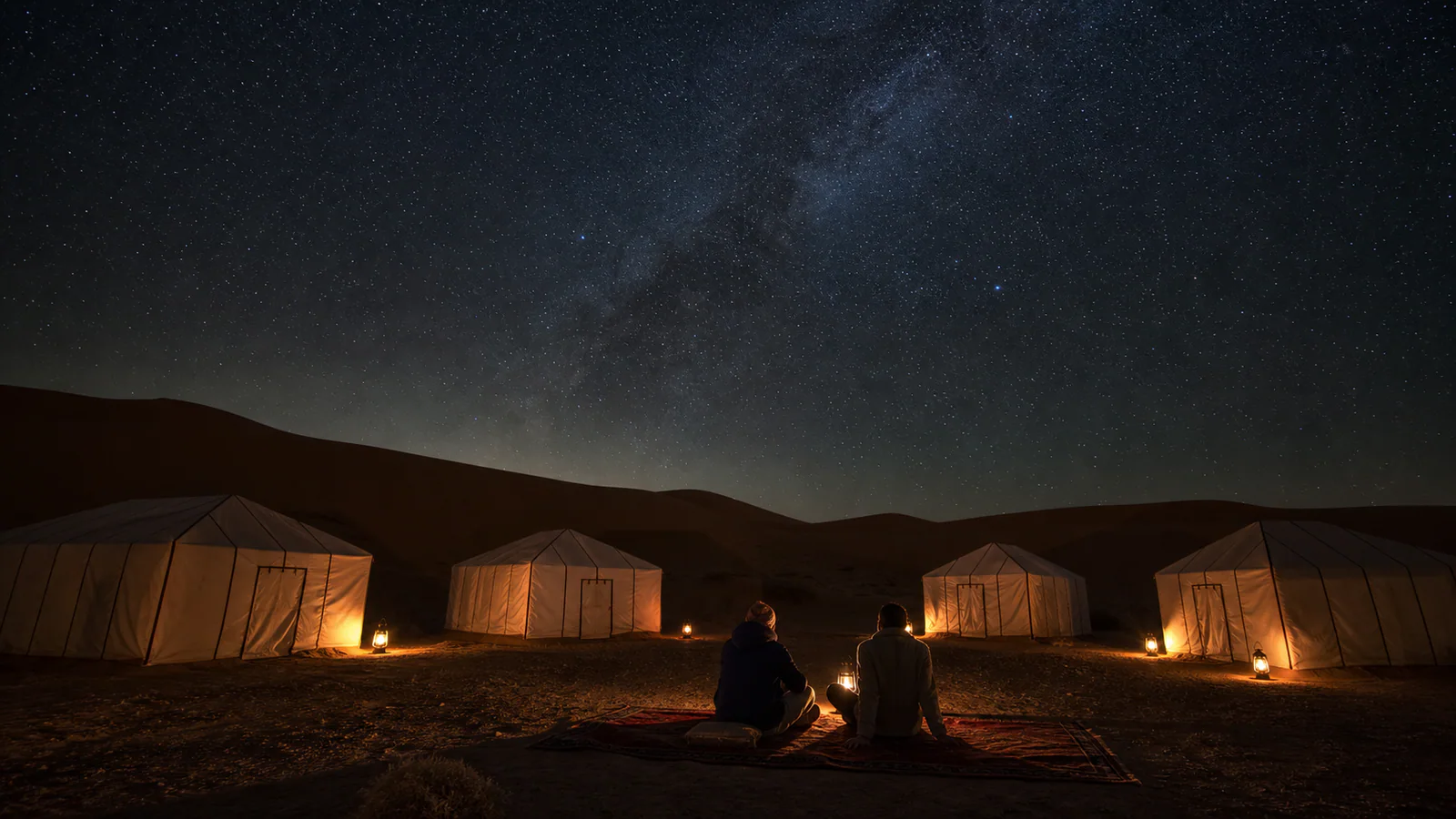
For a better night:
- let your eyes adjust for at least twenty minutes;
- move away from direct tent and bathroom lights with staff approval;
- use a red-light mode or cover a bright torch;
- lower phone brightness;
- check the moonrise and moonset before the trip;
- bring a warm layer before leaving the tent;
- stay within a route you can safely reverse.
A bright full moon reduces faint stars but illuminates the dunes beautifully. That is not a failed stargazing night; it is a different landscape.
Phone and camera photography
Phones with night mode can capture more than the eye, which may create unrealistic expectations when shared. Stabilize the phone on a small tripod or firm surface and avoid using flash around other guests.
For a camera, begin with a wide lens, tripod, manual focus near infinity and a short enough exposure to limit star trails. Exact settings depend on the camera and light. Test, review and change one setting at a time.
Do not walk backward in darkness while composing a frame. Mark the tripod legs and keep them away from camp paths.
5. Camp Dinner, Tea and Music
A desert-camp evening commonly includes tea, dinner and music. The quality comes from hospitality and conversation, not the volume of a performance.
Ask about the evening before booking:
- Is the meal shared or served by table?
- Can dietary needs be handled safely?
- How large is the camp?
- Does music end at a reasonable time?
- Is there a quiet area?
- Is alcohol served or permitted?
Meals vary with camp logistics. Expect practical dishes that can be prepared safely for a group rather than a guaranteed feast of every regional specialty. Tell the camp about serious allergies in writing and confirm again on arrival.
Participate respectfully if invited to clap, sing or learn a rhythm. Do not demand that staff perform after the evening has ended, and ask before filming musicians at close range.
Music belongs to people and communities, not to a generic “desert tribe” label. A good host can explain what is being played and who performs it without inventing an exotic story.
6. Community-Led Village and Music Visits
Some itineraries near Merzouga include villages, markets, family homes or Gnawa music. These can add valuable context when the visit is arranged with consent and clear payment.
Ask the operator:
- Who hosts the visit?
- How is the host or musician paid?
- Is photography allowed?
- Is purchasing expected?
- How many groups visit each day?
- Can visitors decline a private-home component?
A village is not an attraction that opens because a driver arrives. People may be working, resting, studying or observing religious and family routines.
Avoid tours that encourage photographing children, entering homes uninvited or describing every resident as nomadic. Communities around the desert have varied histories, livelihoods and degrees of mobility.
A good cultural visit should make the host’s knowledge visible, not use poverty or privacy as scenery.
7. 4x4 Transfers and Dune Driving
A 4x4 can be a practical transfer between a village-edge hotel and camp, especially for luggage or mobility needs. It can also support longer journeys to areas reached by tracks.
The problem is recreational driving that treats every dune as a racetrack. Fast off-road movement can disturb wildlife, damage fragile ground, create noise and increase accident risk.
Choose an experienced operator who:
- uses established tracks where possible;
- carries appropriate recovery and communication equipment;
- explains seat-belt and emergency procedures;
- adjusts for weather and visibility;
- does not encourage dangerous standing or roof riding;
- avoids wildlife and vegetated ground.
Wear the seat belt. Keep arms and cameras inside. If the driver’s speed feels unsafe, say so immediately.
Quad bikes and buggies add similar concerns plus dust, noise and variable regulation. They are not essential to a Sahara visit. Verify licensing, insurance, helmets, route control and age requirements before considering them.
8. Fossils, Oases and Seasonal Nature
The desert-edge regions around Merzouga and Erfoud include geology, fossils, palm landscapes and seasonal water. These activities can diversify a second day when the dunes alone no longer need your full attention.
The official Errachidia–Midelt–Merzouga destination page places Erg Chebbi within a wider region of mountains, palm groves, tracks and hikes.
For fossil shopping, distinguish an educational workshop from aggressive retail. Ask where material comes from and whether it can legally leave Morocco. Do not remove fossils, rocks, plants or archaeological material from the landscape.
Seasonal lakes and wetlands are not guaranteed to hold water or birds. Observe wildlife from a distance, keep vehicles off soft margins and never feed animals for a photograph.
9. A Quiet Hour With No Activity
Tour schedules often fill every gap because visible activity is easier to sell. Protect one hour with nothing planned.
Sit outside the camp before dinner. Walk only far enough to lose the generator sound. Watch how quickly shade becomes cold. Listen for wind, insects and distant animals.
This unstructured period is often the part travelers remember. It also costs the landscape nothing.
A Realistic One-Night Activity Schedule
Exact timing changes with season and transfer distance, but a balanced camp stay might look like this:
| Period | Activity |
|---|---|
| Late afternoon | Arrive at desert edge, repack a small overnight bag |
| Before sunset | Short camel ride or 4x4 transfer |
| Sunset | Low dune walk and quiet viewing |
| Early evening | Tea, wash and rest |
| Dinner | Camp meal |
| Later evening | Music or conversation, then lights reduced |
| Full darkness | Short stargazing session |
| Before sunrise | Optional wake-up and dune walk |
| Morning | Breakfast and return transfer |
That is enough. Sandboarding, a village visit and a long 4x4 circuit fit better before camp arrival or on a second day.
Best Activity Plan by Traveler
Couples
Prioritize a private sunset walk, small camp and quiet stargazing. Confirm whether “private” describes only the tent or the whole excursion.
Families
Use shorter rides, gentle slopes and clear supervision. Ask about car seats, tent distances, hot surfaces, railings and nighttime bathroom access.
Solo Travelers
Choose a camp with reliable transfers and transparent group size. Tell staff before walking away and keep an offline pin.
Older Travelers or Limited Mobility
Ask for a 4x4 transfer, a tent close to common areas, firm walking surfaces and a private bathroom with minimal steps. Dune walking is more demanding than distance suggests.
Photographers
Protect sunrise, sunset and astronomical darkness rather than joining every activity. Ask about camp lighting and tripod use. Morocco restricts drone use; the UK government’s current Morocco safety advice warns that permission is required and equipment can be confiscated.
What to Pack for Desert Activities
Bring:
- refillable water bottle;
- sun hat and high-protection sunscreen;
- breathable long sleeves;
- warm layer for night and dawn;
- closed shoes plus optional camp sandals;
- sunglasses;
- headlamp;
- lip balm and moisturizer;
- small first-aid supplies;
- any prescription medication;
- power bank;
- sealed bag for electronics during blowing sand;
- personal hygiene items and toilet paper as backup.
Do not rely on “luxury camp” to mean heating, unlimited hot water, strong power or climate control. Ask what the exact tent includes.
Summer requires more than a packing adjustment. Extreme heat can make normal activities unsafe. Morocco’s tourism office identifies spring and fall as the best desert seasons. If traveling in hot months, choose experienced local guidance and let temperature determine the schedule.
Low-Impact Desert Behavior
Desert landscapes look empty but recover slowly. The Leave No Trace principles offer a useful baseline: plan ahead, stay on durable surfaces, dispose of waste properly and leave natural or cultural objects where they are.
In practice:
- carry every wrapper back;
- do not bury wipes or sanitary products;
- use established toilet systems;
- keep vehicles to existing tracks;
- do not collect fossils, plants or pottery fragments;
- avoid loud music away from camp;
- do not chase wildlife;
- conserve water without skipping necessary hygiene;
- choose refill systems over piles of small bottles where available.
Ask the camp how it handles wastewater, toilets, power and rubbish. A canvas tent and solar light do not automatically make a camp sustainable.
How This Page Fits the Sahara Guides
This URL owns activity choice after arrival. For destination and trip-length decisions, use our complete Moroccan Sahara guide.
For road sequencing, transfers and camp questions, use the focused Sahara route and camp planning guide. Keeping those decisions separate prevents a camel-ride article from pretending to answer a four-day cross-country itinerary.
For broader national planning before adding the desert, start with the Morocco first-time travel guide.
Frequently Asked Questions
What is the best activity in the Moroccan desert?
A sunrise or sunset dune walk is the most broadly rewarding. It requires little equipment and lets the landscape remain the focus.
Is a camel ride necessary?
No. Choose a short ride only if you are comfortable and the animal and handling look responsible. Most camps can arrange another transfer.
Can you see the Milky Way in Merzouga?
It is possible under dark, clear conditions, but moonlight, dust, cloud, season and camp lighting affect visibility. No ethical operator should guarantee it.
Is sandboarding safe?
It has fall, heat and exertion risks. Use a maintained board on a staff-approved gentle slope and skip it with significant knee, ankle or back problems.
Are desert activities suitable for children?
Some are, with age-appropriate supervision and shorter durations. Ask the operator about car seats, camel policies, helmets, hot sand and nighttime camp layout.
Can I fly a drone in the Morocco desert?
Do not bring or fly one without the required Moroccan authorization. Restrictions apply even in open-looking landscapes, and equipment may be confiscated.
How cold does a desert camp get?
Conditions vary by season and weather. Nights and early mornings can feel very cold compared with the day. Ask about bedding and heating, then pack layers regardless of the daytime forecast.
Final Takeaway
A great Morocco desert stay does not need a packed activity list. Choose one good walk, one optional physical activity, time with respectful hosts and a dark quiet period after dinner.
Ask hard questions about animals, vehicles, waste and community visits. Skip anything that feels unsafe or staged. The Sahara is most powerful when activities help you notice the landscape rather than compete with it.