A desert camp can be the quietest night of a Morocco trip or its most expensive disappointment. The difference is rarely the number of rugs in a promotional photograph. It is the information hidden outside the frame: where the camp actually sits, how guests reach it, whether the bathroom is genuinely private, what happens in cold or windy weather, and which services cost extra.
Words such as luxury, premium and traditional do not tell you enough on their own. A simple camp with honest details may be more comfortable than a “five-star” tent whose heater cannot run at night.
This guide helps you compare camps before paying. It focuses on accommodation decisions; use our separate Morocco desert route guide for the long drive from Marrakech or Fes, and our desert activities guide for camel rides, dune walks and stargazing.
Desert Camp Decision in 60 Seconds
Before booking, confirm these ten points in writing:
- the camp’s map pin and nearest village;
- the transfer meeting point, time and duration;
- whether 4x4 transport is included in both directions;
- the exact tent type shown in your room category;
- private, shared or external bathroom;
- hot-water method and likely availability;
- heating, ventilation and electricity hours;
- meals, drinks and dietary arrangements;
- cancellation procedure for severe weather;
- the total price, including transfers, activities and local charges.
If the seller replies only with “everything included” or sends more photographs without answering, keep looking.
First Choose the Desert Area
A camp is not useful simply because it is in “the Moroccan Sahara.” The landscape and travel time depend on the area.
Merzouga and Erg Chebbi
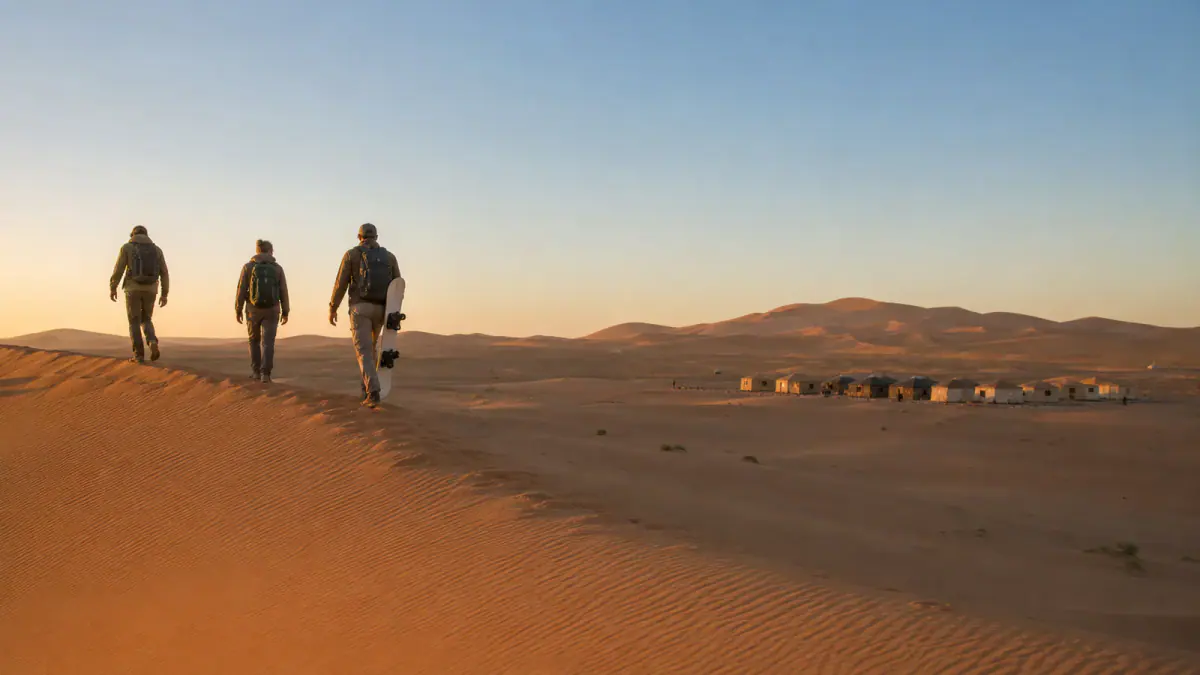
Merzouga is the best-known base for the tall dunes of Erg Chebbi. It has a mature network of hotels, guesthouses, transport operators and camps. The Moroccan National Tourist Office describes Merzouga as one of the country’s major dune destinations.
This area is the clearest choice when large dunes are the priority. It also means a long overland journey from Marrakech or Fes. The camp night should be treated as one part of a multi-day route, not as a short excursion from either city.
Mhamid and Erg Chigaga
Mhamid is the road-end gateway for the wider, more remote landscapes around Erg Chigaga. Reaching many camps requires a longer off-road transfer. That remoteness can produce a stronger sense of space, but it increases the importance of vehicle condition, driver experience, water and weather plans.
Ask whether the booking begins in Mhamid, Zagora, Marrakech or another town. A low camp price may exclude the expensive transfer from the paved road.
Zagora and the Draa Valley
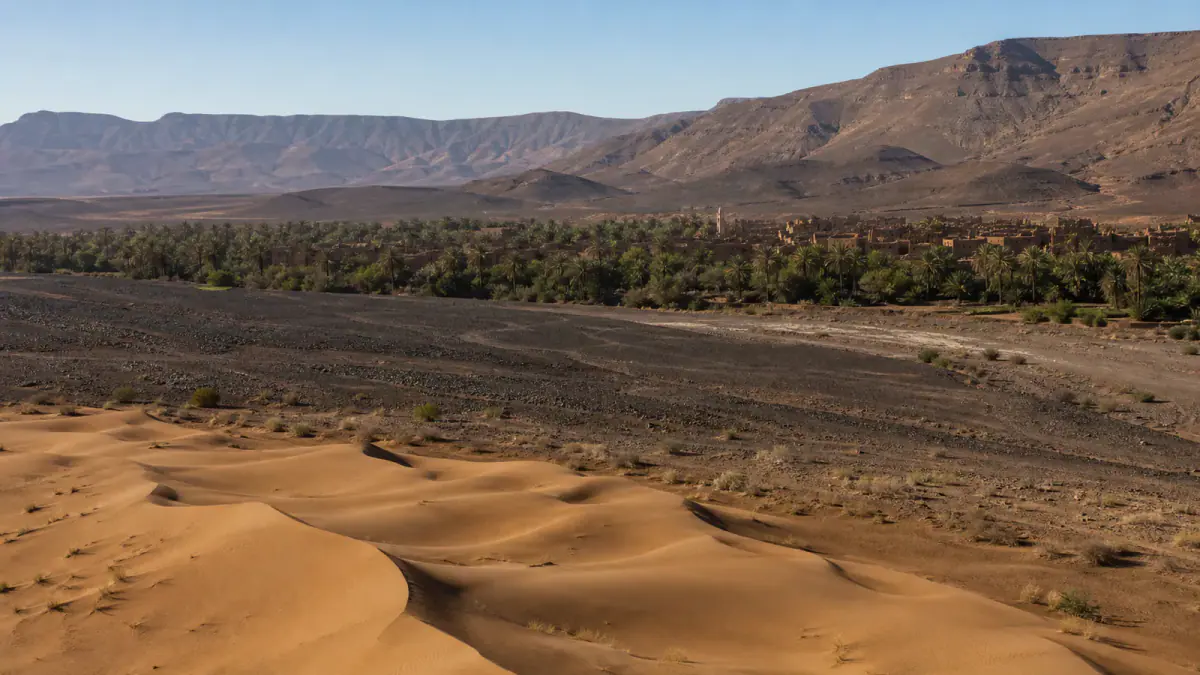
Zagora provides access to arid landscapes, palm groves and smaller dune areas. It fits a shorter southern route better than Merzouga, but a camp advertised as “Zagora desert” may not sit beside the towering orange dunes travelers imagine.
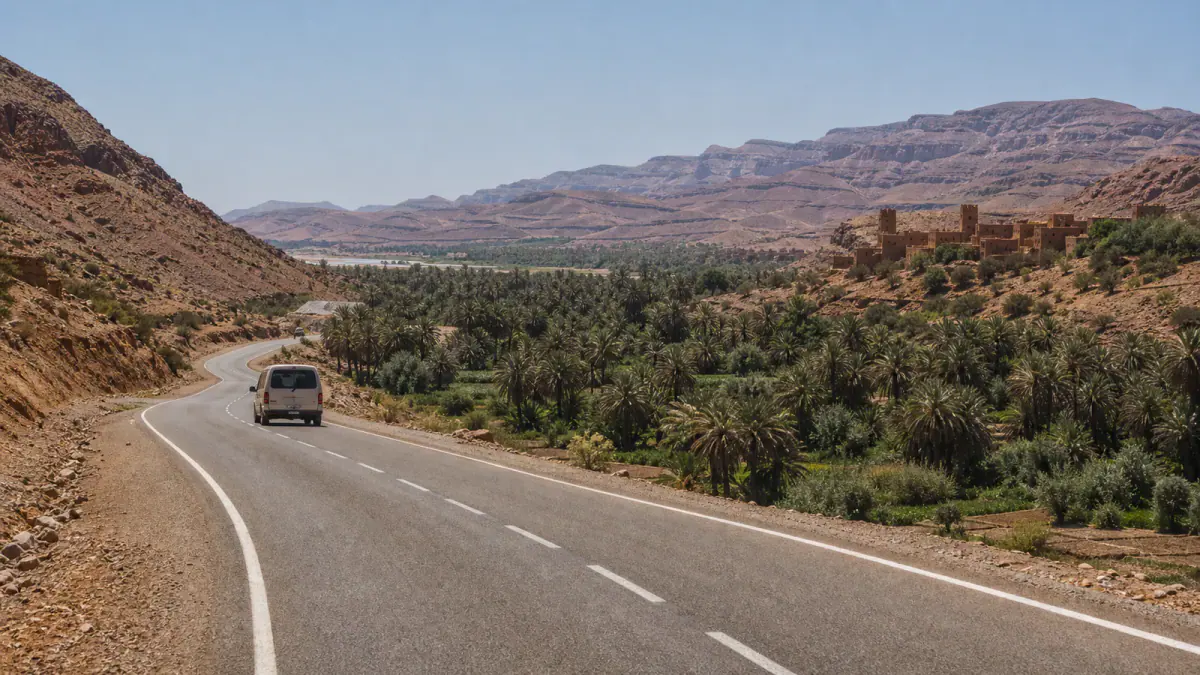
The official Ouarzazate–Zagora–Tinghir destination guide emphasizes the region’s mix of valleys, kasbahs and desert-edge scenery. Choose it for that broader landscape, not as a substitute sold under an Erg Chebbi photograph.
Agafay
Agafay is a rocky, dry landscape near Marrakech, not part of the Saharan dune fields. Its camps are convenient for a night away from the city and may provide polished hospitality, but the experience is visually and geographically different.
There is nothing wrong with choosing Agafay. The problem is booking it while expecting Merzouga.
Ask for the Exact Map Pin
“Near Merzouga” can mean beside the dune edge, on a flat plain with dune views, or close to a road and other camps. All three can work, but they create different nights.
Use a satellite map to check:
- distance from the nearest paved road;
- distance from the dune edge;
- number of neighboring camps;
- visible vehicle tracks;
- proximity to a village;
- whether promotional photos appear geographically plausible.
A camp deep inside a photographed dune sea may sound more authentic, but permanent or semi-permanent structures need service access. Water, food, staff, waste and guests do not arrive by magic. Vehicle access nearby is normal. What matters is whether the operator describes it honestly and manages noise and traffic well.
Do not demand a camp on untouched land. Concentrating accommodation on established surfaces can reduce the spread of damage when waste and traffic are properly managed.
Camp, Bivouac or Hotel?
Moroccan tourism uses several accommodation terms, and listings do not always apply them consistently.
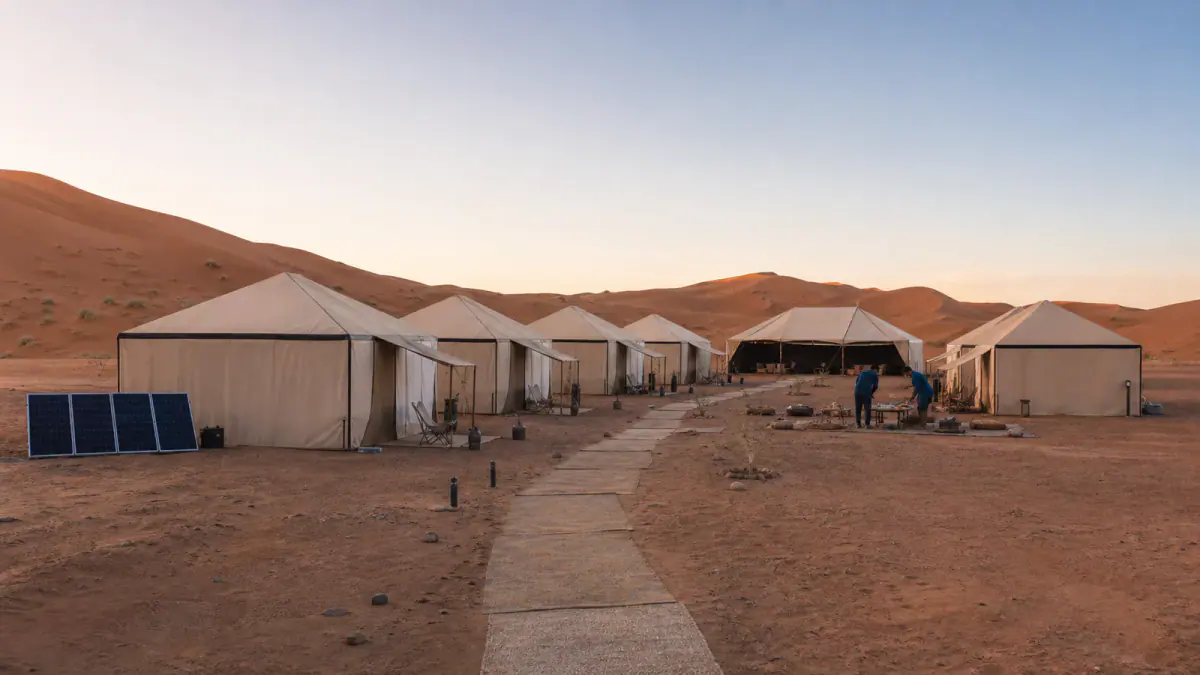
- Desert camp: a group of guest tents with shared services and a communal space.
- Bivouac: traditionally a temporary camp; in tourism it may describe anything from simple mobile tents to an established site.
- Luxury camp: a marketing category, not enough information to judge facilities.
- Auberge or desert hotel: a fixed building near the dunes, often with easier road access, solid walls and reliable bathrooms.
- Nomadic camp: may describe style or a cultural experience rather than an actively mobile household.
The Moroccan National Tourist Office lists bivouacs among the country’s accommodation types, but individual comfort still varies. Compare the room and services, not only the label.
A dune-edge hotel plus a sunset excursion can be the better choice for travelers who need air conditioning, step-free access, a quiet private bathroom or freedom from group schedules.
Basic, Comfort and “Luxury” Camps
Price bands do not follow one universal standard, but camps often fall into three practical patterns.
Basic Camp
Expect a simple sleeping tent, mattress or bed, shared bathroom facilities, communal dinner and limited electricity. A good basic camp can be clean, warm and memorable. Ask whether bedding, towels and shower access are included.
Comfort Camp
This category may add a proper bed, thicker flooring, private or nearby bathrooms, better lighting and more space. The word “private bathroom” must still be checked: it may mean an attached room, a separate facility assigned to your tent, or a shared block described unclearly.
High-Comfort or Luxury Camp
These listings often promise ensuite bathrooms, large beds, decorative furnishings, multi-course meals and private transfers. Some deliver that experience. Others add rugs and a shower to the same canvas shell while using “luxury” to justify a much higher price.
Ask what works at night, not only what exists:
- Does the heater run after the generator is off?
- Is hot water available at full occupancy?
- Can outlets charge more than one device?
- Does the toilet flush normally?
- Is the tent sealed against wind-driven sand?
- How far is your room from music and dining?
Inspect the Exact Tent Category
Booking pages often mix photographs from several room types. The hero image may show the most expensive suite while the selected rate buys a smaller shared-bath tent.
Request recent photographs of the exact category, including:
- the whole sleeping area;
- beds and bedding;
- tent walls and door closure;
- floor surface;
- window or ventilation;
- bathroom entrance;
- shower and toilet;
- power outlets;
- distance to the communal tent.
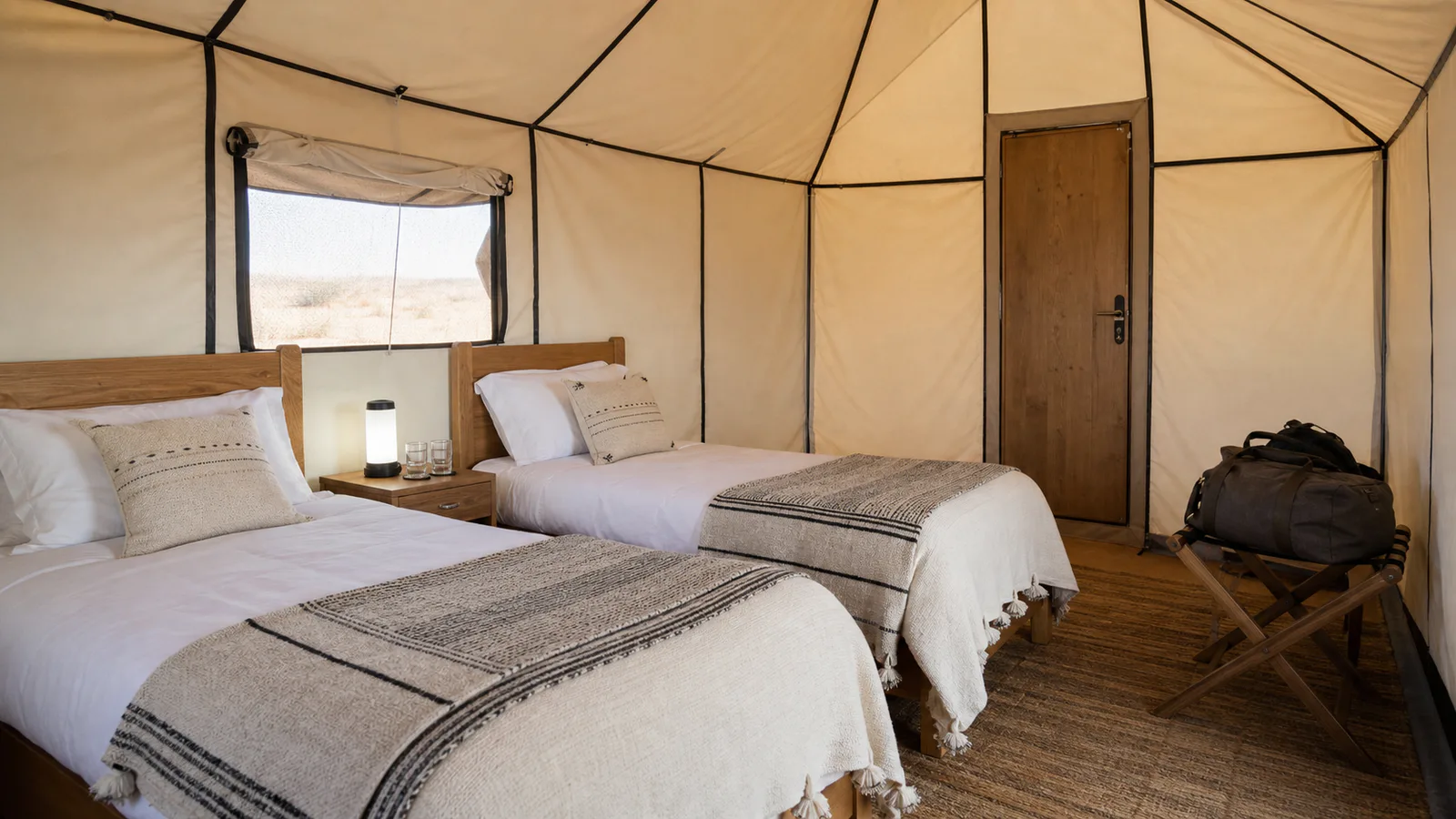
Canvas does not insulate like a hotel wall. Even a beautifully furnished tent responds to wind, sun and nighttime cold. A photograph can prove that a blanket exists; it cannot prove the room will be warm.
Bathroom Questions That Prevent Surprises
Bathroom language causes more misunderstandings than almost any other camp detail.
Ask:
- Is the bathroom inside the same tent?
- Is it fully enclosed from the sleeping area?
- Is the toilet flush, chemical or dry?
- Is the shower hot, and how is water heated?
- Are towels and soap provided?
- Can hot water run out?
- Is water pressure reduced at busy times?
- How is wastewater handled?
- Is the path lit at night if facilities are external?
A private bathroom is not automatically environmentally better. Water and wastewater management matter in an arid landscape. A simple shared system may use resources more efficiently than decorative private showers, depending on design and operation.
Short showers are sensible even when hot water is included.
Heating, Cooling and Ventilation
Desert days and nights can feel dramatically different. Winter nights may be cold; summer tents can remain hot long after sunset.
“Heating available” might mean:
- an electric heater that runs only during generator hours;
- a gas heater used under staff supervision;
- heated bedding;
- extra blankets;
- a fixed unit with limited output.
Never bring your own fuel heater into a closed tent. Combustion creates fire and carbon-monoxide risk.
For warm conditions, ask about mesh windows, cross-ventilation, shade and the time the sun reaches the tent. Air conditioning in a remote camp may be limited by generator or solar capacity even when a listing mentions it.
Travelers sensitive to temperature should choose the season first and the camp second. No amount of interior decoration can cancel extreme heat.
Electricity, Wi-Fi and Phone Signal
Remote-camp electricity may come from solar panels, batteries or generators. That can be sufficient for lighting and phone charging but not for hair dryers, medical devices or continuous heating.
Confirm:
- electricity hours;
- outlet type and location;
- whether charging happens in the tent or a communal area;
- whether high-power appliances are prohibited;
- availability of backup power;
- phone signal by network;
- whether Wi-Fi reaches guest tents.
Bring a charged power bank and a small flashlight. Download tickets, maps and key contacts before the transfer.
If you rely on a powered medical device, obtain a specific written answer about wattage, runtime and backup. “We have electricity” is not enough.
Understand the Camp Transfer
The room rate may begin at a hotel, parking area, village office or desert-edge auberge. It may include a 4x4 ride, a camel ride, one direction only, or no transfer at all.
Ask for:
- meeting-point map pin;
- safe parking details;
- latest check-in time;
- transfer duration;
- vehicle type;
- luggage limit;
- return departure time;
- private versus shared transfer;
- weather alternative;
- total extra cost.
Camel transfer should always be optional. Travelers who are uncomfortable riding, pregnant, mobility-limited or concerned about animal welfare need a 4x4 option without pressure or embarrassment.
Our Morocco desert transport and route guide explains how camp transfers fit the longer Marrakech–Merzouga and Fes–Merzouga journeys.
Meals and Dietary Needs
Most camps include dinner and breakfast. “Dinner included” does not reveal the menu, serving time, drinks or dietary flexibility.
Clarify:
- fixed or buffet meal;
- vegetarian and vegan options;
- allergies and cross-contact limitations;
- bottled or treated drinking water;
- drinks included or charged separately;
- breakfast time before departure;
- late-arrival meal policy;
- child portions.
Communicate serious allergies in writing and repeat them on arrival. Remote kitchens may have fewer substitute ingredients and less separation than urban restaurants. Carry an appropriate safe snack.
Camp dinner often becomes a social evening around tagine, soup, bread and tea. Enjoy it as hospitality without assuming that every menu or music performance represents all Saharan food and culture.
Music, Quiet and Group Size
Many camps offer drumming or music after dinner. Some travelers value it; others booked the desert for silence.
Ask how long evening music normally lasts and whether outside tour groups visit. A camp with twelve tents can feel intimate until several vehicle groups arrive for dinner.
For quiet:
- request a tent away from the communal area;
- avoid listings centered on “party” language;
- ask about generators at night;
- check how close neighboring camps are;
- carry earplugs for wind, music and other guests.
Silence is not guaranteed simply because the nearest city is far away.
Camel Welfare and Optional Activities
A camp may bundle camel transport into the package. Ask whether a non-riding transfer changes the price and how the animals are managed.
Look for:
- handlers who work calmly;
- appropriate loads;
- visible rest and water;
- tack that appears fitted and maintained;
- no wounds or obvious distress;
- an operator willing to accept “no ride.”
Do not ride if an animal appears injured, extremely thin or agitated. A dune walk or vehicle transfer can provide the same sunset without using an animal.
The activities page explains how to evaluate camel rides and other desert experiences in more detail.
Accessibility and Health
“Accessible” needs to be described as a route, not a label. Sand, soft rugs, tent thresholds and narrow bathroom doors can defeat a nominally step-free camp.
Ask for measurements and photographs of:
- vehicle entry height;
- transfer from parking to tent;
- firm path width;
- tent threshold;
- space beside the bed;
- bathroom doorway;
- shower lip;
- grab rails;
- distance to dining;
- emergency vehicle access.
People with respiratory conditions should consider dust and smoke from fires. Travelers with serious allergies need a plan for remote response. Anyone with limited mobility should prefer a camp near firm vehicle access rather than a long sand crossing.
Travel insurance should cover the actual activities in the booking. Current UK Morocco travel guidance advises appropriate preparation, professional support and suitable insurance for outdoor and adventure travel.
Families and Children
A camp night can work well for children when adults reduce expectations.
Check:
- family tent layout;
- bed rails or cots;
- hot surfaces and open fires;
- unguarded drops or dunes;
- vehicle movement through camp;
- early meal availability;
- nighttime temperature;
- distance to the bathroom;
- whether music continues late.
Do not let young children wander between tents after dark. Paths can look identical, and vehicles may arrive unexpectedly.
A one-night stay is usually enough for a first family visit. Choose a camp with easy 4x4 access and a nearby auberge rather than the most remote listing.
Environmental Questions
Remote hospitality creates a real service footprint. Water arrives, waste leaves, vehicles cross the landscape and energy must be generated.
Ask the operator how it handles:
- drinking and washing water;
- sewage and greywater;
- solid-waste removal;
- single-use plastic;
- generator hours;
- solar power;
- off-road vehicle routes;
- camp expansion;
- local staffing and purchasing.
Leave No Trace guidance for desert camping emphasizes established or durable surfaces and protection of fragile soils and vegetation. Guests can help by staying on used paths, not collecting rocks or plants, refusing disposable items where practical and taking personal waste back to a managed bin.
Do not confuse remoteness with zero impact.
Reviews: What to Read Between the Stars
Recent written reviews are more useful than the average score. Sort by newest and look for repeated details.
Useful review signals include:
- exact month of travel;
- room category;
- transfer experience;
- bathroom and hot-water details;
- nighttime temperature;
- noise;
- staff response to a problem;
- whether images matched reality.
A single complaint can reflect unusual weather or mismatched expectations. Several recent reviews describing the same failed heater or surprise transfer fee indicate a pattern.
Check whether management replies with specific corrections or generic denial. A calm response that explains what changed is more reassuring than an argument.
Pricing and Hidden Costs
Build the total before comparing camps:
room + both transfers + meals + water + activities + taxes or local charges + cancellation risk
Potential extras include:
- 4x4 transfer;
- camel ride;
- private rather than shared transport;
- sandboarding;
- lunch;
- drinks;
- heater;
- child bed;
- pickup from Merzouga or another town;
- card-processing or currency conversion;
- tips.
Pay through a method that provides a receipt and clear booking record. Save the listing, included services and cancellation conditions because pages can change after purchase.
If booking through a Marrakech or Fes tour operator, ask for the actual camp name. “Similar luxury camp” prevents you from checking facilities and reviews.
Weather, Cancellation and Backup Plans
Wind, rain, extreme heat and road conditions can change a desert stay. Ask who decides when a transfer is unsafe and what alternative accommodation or refund applies.
A responsible answer may include:
- moving guests to a dune-edge auberge;
- delaying the transfer;
- using a different vehicle route;
- canceling an exposed activity;
- returning earlier;
- changing meal arrangements.
Do not pressure a driver to continue into poor visibility because the camp is prepaid. Safety is more valuable than one sunset.
Heavy rain can cause flash flooding in dry channels and make secondary roads dangerous. Follow local authorities and professional drivers rather than selecting a route from a map.
Copy-and-Send Camp Questions
Send this before paying:
Hello. I am considering the [exact room name] for [date] for [number] guests. Please confirm the camp map pin, meeting point, included return transfer, transfer type and duration. Is the bathroom inside our tent and fully private? How do hot water, heating/cooling and electricity work at night? Which meals and drinks are included? Is 4x4 transport available instead of a camel ride? Please also confirm the total price, all extra charges, return time and bad-weather cancellation policy. Thank you.
Add accessibility, allergy, child-bed or medical-power questions as needed. Keep the reply with the booking.
What to Pack for the Camp Night
Use a small overnight bag:
- warm layer appropriate to the season;
- breathable daytime clothing;
- closed shoes plus easy camp footwear;
- sun protection and sunglasses;
- scarf or buff;
- water;
- personal medication;
- power bank and charging cable;
- flashlight or headlamp;
- tissues and small toiletries;
- earplugs;
- offline booking details.
Leave large luggage at the hotel, auberge or vehicle only when the operator confirms secure storage. Do not assume valuables are insured.
Final Decision
The best Morocco desert camp is not necessarily the deepest, most decorated or most expensive. It is the one whose operator can explain the location, transfer, facilities, limits and environmental systems without hiding behind adjectives.
Choose Merzouga for Erg Chebbi access, Mhamid for a more remote Chigaga route, Zagora for a shorter southern journey, or Agafay for proximity to Marrakech—but compare each place to its real landscape.
Then choose the tent as carefully as a hotel room. Confirm the bathroom, power, temperature plan, meals and return in writing. Once those practical questions are settled, the desert can provide what marketing photographs cannot: space, changing light and a genuinely quiet night.