Marrakech feels different when you stop treating it as a checklist. Beyond Jemaa el-Fna, the main souks and the best-known palaces, there is a quieter city of small museums, shaded lanes, neighborhood bakeries, restored gardens and modern art spaces.
These places are not all secret. Some are well known, but they create a slower and more personal day than the standard race between major sights. This guide connects them into two flexible routes: one through the northern medina and Gueliz, and another through the Mellah and Menara Gardens.
Quick answer: For a quieter Marrakech experience, begin early around Dar El Bacha, choose one small museum, pause in a calm medina courtyard, and spend the afternoon in Gueliz. On the second day, explore the Mellah respectfully, take a long lunch or hammam break, then visit Menara Gardens near sunset if the sky is clear.
Quiet Marrakech Places at a Glance
| Place or experience | Best for | Allow | Useful timing |
|---|---|---|---|
| Dar El Bacha museum quarter | Architecture and decorative arts | 1–2 hours | Near opening time |
| House of Photography | Historic images and a medina rooftop | 1–1.5 hours | Late morning |
| Mouassine and northern medina lanes | Slow walking and small details | 1–2 hours | Morning |
| Mellah | Layered history and neighborhood streets | 2 hours | Morning |
| A hammam | Rest after a walking day | 1.5–2.5 hours | Booked afternoon |
| Gueliz galleries | Contemporary Marrakech | 2–3 hours | Afternoon |
| Menara Gardens | Open space and Atlas views | 1–1.5 hours | Late afternoon |
Do not try to combine every row in one day. The pleasure comes from choosing fewer stops and leaving room for a long tea, an unexpected exhibition or a lane that looks worth following.
Before You Go: What “Hidden” Means Here
Marrakech is a living city, not a collection of empty photo sets. A quiet lane may lead to family homes, a mosque, a workshop or a school. Walk normally, keep voices low in residential passages and ask before photographing people, shop interiors or artisans at work.
Some locations below charge admission, close weekly or change hours during Ramadan, holidays and exhibition installations. Check the linked official page on the day before your visit. A map pin is useful, but it is not a guarantee that a door is open.
The routes also assume that you are comfortable walking on uneven paving and sharing narrow lanes with bicycles, carts and scooters. Comfortable closed shoes are more useful than a perfect outfit. If mobility is limited, use taxis between districts and ask each venue about step-free access before arriving.
Day One: Dar El Bacha, Northern Medina and Gueliz
This route is designed for travelers who want architecture, photography and contemporary art without spending the entire day in the busiest souks.
1. Start in the Dar El Bacha Museum Quarter
Dar El Bacha is one of the best places to understand why Marrakech buildings often hide their beauty behind plain outer walls. The former palace is organized around a garden courtyard, with carved wood, zellige, painted ceilings and plasterwork revealing themselves only after you enter.
The building now houses the Museum of Confluences. The National Foundation of Museums describes collections of Moroccan decorative arts and ethnographic objects, while temporary exhibitions add a reason to return. Its official listing currently shows Tuesday to Sunday opening, but verify the latest schedule before walking across the medina.
Arrive near opening time if architecture matters more to you than the social scene around the entrance. Look at the proportions of the courtyard, the transitions between shaded rooms and open garden, and the workmanship around doors and ceilings. Do not rush directly toward the most photographed corner.
The surrounding Riad Laarous and Dar El Bacha lanes are worth a slow walk, but “getting lost” is less romantic when you have a timed booking. Save your accommodation pin offline and use a known landmark as your next anchor.
2. Choose One Small Medina Museum
Marrakech has enough museums to fill several days. The quieter approach is to choose one collection that matches your interests.
The House of Photography works well for travelers curious about how Morocco was documented in earlier photography. The official Marrakech tourism listing says its collection includes photographs, postcards, glass plates and other historical documents. Check the House of Photography visitor information before going because prices and hours can change.
Another option is to stay near Dar El Bacha and spend more time with its temporary exhibition. One thoughtful museum visit usually adds more to a day than three rushed admissions.
When viewing old photographs, remember that an archive shows the perspective of its makers and collectors; it is not a complete portrait of Morocco. Read captions, notice dates and compare the images with the living city outside.
3. Walk the Lanes Instead of Shopping the Whole Souk
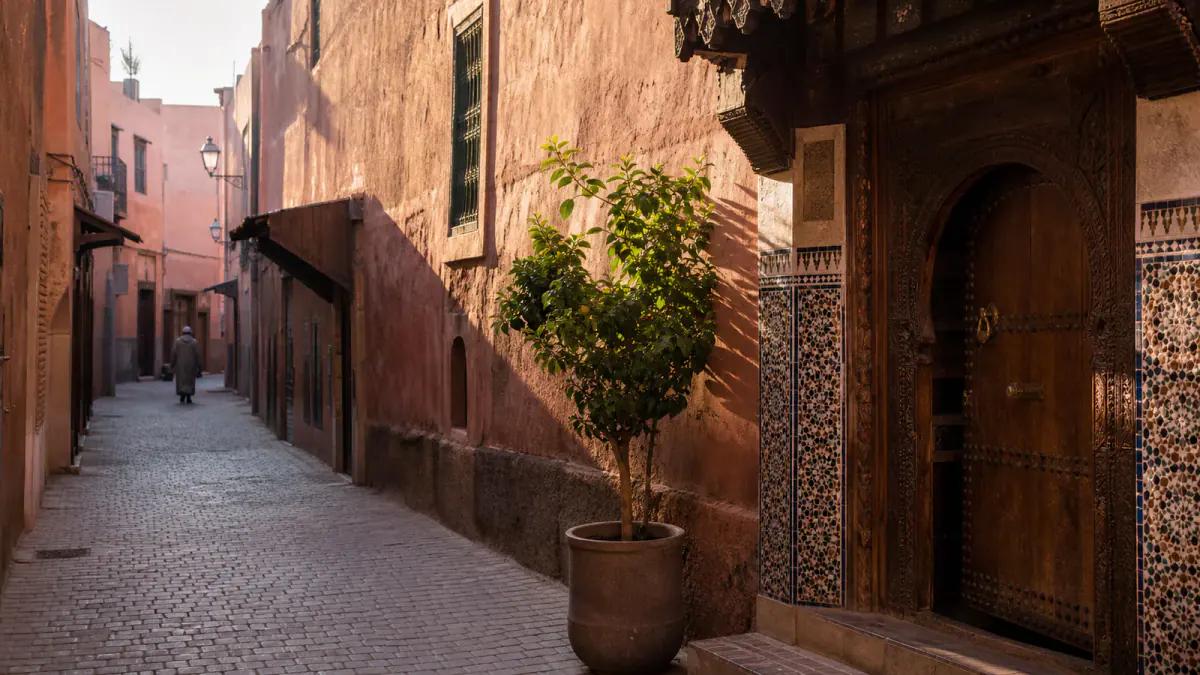
The medina is calmer when you stop trying to cover every market. Choose a direction between clear anchors and pay attention to ordinary details: communal fountains, carved doors, bread trays moving toward a neighborhood oven, cats sleeping in shade and workers opening small shops.
This is not an invitation to treat private life as scenery. Avoid aiming a camera through open doors. If an artisan welcomes you into a workshop, ask whether photographs are acceptable and do not assume that a conversation obliges you to buy.
A simple technique keeps the walk relaxed:
- Save your starting point and next landmark offline.
- Follow wider lanes when you want efficient movement.
- Take smaller passages only when they are clearly public.
- Ignore unsolicited claims that a road is “closed” unless there is a visible barrier.
- Ask a shopkeeper or uniformed official for directions if uncertain.
For the major monuments and souk structure, use the separate guide to Marrakech walls, palaces and gardens. This page intentionally stays with the slower secondary route.
4. Take a Real Midday Pause
The most useful hidden Marrakech experience may be an empty hour. In hot weather, the early afternoon is a poor time to keep collecting outdoor sights. Choose a courtyard lunch, return to your riad, or sit somewhere that does not depend on a panoramic view.
Order one meal and let it be the activity. A vegetable tagine, harira, tanjia or seasonal salad provides a more meaningful pause than another hurried coffee. Our guide to traditional Moroccan dishes explains what common menu names mean without turning lunch into a food challenge.
Hydrate even outside summer. Medina shade can make the heat feel mild until fatigue arrives suddenly.
5. See Contemporary Marrakech in Gueliz
Gueliz is not an interruption to “authentic” Marrakech. It is part of the city: broad avenues, apartment buildings, cafes, bookshops, galleries and residents moving through an ordinary working day.
The official tourism board’s creative Marrakech itinerary highlights galleries and concept stores in Gueliz alongside traditional craft spaces in the medina. Exhibitions change, which is exactly why this district rewards checking current listings instead of relying on an old top-ten article.
Choose one or two galleries rather than attempting every name on a map. Confirm opening hours directly, especially around lunch and on Mondays. If a gallery is closed, let the neighborhood itself be the plan: walk, find coffee and notice how Marrakech functions beyond the old walls.
This modern-district afternoon pairs especially well with a medina morning because the contrast prevents visual fatigue. It also makes taxis and evening dinner logistics easier.
Day Two: Mellah, Hammam and Menara
The second route moves south through a part of Marrakech where Jewish, royal, commercial and residential histories meet. It ends with rest and open space rather than another dense monument.
1. Begin at Place des Ferblantiers
Place des Ferblantiers is a useful orientation point between Bahia Palace, the Mellah and the streets toward the Kasbah. Metal lanterns and decorative goods make it visually busy, but the square also helps you understand how these neighboring districts connect.
Arrive in the morning, look at your route before entering smaller lanes and resist following the first person who offers a “shortcut.” If you want Bahia Palace, visit it as a deliberate main sight; if not, use the square as the beginning of a more focused Mellah walk.
2. Walk Through the Mellah with Context
The Mellah is Marrakech’s historic Jewish quarter. Its streets hold a history that should not be reduced to picturesque balconies or a quick market photograph. The official Marrakech Mellah guide groups the neighborhood’s market, public spaces and heritage sites as part of a connected visit.
Walk slowly enough to notice how street proportions and upper floors differ from other sections of the medina. Some religious and community spaces may welcome visitors, but access and hours can change. Dress respectfully, follow any instructions at the entrance and avoid interrupting worship or private gatherings.
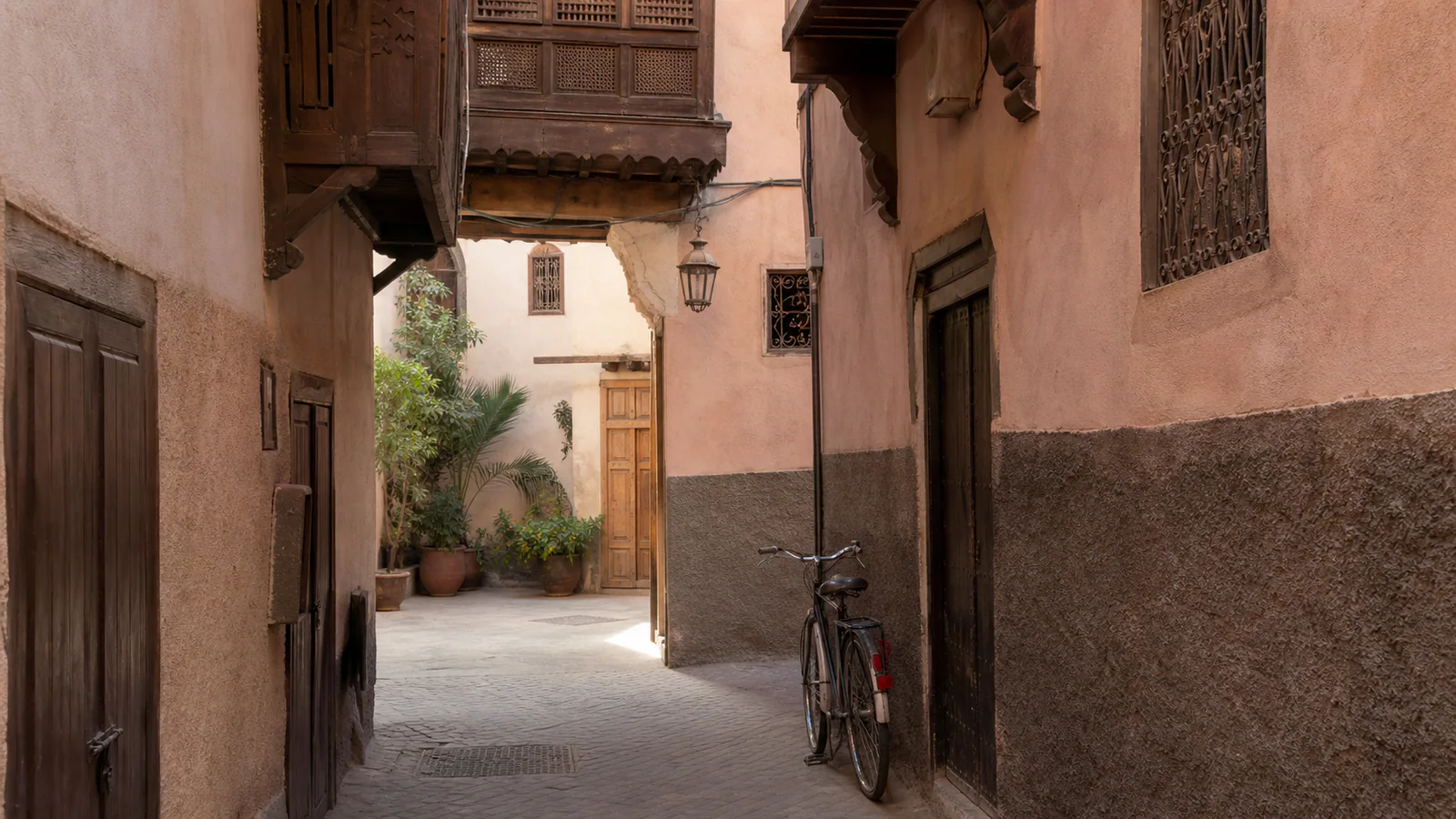
The Mellah is still a neighborhood. Photograph architecture from public space, ask before photographing residents and avoid narrating local life as though the area were abandoned. The value of the walk lies in understanding another layer of Moroccan history, not claiming to have found an untouched secret.
3. Add One Nearby Cultural Stop
From the Mellah, several major attractions are close: Bahia Palace, Dar Si Said and the Saadian Tombs are common choices. For this quieter route, select only one.
Dar Si Said is useful if decorative arts and craft history matter most. Bahia Palace offers larger-scale architecture. The Saadian Tombs provide a focused historical visit but can feel crowded at peak times. Check official opening information and decide based on your energy rather than online rankings.
If you already visited the main palaces on another day, skip this step. A slow walk followed by lunch is a complete morning.
4. Choose the Right Hammam Experience
A hammam can be either a local public bath or a private spa treatment. They share a bathing tradition but offer very different levels of guidance, privacy, price and comfort.
A public neighborhood hammam is practical rather than theatrical. Facilities are commonly separated by gender or use different schedules, and visitors normally bring or buy bathing supplies. Procedures vary, so first-time travelers should ask their riad host for a nearby option and a clear explanation.
A private hammam or spa costs more but usually supplies towels, products and step-by-step assistance. It is the easier choice if you want relaxation without learning local bathhouse routines on arrival.
Whichever you choose:
- confirm whether advance booking is required;
- ask what clothing or swimwear is expected;
- mention allergies, pregnancy or health concerns before treatment;
- drink water before and after;
- keep phones and cameras away from all bathing areas;
- do not treat vigorous exfoliation as a test of endurance.
The hammam belongs in this route because it creates a genuine break. Marrakech becomes more enjoyable when every hour is not spent standing, bargaining or navigating.
5. End at Menara Gardens—With Realistic Expectations
Menara Gardens offer olive trees, a large basin, a historic pavilion and, in clear weather, a view toward the Atlas Mountains. They are valuable for space and atmosphere, not for dense botanical displays.
The official regional tourism board’s Marrakech gardens guide describes Menara as an old olive grove facing the mountains. Conditions matter: haze can hide the Atlas, midday can feel exposed, and the basin area can be busy on weekends.
Late afternoon usually gives softer light and more comfortable walking, but do not arrive only for a guaranteed postcard view. Treat the mountains as a bonus. The olive grove and changing local rhythm are the experience.
Use a taxi if you are tired. The approach from the medina looks manageable on a map, yet road crossings, heat and a full day of walking can make it feel longer.
If You Have Only Half a Day
Choose one of these combinations:
- Architecture: Dar El Bacha, surrounding lanes and a courtyard lunch.
- History: Place des Ferblantiers, the Mellah and one nearby cultural site.
- Art: one medina museum, lunch, then two Gueliz galleries.
- Rest: a short medina walk, long lunch and pre-booked hammam.
- Open space: Gueliz coffee followed by Menara in late afternoon.
Do not combine the Mellah, Dar El Bacha, Gueliz and Menara in four hours. You would spend the visit watching a route line on your phone.
When Quiet Marrakech Is Actually Quiet
Early morning is best for soft light and easier navigation, although shops and museums may not be open yet. Late morning works for cultural venues. Early afternoon favors lunch, a riad break or hammam. Late afternoon suits gardens and Gueliz.
Friday changes the rhythm around mosques and some family businesses. Mondays are common closing days for museums and galleries, but not universal. Ramadan and religious holidays can alter schedules. Always confirm individual venues.
Winter mornings can be cool, while summer afternoons can be dangerously hot. A “quiet” lane is not automatically a comfortable lane at 2 p.m. in July.
How This Route Fits a Longer Marrakech Trip
Use these slower days after seeing the essential landmarks, or alternate one with a busier sightseeing day. If this is your first visit and you need the main attractions in a logical order, start with our Marrakech 3-day itinerary.
Where you sleep also changes how calm the city feels. A medina riad places you near the morning route but may involve luggage access and nighttime noise; Gueliz simplifies taxis and modern dining. Compare the tradeoffs in our guide to where to stay in Marrakech.
For a nature day after the city, choose a clearly named destination rather than a vague “Atlas tour.” Our Atlas Mountains trips from Marrakech compares Imlil, Ourika and Ouirgane.
Frequently Asked Questions
Are there truly hidden places in Marrakech?
There are quiet corners, but very few visitor-ready places are secret. Dar El Bacha, the Mellah, Gueliz galleries and Menara are known locations. The less-touristy feeling comes from timing, choosing smaller venues and moving slowly.
Is the Marrakech medina safe to explore alone?
Many visitors explore independently, but ordinary city awareness still matters. Keep valuables controlled, use known landmarks, avoid empty passages late at night and reject unwanted guiding firmly but politely. Ask your accommodation for current neighborhood advice.
Can I photograph people in the medina?
Ask first. A public street does not remove someone’s right to refuse a portrait. Be especially careful around children, worship, bathing spaces, workshops and private doorways.
Is the Mellah worth visiting?
Yes, if you visit for its history and present-day neighborhood context rather than only for photographs. Pair it with one nearby museum or palace and allow time to walk without rushing.
Are Menara Gardens the same as Jardin Majorelle?
No. Menara is a broad historic olive grove with a basin, pavilion and possible Atlas view. Jardin Majorelle is a designed botanical garden with timed visitor demand and a very different experience.
Should I choose a public or private hammam?
Choose a public hammam if you understand the local routine and want a functional neighborhood bath. Choose a private spa if you prefer supplied products, clearer guidance and more privacy.
Final Takeaway
Quiet Marrakech is less about discovering a place no one knows and more about changing your pace. One small museum, one neighborhood walk, a long pause and a garden can reveal more than another crowded list of ten attractions.
Start early, verify current hours, photograph respectfully and give each district enough time to feel distinct. The Red City is at its richest when you leave space for ordinary life between its monuments.