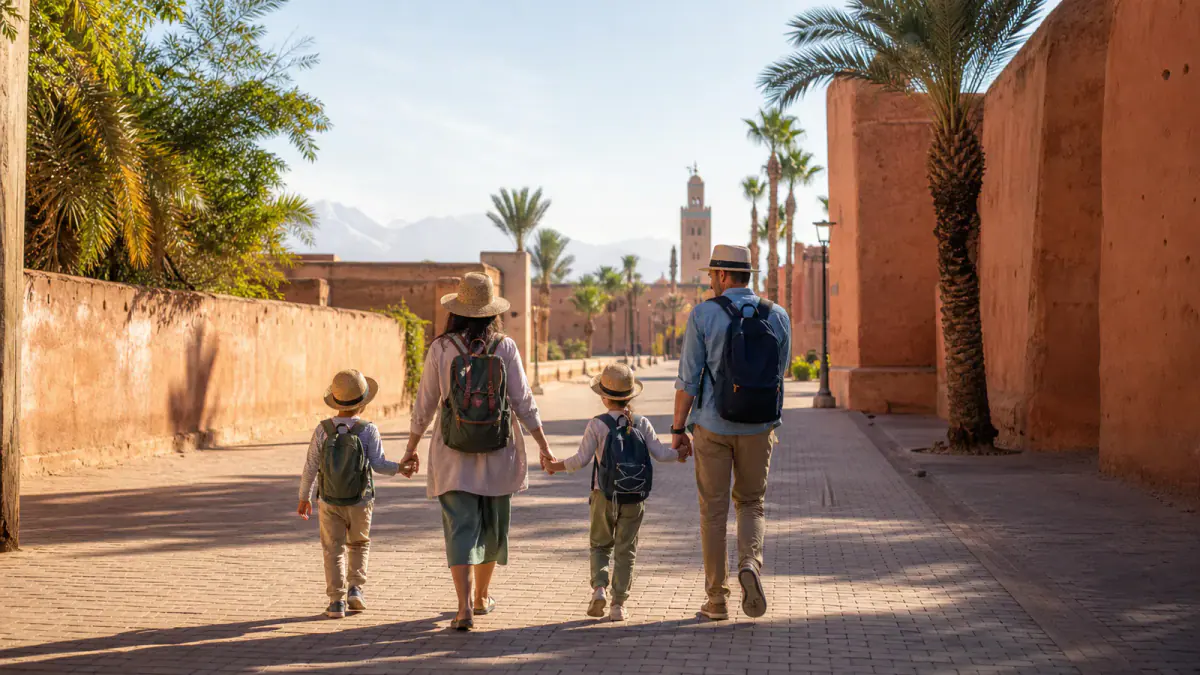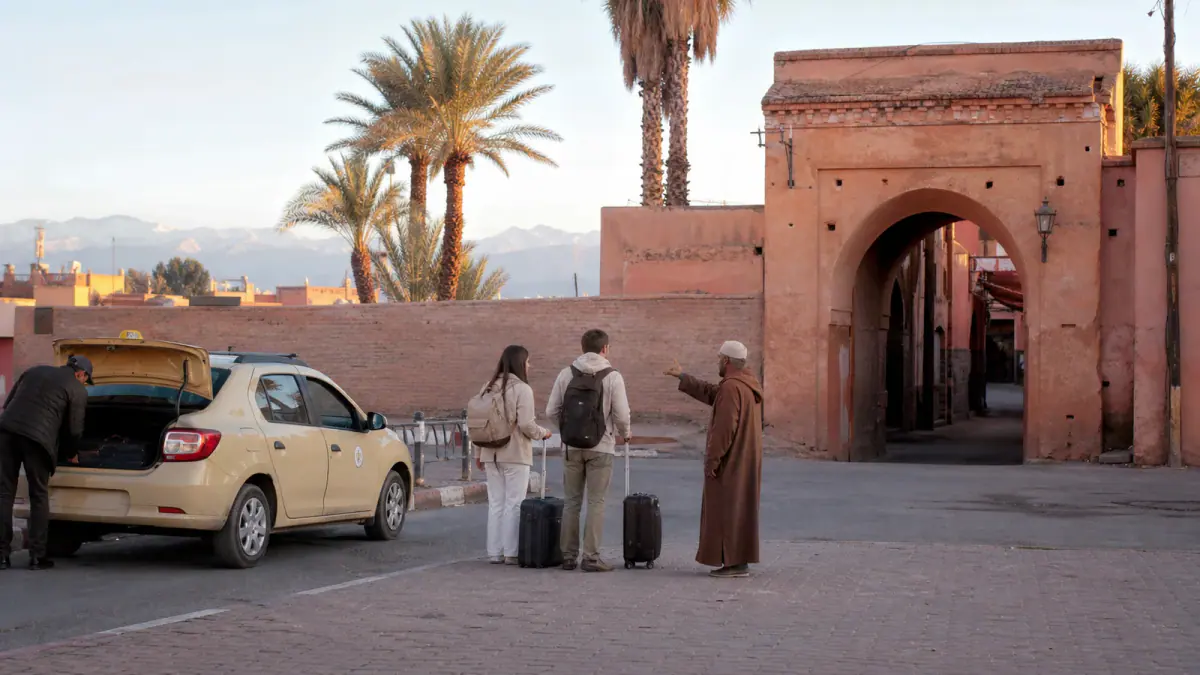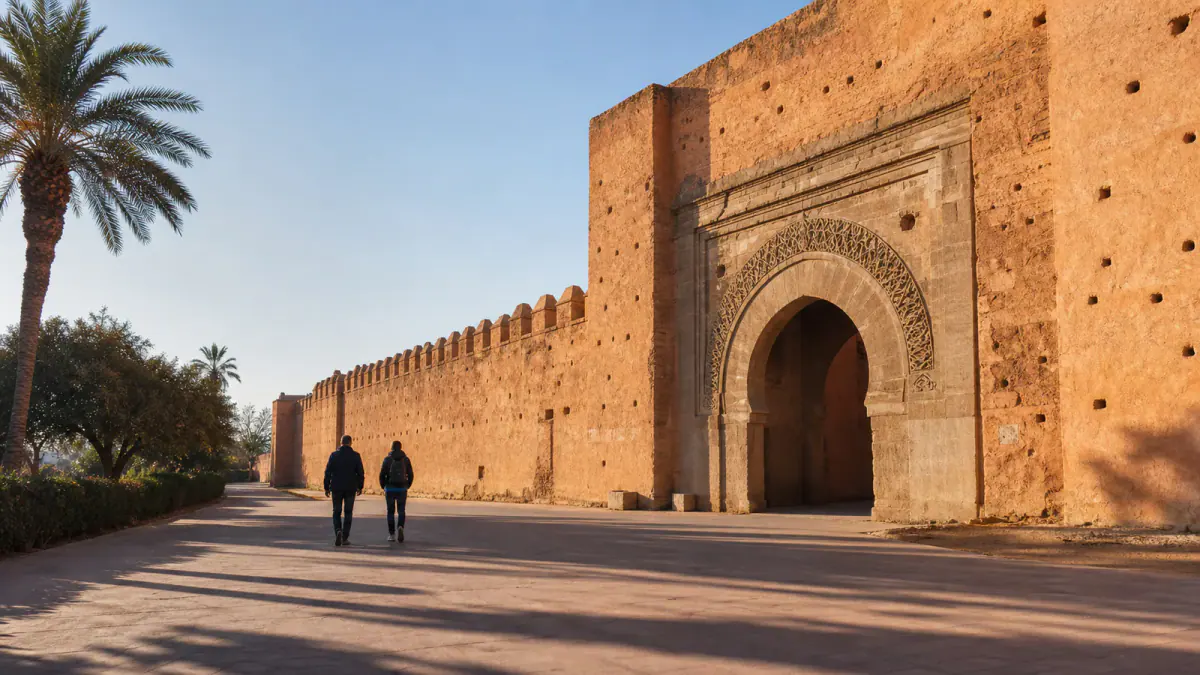
Marrakech is easy to photograph and surprisingly easy to misunderstand. A first walk may feel like a sequence of tiled courtyards, spice displays, motorbikes and persistent invitations to shop. Stay a little longer, however, and the city begins to reveal a more useful rhythm: bread moving from neighborhood ovens to family tables, artisans working behind the displays, the medina quietening during prayer, and Jemaa el-Fna changing character several times in a single day.
This Marrakech culture guide is about that rhythm. It explains what visitors are seeing, what to eat, how bargaining works, what happens in a hammam, and how to approach people and places with respect. It is not a sightseeing schedule; for day-by-day logistics, use our separate Marrakech three-day itinerary.
Marrakech Culture at a Glance
Marrakech is not a preserved stage set. It is a working Moroccan city where tourism, family life, worship, trade and contemporary design share the same streets.
Keep these principles in mind:
- Observe before photographing. A workshop or performance is someone else’s work, not just visual material.
- Ask before taking a close portrait. A smile and a simple request prevent most uncomfortable encounters.
- Treat bargaining as a conversation. It should end with both sides comfortable, not with one person humiliated.
- Dress for context. Light, loose clothing that covers shoulders and knees works well in the medina and is practical in the heat.
- Slow down around religious moments. Mosques and neighborhood prayer are parts of daily life, not tourist attractions.
- Spend where skill is visible. Buying directly from a craft workshop or choosing a locally run food experience keeps more value in the city.
Arabic and Tamazight are Morocco’s official languages, while Darija—the Moroccan form of Arabic—is what visitors hear most often in everyday conversation. French is also widely used in tourism and commerce. You do not need to speak any of them fluently. A warm salam alaykum (peace be upon you), shukran (thank you) and patient body language go a long way.
Jemaa el-Fna Is a Living Cultural Space
The main square is often described as Marrakech’s biggest attraction, but “attraction” is too small a word. UNESCO recognizes the cultural space of Jemaa el-Fna for its concentration of oral, musical, religious and artistic traditions. The square has long been a meeting place where commerce and performance overlap.
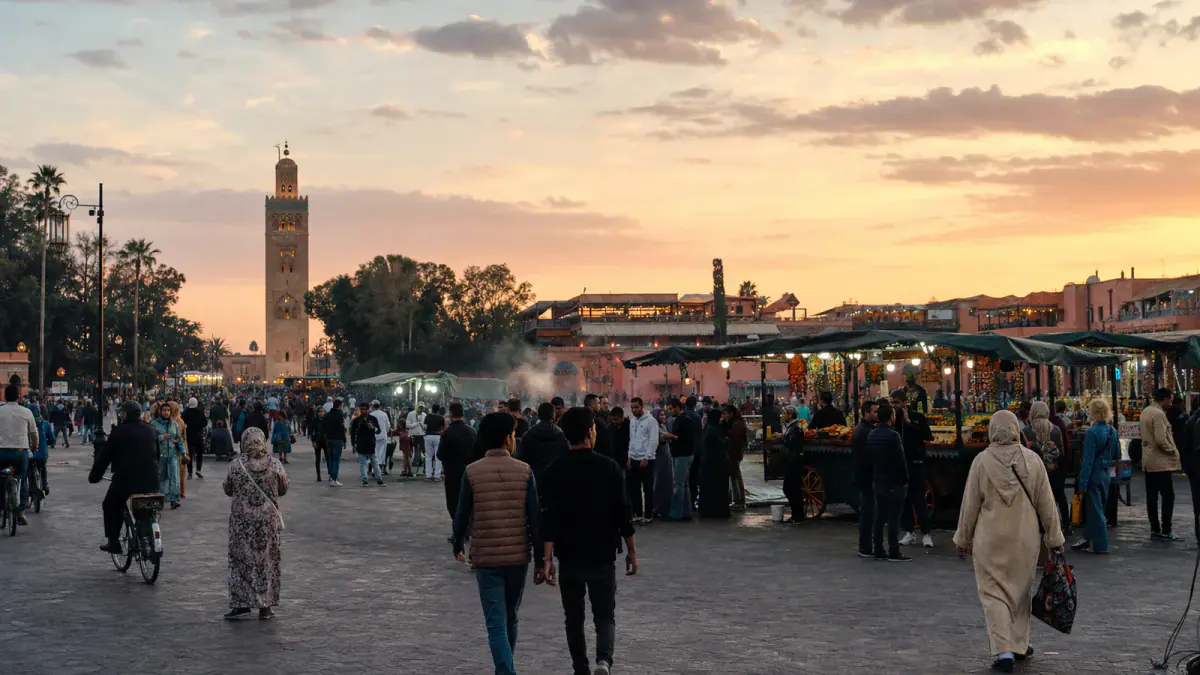
Its mood changes by the hour. In the morning, the open space feels relatively functional: juice sellers set up, people cross between the souks and the Koutoubia side, and delivery carts finish their rounds. In late afternoon, circles begin to form around musicians and storytellers. After sunset, smoke rises from the food stalls and the square becomes louder, denser and more social.
Watching from a rooftop can help you understand the shape of the square, but culture is not only a view from above. Walk through slowly, leave room around performance circles, and notice who the audience is. Marrakchis use the square too.
Performers, Photos and Payment
If you deliberately stop for a performance, expect to contribute. The amount is not a fixed admission fee, but the performers are working. Keep small dirham notes or coins accessible so you do not need to open your full wallet in a crowd.
Ask before making a close photograph or video. Consent to watch is not automatically consent to publish someone’s face. If a performer names a photo price, agree before taking the picture. If you do not want the interaction, say “la, shukran” politely and continue walking.
Animal performances raise a separate issue. Visitors do not need a snake or chained macaque photograph to experience Jemaa el-Fna. Walking past without paying avoids supporting an activity when you cannot verify the animal’s care.
The Souks Are Workplaces, Not One Market
“The souk” is actually a network of lanes and specialist areas. Routes change gradually from leather and slippers to metal, wood, textiles, spices and household goods. Some shops sell work made on site; others sell objects brought from elsewhere. A polished display does not necessarily reveal who made the product.
The Moroccan National Tourist Office’s Marrakech shopping guide describes the city’s mix of Amazigh and Arab craftsmanship and identifies areas associated with metal, leather and decorative work. The useful lesson is not to memorize every souk name. It is to look beyond the first shopfront.
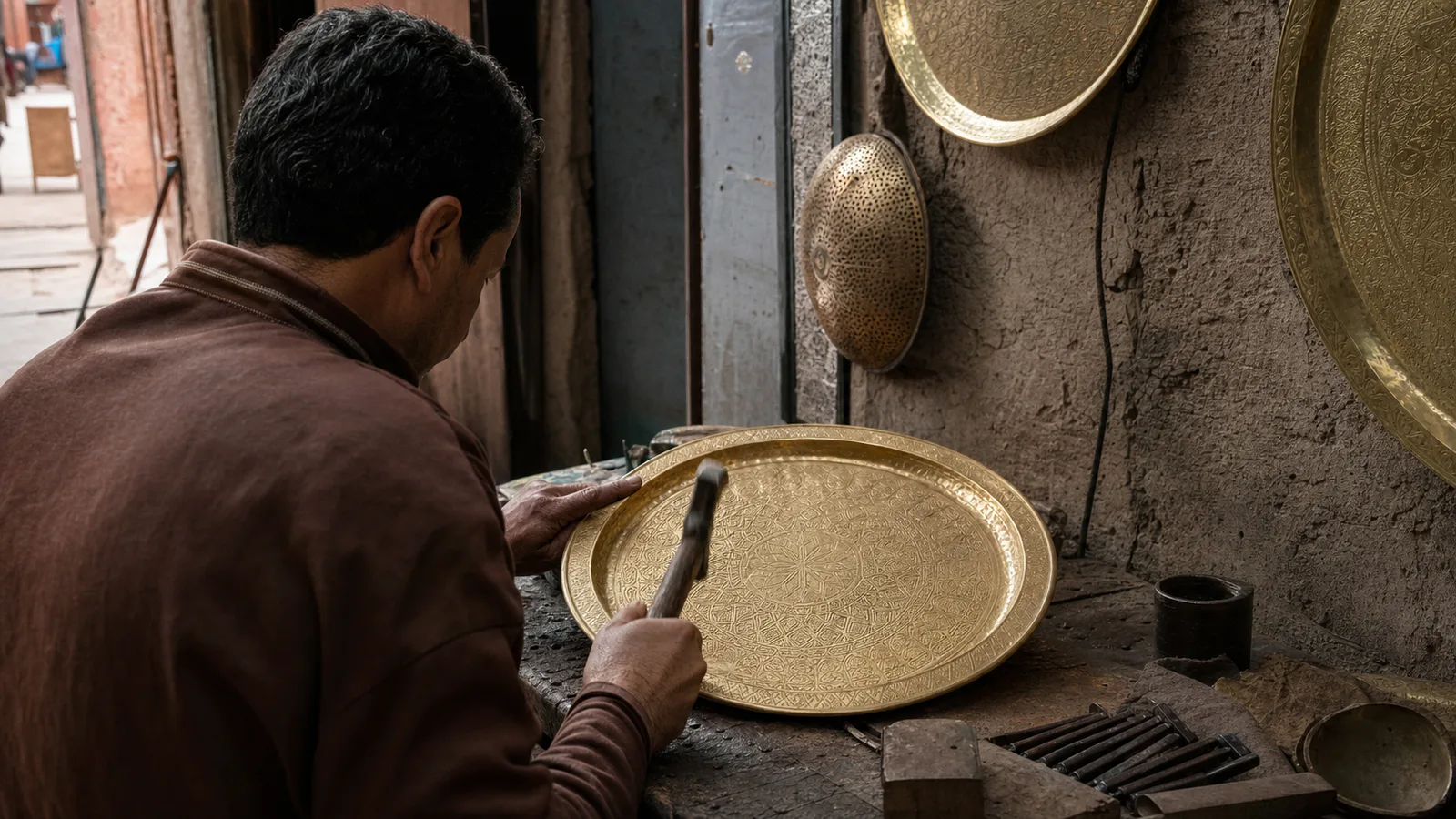
When a doorway opens onto a workshop, pause without blocking it. You may hear the repeated tap of a metalworker, see leather being cut, or watch wood turned on a simple lathe. Ask before entering or photographing. If someone explains the process, give them your attention even if you decide not to buy.
A Better Way to Judge Craft
Instead of asking only whether something is “authentic,” ask specific questions:
- Where was it made?
- What material is it?
- Was the pattern done by hand or machine?
- Can the seller show a similar unfinished piece?
- How should it be cleaned or transported?
Handmade is not one quality level. A rough, inexpensive object and a highly finished commissioned piece can both involve handwork. Time, material and precision affect price.
Be cautious with claims about “antique” objects, rare stones or old tribal pieces unless provenance is clear. Buying an item because you like its form and know what it is is safer than buying a dramatic story.
How to Bargain Without Making It Hostile
Negotiation is common in many medina shops, but it is not mandatory everywhere. Fixed-price cooperatives, contemporary boutiques, pharmacies, supermarkets and many food businesses display set prices.
In a negotiable shop, begin by deciding whether you genuinely want the item. Ask the price, make a reasonable counteroffer, and move in smaller steps. An opening offer so low that it dismisses the work can turn a friendly exchange sour. It is acceptable to say no and leave; it is less respectful to agree and restart the negotiation.
A practical sequence is:
- Compare quality and price at more than one shop.
- Ask what the object is made from and where it was produced.
- Decide your maximum price privately.
- Negotiate calmly, without pretending to be angry.
- Confirm the final price and currency before payment.
- Request suitable wrapping, especially for ceramics and metalwork.
Never feel obliged to buy because tea was offered. Hospitality and commerce often share the same space, but a glass of tea is not a contract. Equally, if an artisan gives you a long demonstration, do not treat their time as free entertainment.
Food Explains Marrakech Better Than a Checklist
Moroccan food carries Amazigh, Arab-Andalusian, Jewish and regional influences. The National Tourist Office’s gastronomy overview emphasizes both that cultural mixture and the importance of sharing food. In Marrakech, the meal worth understanding most deeply is not necessarily the most expensive one.
Tanjia Is the City’s Signature
Tanjia Marrakchia is meat slow-cooked in an earthenware jar, typically with preserved lemon, garlic, spices and smen, Morocco’s aged butter. Traditionally, the sealed jar cooks slowly in the warm ashes associated with a hammam furnace. It is different from tagine: tanjia names both the vessel and the Marrakech preparation, while a tagine cooks in a shallow conical pot.
The dish is rich and usually shared. Ask about portion size before ordering it alone. Restaurants prepare it in different ways, so avoid treating one plate as the universal version.
What Else to Try
- Moroccan salads: cooked and raw vegetable dishes served together at the beginning of a meal.
- Harira: a tomato-based soup with legumes, especially associated with breaking the Ramadan fast.
- Msemen: layered griddled flatbread, good at breakfast or with tea. Our traditional msemen recipe explains how the folds create its flaky texture.
- Couscous: traditionally connected with Friday lunch in many families, rather than an everyday restaurant side dish.
- Mint tea: a social gesture as much as a drink; sweetness varies widely.
- Fresh bread: a daily foundation, often carried to and from neighborhood ovens.
For a broader map of dishes and regional differences, read our Moroccan food guide.
Eating at Jemaa el-Fna
The evening stalls are part of the square’s identity, but choose with the same judgment you would use at any busy food market. Look for a stall with steady turnover, clean working surfaces and food cooked hot in front of you. Ask for the price before ordering, especially when several plates are suggested in quick succession.
One snack in the square and a longer meal in a quieter restaurant can make a better evening than trying to eat everything at once. Keep restaurant expectations separate from home hospitality: tourist menus tend to serve courses and portions differently from a family meal.
Riads Teach a Quiet Form of Architecture
The plain exterior wall and elaborate interior courtyard are not a contradiction. A traditional riad turns inward around a garden, while a dar usually centers on a courtyard without the same planted-garden concept. In everyday speech and tourism, the term “riad” is now used broadly for many restored medina guesthouses.
This inward design creates shade, airflow and privacy. It also explains a useful piece of etiquette: a rooftop terrace may overlook neighboring homes. Do not lean over walls to photograph private courtyards, residents or laundry. Keep voices low late at night because sound travels between terraces.
Architectural decoration rewards close attention. Zellige is assembled from individually cut glazed tile pieces; carved plaster creates fine repeated patterns; cedar ceilings and doors bring warmth above the tile. Our guide to Marrakech walls, gates and palaces gives the historical context without duplicating the cultural advice here.
What to Expect at a Hammam
A neighborhood hammam is a public bath with separate times or sections for men and women. It is a practical institution as well as a ritual of cleansing and social life. A hotel spa inspired by the hammam is usually private, quieter and easier for a first-time visitor, but it is not the same experience.
At a traditional hammam, procedures vary. You may need to bring soap, a scrubbing glove called a kessa, a small bucket or bowl, sandals, a towel and a change of underwear. Some hammams sell basic supplies or offer an attendant’s scrub. Ask your accommodation to recommend a suitable place and explain what is provided.
The usual flow is gradual: warm the body, wash with black soap, rinse, then scrub. The exfoliation can be vigorous. Say so immediately if the pressure is uncomfortable. Swimwear rules differ, but complete nudity is generally not the norm; follow the hammam’s instructions rather than assuming spa conventions.
Do not take a phone or camera into the bathing area. Privacy here is absolute.
Photography Etiquette in Marrakech
The strongest Marrakech photographs often come from light, texture and street geometry rather than an unsuspecting person’s face. Doorways, shadows, hands at work—with permission—and wide public scenes can tell a richer story.
Use this simple standard:
- Ask before a close portrait, even when the person is working in public.
- Ask a parent or guardian before photographing a child.
- Agree on any payment before photographing a performer.
- Do not photograph inside a workshop, riad or shop after being told no.
- Avoid cameras near military, police and sensitive government sites.
- Never fly a drone without the required Moroccan authorization.
The current UK government Morocco safety and customs guidance notes restrictions near sensitive political or military locations and the need for authorization to fly a drone. Rules can change, so verify official advice close to travel.
Sometimes the correct response to a beautiful moment is simply to remember it.
Dress and Public Conduct
Marrakech is used to visitors, but comfort with tourism should not be confused with the absence of local norms. Loose, breathable clothes that cover shoulders and knees are a practical default. They protect from strong sun, attract less unwanted attention and fit a wider range of settings. Carry a light layer for evenings and more conservative visits.
Public affection is best kept restrained, particularly near religious sites. Alcohol is available in licensed hotels, restaurants and bars, but drinking in the street is inappropriate and can be illegal. Mosques in Morocco are generally not open to non-Muslim visitors, with specific exceptions elsewhere in the country. Never enter because a door happens to be open.
An official guide can be valuable for history, craft introductions and navigating the medina. If hiring one in a historic district, look for an official badge, as current government travel guidance recommends. Clarify the route, duration, fee and whether shopping stops are included before starting.
Visiting Marrakech During Ramadan
Ramadan follows the lunar calendar, so its dates move earlier each solar year. Daily life changes: many people fast from dawn to sunset, some businesses adjust their hours, and the city becomes especially active after the evening meal.
Visitors are not expected to fast, and tourist hotels usually continue serving food. Still, discretion matters. Avoid conspicuous eating, drinking, smoking or chewing gum in public during daylight. Dress thoughtfully, expect slower service before sunset, and do not interpret temporary closures as poor hospitality.
The moment of iftar, when the fast ends, belongs first to people who have been fasting. Give staff time to eat and avoid demanding immediate service. Nights can be wonderfully social, while mornings may begin later.
Check opening hours directly during Ramadan and around Eid; ordinary online schedules may be wrong.
Modern Marrakech Is Part of the Culture Too
The medina is not the only “real” Marrakech. Gueliz grew during the twentieth-century French Protectorate period and now holds apartment blocks, cafés, galleries, bookstores and Moroccan fashion and design businesses. Younger Marrakchis move between the old city and modern neighborhoods rather than living inside a simple tradition-versus-modernity divide.
Spend an afternoon looking at contemporary Moroccan art or design, then return to the medina with a less nostalgic lens. Crafts evolve. A metalworker can use inherited techniques for a modern lamp; a textile designer can reinterpret regional patterns without pretending the object is old.
This is also why “timeless Marrakech” is a misleading cliché. The city has an important historic core—its medina is listed by UNESCO—but living heritage survives by adapting, not by freezing people in the past.
A Respectful Culture-Focused Day
This is a rhythm rather than a race:
Morning: Walk through the souks while workshops are active. Choose one craft area to understand instead of trying to cover every lane. Ask before taking photographs and stop for tea without treating it as a performance.
Lunch: Eat a regional dish somewhere that can explain what it is. Tanjia is the obvious Marrakech choice, but Moroccan salads, bread and a simple tagine can reveal just as much.
Afternoon: Rest in your riad, visit a hammam, or explore contemporary design in Gueliz. Marrakech makes more sense when you include a quiet interval.
Sunset and evening: Approach Jemaa el-Fna as a changing public space. Watch one performance respectfully, contribute if you stay, and try a food stall with clear prices and good turnover.
For a calmer route through Mellah lanes, gardens and less crowded corners, use our quiet Marrakech two-day guide.
Common Cultural Mistakes to Avoid
Treating every interaction as a scam: Tourist pressure exists, but suspicion can make ordinary hospitality feel transactional. Stay alert without becoming dismissive.
Photographing first and asking later: Consent cannot be added after the image has already been taken.
Haggling over food or tiny purchases: Bargaining belongs in the right context. A listed café price is not an invitation to negotiate.
Calling every object handmade or antique: Ask about material, maker and process. Specific knowledge is more respectful than romantic labels.
Overpacking the day: Heat, crowds and navigation fatigue make rushed visitors impatient. A slower plan improves both judgment and interaction.
Expecting the city to perform constantly: Shops close, people pray, artisans take breaks, and neighborhoods become quiet. Marrakech is a home before it is a destination.
Final Perspective
The most rewarding version of Marrakech begins when the city stops being a list of visual symbols. Jemaa el-Fna becomes a place of exchange rather than a backdrop. A brass tray carries the hours of the person who made it. Tanjia connects a meal to the heat of a hammam furnace. A riad’s inward plan begins to explain privacy, climate and sound.
You do not need to imitate local life to appreciate it. Listen, ask, pay fairly, accept a polite boundary and leave room for moments that are not yours to record. That is how Marrakech feels less like a tourism product and more like the complicated, creative Moroccan city it is.