Casablanca is Morocco’s largest city and its main business center, but it is more rewarding than a simple airport stop. Give it one focused day and you can visit Hassan II Mosque, walk through the old medina and Art Deco center, explore Habous, eat well and finish beside the Atlantic.
The key is to plan Casablanca as a large modern city, not as another Marrakech or Fes. Distances are wider, traffic shapes the day, and the best sights belong to different chapters of the city’s history. This guide helps first-time visitors choose what is worth their time and connect it into a realistic route.
Is Casablanca Worth Visiting?
Casablanca is worth visiting if you want to see contemporary urban Morocco alongside major architecture and Atlantic life. Its appeal is not one perfectly preserved old quarter. It is the contrast between the oceanfront mosque, working markets, twentieth-century boulevards, neighborhood cafes and modern city energy.
Stay one night when Casablanca fits naturally around a flight or train journey. Allow two nights if architecture, museums or food matter to you. Travelers with a very short classic itinerary may prefer to prioritize Marrakech or Fes, but anyone arriving through Mohammed V Airport can turn a transit night into a meaningful city day.
If you are still choosing your route, compare Casablanca with the other options in our Morocco cities guide.
Casablanca Highlights at a Glance
| Place | Best for | Time to allow | Planning note |
|---|---|---|---|
| Hassan II Mosque | Architecture and craftsmanship | 1.5–2 hours | Plan around an official guided visit |
| Old medina | A short historic walk | 45–75 minutes | Compact and working rather than polished |
| Mohammed V Boulevard | Art Deco and city history | 1–2 hours | Look above shop level at the façades |
| Central Market | Produce, flowers and lunch | 45–90 minutes | Best paired with the city center |
| Habous | Arcades, books, pastries and crafts | 1.5–2 hours | A taxi ride from the oceanfront |
| Corniche and Aïn Diab | Atlantic walk and sunset | 1.5–3 hours | Most enjoyable later in the day |
Begin With Hassan II Mosque
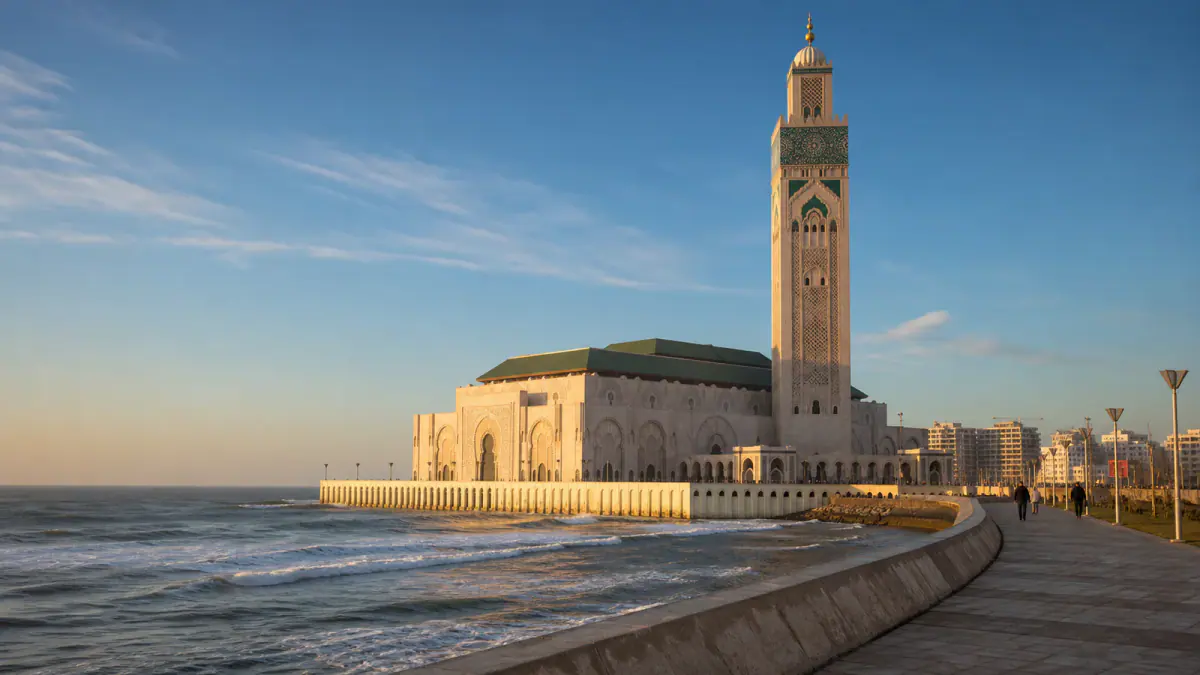
Hassan II Mosque is the city’s defining landmark. Its scale is impressive, but the location matters just as much: the complex meets the Atlantic, making ocean, stonework and city skyline part of the same view.
Non-Muslim visitors enter the interior as part of an official guided tour. Schedules and prices can change, especially during Ramadan and religious events, so use the Hassan II Mosque Foundation’s current guided-visit page rather than relying on an old blog timetable. The foundation also publishes dress and visit rules. Shoulders and knees should be covered, and visitors remove their shoes before entering the prayer hall.
The tour reveals details that a photograph from the esplanade cannot: carved plaster, wood, zellige, marble and the ablution hall. Even if you do not enter, allow time to walk the public exterior and ocean edge respectfully. Avoid blocking worshippers or treating prayer time as a photo opportunity.
Walk Through the Old Medina
Casablanca’s old medina sits between the mosque, port and city center. It is smaller and less monumental than the medinas of Fes or Marrakech. That is not a defect; it simply serves a different role.
Expect narrow commercial streets, everyday shopping and uneven lanes rather than a long list of ticketed monuments. A simple route toward the port-side edge gives you enough context without pretending this is the city’s only identity. Keep valuables secure in crowded passages, ask before photographing people and use a saved map pin for your exit.
The old medina works best as a bridge between Hassan II Mosque and downtown, not as an all-day attraction.
See Casablanca’s Art Deco Center
Casablanca’s center rewards anyone who looks above street level. Boulevard Mohammed V and surrounding streets contain façades that mix Art Deco lines with Moroccan decorative elements such as zellige, stucco, ironwork and green tile.
The regional tourism council’s Mohammed V Boulevard guide identifies buildings and architectural details along this historic commercial axis. Begin near Place Mohammed V, then walk toward the Central Market at a relaxed pace.
Do not reduce the area to an architectural checklist. The tram, shops, cafes and office crowds are part of the experience. Casablanca’s center is interesting precisely because heritage remains inside an active commercial city.
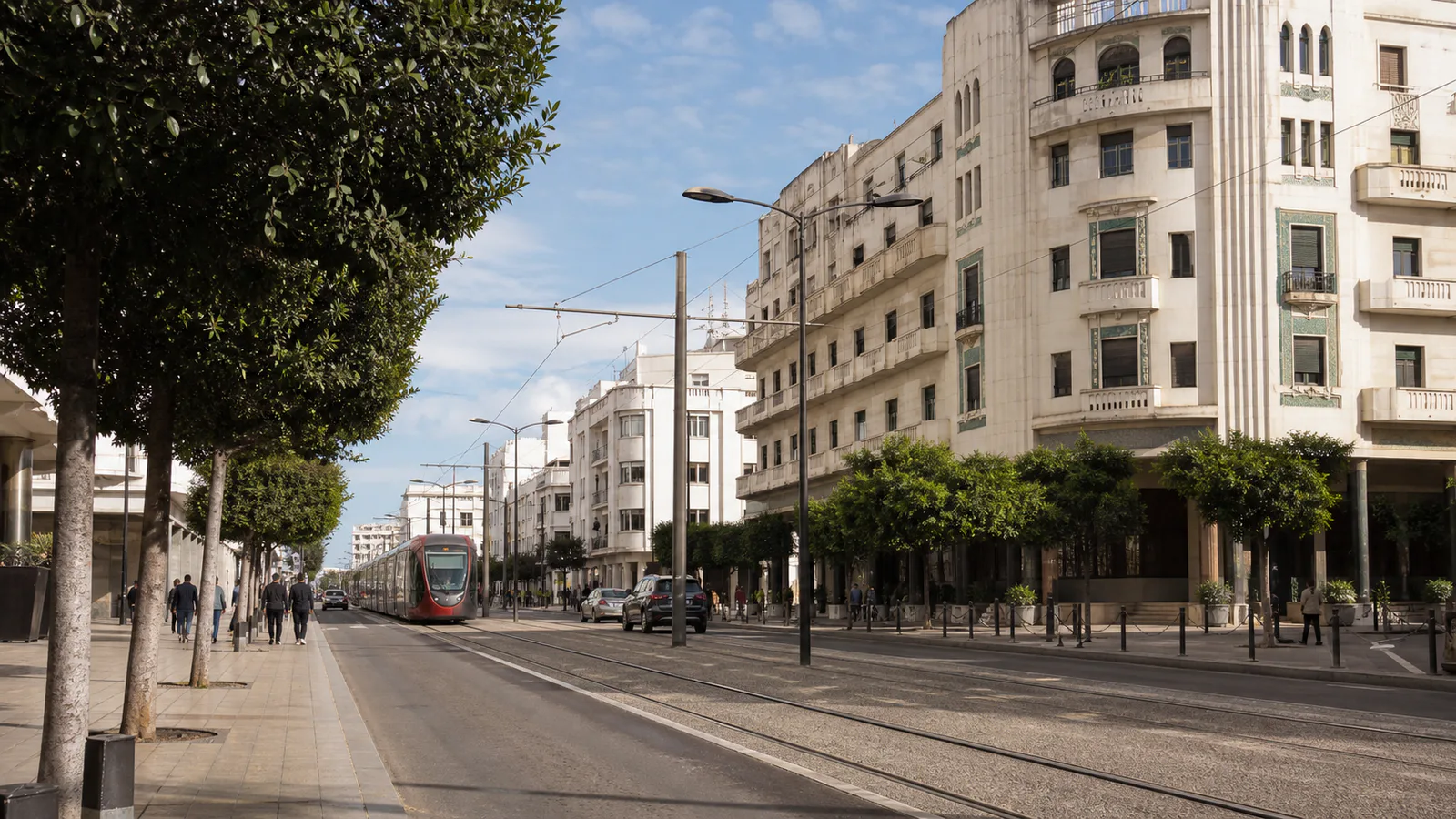
An illustrative view of central Casablanca’s Art Deco streetscape; individual buildings and street activity vary.
Stop at the Central Market
The Central Market is an easy place to add color and lunch without crossing the city. Its arcades hold flowers, produce, fish, small shops and food counters. The official Central Market profile also explains its early twentieth-century history.
Check a menu or agree on the price before ordering fish. Choose a busy, clean-looking counter and keep the stop simple if you still plan to visit Habous.
Explore Habous, the New Medina
Habous feels more ordered than the old medina. Arcades, small souks, bookshops, pastry shops and traditional design make it approachable for visitors who want to browse without navigating a huge maze.
The district is often called the new medina because it developed during the first half of the twentieth century. The official Habous district guide describes its construction between 1918 and 1955 and its continuing role as both a lived neighborhood and visitor destination.
Browse slowly and buy only what you understand. Ask about materials and prices, compare a few shops and bargain politely where appropriate. Nearby administrative buildings may have restricted or changing access, so do not build the day around entering a specific interior unless you have current confirmation.
Add One Museum, Not Three
With a second day, choose one museum that fits your interests instead of spending the day in traffic.
The Museum of Moroccan Judaism is the most distinctive option. Its collection presents Jewish Moroccan history through objects, clothing, jewelry, photographs and documents. Check the regional tourism council’s museum page for current opening information before traveling to the Oasis neighborhood.
The Hassan II Mosque Museum is more convenient if you want to stay near the oceanfront. Architecture lovers can also look for current guided heritage walks in the center. Opening hours are the detail most likely to disrupt a museum plan, so verify them on the day rather than assuming every institution opens continuously.
Finish on the Corniche and Aïn Diab
Casablanca’s Corniche is a long Atlantic seafront rather than a single viewpoint. Aïn Diab has beach access, cafes, restaurants and a livelier evening atmosphere. It is a good final stop because there is no pressure to complete a list: walk, watch the ocean and choose dinner when you are ready.
The tourism council’s Aïn Diab guide describes the area as a center for water sports as well as dining and nightlife. Treat the water as Atlantic surf, follow local flags and conditions, and do not assume it is safe to swim merely because people are on the beach.
The mosque waterfront and Aïn Diab are different coastal experiences. The first is architectural and reflective; the second is social and recreational. Seeing both makes Casablanca easier to understand.
A Realistic One-Day Casablanca Itinerary
Morning
Book an official Hassan II Mosque visit, arrive early and spend additional time around the exterior. Walk or take a short taxi into the old medina afterward.
Midday
Continue to Place Mohammed V and Boulevard Mohammed V. Notice the façades, then stop at the Central Market for lunch or a quick browse.
Afternoon
Take a taxi to Habous. Give yourself enough time for the arcades, bookshops and pastries without turning the visit into a rushed shopping stop.
Evening
Finish on the Corniche around Aïn Diab. Eat near the coast or return toward Gauthier or Maârif if you prefer a denser choice of city restaurants.
This route is deliberately selective. Adding a museum, Morocco Mall and a distant beach to the same day creates more driving than discovery.
Where to Stay in Casablanca
Choose by the next morning’s priority:
- City center: practical for Art Deco walks, Casa-Port station and a short sightseeing stay.
- Gauthier or Maârif: useful for restaurants and a more neighborhood-based evening.
- Corniche or Aïn Diab: best when Atlantic views and nightlife matter more than station access.
- Near Casa-Voyageurs: functional for an early onward train, but choose the exact property and surroundings carefully rather than booking by station name alone.
Casablanca is spread out, so a cheaper room can cost time and taxi fares if it sits far from everything you intend to visit.
Getting From Mohammed V Airport
Mohammed V International Airport lies outside central Casablanca. ONCF operates trains linking the airport with city stations including Casa-Oasis, Casa-Voyageurs and Casa-Port. Check the latest official airport train timetable, because schedules can be revised.
Choose the station closest to your accommodation rather than automatically leaving at the first Casablanca stop. For a late arrival, heavy luggage or a group, a pre-arranged transfer may be simpler.
Our Morocco airports guide explains when Casablanca is the best arrival point and when another city can save travel time.
Moving Around the City
The tram is useful along served corridors, while red petit taxis fill gaps between sights. Ask for the meter and carry small notes. At busy times, traffic can make a short-looking route slow.
Walking works within individual zones—the mosque and old medina, downtown, or parts of the Corniche—but not for connecting the entire itinerary. Group nearby places and use transport between clusters.
For onward travel, Casablanca connects naturally with Rabat by train. Read our Rabat travel guide if you are building a two-city Atlantic route, or use the first-time Morocco guide for a wider itinerary.
Food Without Chasing a Viral Restaurant
Casablanca’s size gives it one of Morocco’s broadest dining scenes. You can find traditional Moroccan dishes, seafood, bakeries, neighborhood grills and contemporary restaurants without crossing the whole city for one famous address.
Build meals around the route: the Central Market for a daytime fish stop, Habous for pastries and tea, and the Corniche or a central neighborhood for dinner. Check prices before ordering seafood by weight and remember that an ocean view often adds to the bill.
If you want context before ordering, our Moroccan food guide covers familiar dishes, snacks and eating customs.
Practical Expectations and Safety
Casablanca is a busy metropolis. Use normal large-city precautions: keep phones discreet near traffic, secure bags in crowded markets, use official transport and avoid poorly lit empty streets late at night. Road crossings require attention even when you appear to have priority.
Dress for the actual plan. Comfortable closed shoes help on medina lanes and long downtown walks, while a light layer is useful beside the Atlantic. For the mosque, follow the foundation’s clothing rules rather than arriving in beachwear.
French and Moroccan Arabic are widely useful, but many tourism workers also speak English. Save your accommodation address offline in French or Arabic so a driver can identify it easily.
Frequently Asked Questions
How many days do you need in Casablanca?
One full day covers the mosque, old medina, downtown, Habous and the Corniche at a sensible pace. Two days allow a museum, longer architecture walk and more relaxed meals.
Is Casablanca walkable?
Individual districts are walkable, but the complete city itinerary is not. Combine walking inside each area with trams or taxis between them.
Can non-Muslims visit Hassan II Mosque?
Yes, through the official guided-visit program. Check the foundation’s current schedule, price and dress rules before going.
Is Casablanca better than Rabat for a short stop?
Casablanca offers stronger big-city energy, Hassan II Mosque and Art Deco architecture. Rabat is calmer and has a denser mix of historic monuments. The better choice depends on your pace.
What about Casablanca’s new World Cup stadium?
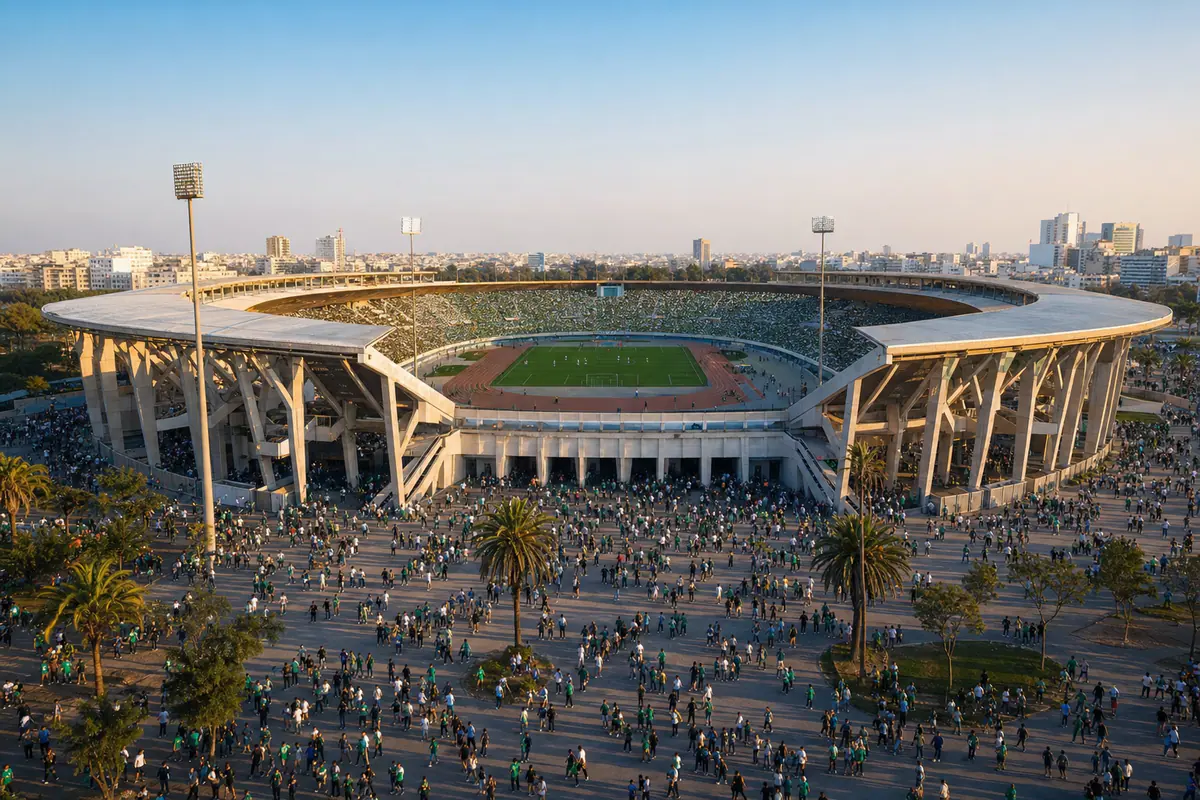
The planned Grand Stade Hassan II belongs to the wider Casablanca-Settat region rather than the central sightseeing circuit. Sports travelers can read our separate Grand Stade Hassan II guide.
Give Casablanca One Focused Day
Casablanca works when you stop asking it to behave like Morocco’s imperial cities. Begin at the oceanfront mosque, read the city through its medina and Art Deco center, spend time in Habous and end beside the Atlantic. One well-planned day is enough to reveal why this modern city deserves more than an airport transfer.