The best cities to visit in Morocco are not simply the most famous ones. Marrakech is the strongest all-round first stop, Fes offers the deepest medina experience, Rabat is the calm historic capital, Essaouira suits a slower Atlantic break, and Chefchaouen brings a small-town Rif Mountain atmosphere. Your best combination depends on pace, transport and what you actually want to do.
This guide compares ten popular Moroccan cities without pretending they are interchangeable. Use it to choose two or three complementary bases, then follow the linked destination guides when you are ready to plan each day.
Morocco Cities at a Glance
| City | Best for | Overall feel | Sensible first stay |
|---|---|---|---|
| Marrakech | First visits, food, gardens and day trips | Energetic and visitor-friendly | 3–4 nights |
| Fes | Medieval heritage, craft and architecture | Intense, historic and immersive | 2–3 nights |
| Rabat | A calm capital with coast and monuments | Orderly, spacious and local | 1–2 nights |
| Casablanca | Modern urban Morocco and flight connections | Large, commercial and fast-moving | 1–2 nights |
| Chefchaouen | Blue lanes, photography and Rif scenery | Small, relaxed and hilly | 1–2 nights |
| Essaouira | Walkable medina, seafood and Atlantic air | Creative, breezy and unhurried | 2–3 nights |
| Agadir | Beach hotels, families and easy resort time | Modern, open and relaxed | 3–5 nights |
| Tangier | Northern culture, sea views and rail access | Cosmopolitan and layered | 2 nights |
| Meknes | Imperial history with fewer crowds | Compact and understated | 1–2 nights |
| Ouarzazate | Kasbah country and southern road trips | Quiet, cinematic and arid | 1–2 nights |
These are planning ranges, not rules. A food-focused traveler can happily spend five days in Marrakech, while someone building a northern route may use Casablanca only as an arrival point.
Which Moroccan City Should You Visit First?
Choose Marrakech if this is your first trip and you want the broadest mix of riads, markets, historic sites, restaurants and organized excursions. It delivers a vivid introduction quickly, but its busy medina requires energy.
Choose Fes first if old-city history and traditional craft matter more than nightlife or resort comfort. Choose Rabat if you want a gentler arrival with reliable rail connections and room to breathe. For a coast-led holiday, start with Essaouira for character or Agadir for beach infrastructure.
If you have fewer than seven nights, do not collect cities merely to increase the number on your itinerary. Two well-matched bases usually create a better trip than four rushed check-ins.
1. Marrakech: Best All-Round City for a First Trip
Marrakech is the practical answer for many first-time visitors because it combines a major airport, a large choice of accommodation, landmark architecture, gardens, food and access to the High Atlas. The medina is dense, but the visitor infrastructure makes tours, transfers and day trips easy to arrange.
The historic core includes the Koutoubia area, palace architecture, traditional houses, souks and Jemaa el-Fna. UNESCO describes Marrakech as a long-standing political, economic and cultural center whose monuments include the Koutoubia, kasbah, ramparts, gates and gardens. That history is real, but so is the modern city beyond the walls.
Choose Marrakech if you want:
- a strong mix of history, shopping, food and nightlife;
- riad accommodation and rooftop dining;
- easy access to mountain or desert-edge excursions;
- enough activities to fill several days without changing hotels.
Shorten your stay if: crowds, sales pressure and constant stimulation tire you quickly. Plan one major medina area per half-day instead of trying to cross the whole old city repeatedly.
For a broader route after Marrakech, compare seasonal conditions in our best time to visit Morocco guide.
2. Fes: Best for Medina History and Traditional Craft
Fes feels less staged around visitors than central Marrakech. Its old city is a working urban fabric of homes, workshops, markets, religious buildings, fountains and narrow passages. UNESCO dates the city’s foundation to the ninth century and notes that Fes retained its role as Morocco’s cultural and spiritual center after the political capital moved to Rabat.
The medina rewards slow observation. A first guided walk can help you understand its neighborhoods and reduce the temptation to treat it as a puzzle to escape. Leave room for courtyards, craft workshops and food rather than racing between photo stops.
Choose Fes if you want:
- the most immersive historic-medina experience;
- architecture, woodwork, plaster, tile and metal craft;
- a base for Meknes, Moulay Idriss or Volubilis;
- evenings that feel quieter than central Marrakech.
Shorten your stay if: you need wide streets, easy visual orientation or a large nightlife scene. Fes is most rewarding when history is the purpose, not merely the backdrop.
3. Rabat: Best for a Calm Capital City
Rabat is the capital city of Morocco. It is also one of the country’s four imperial cities, alongside Fes, Meknes and Marrakech. Yet it often feels less demanding than all three. Boulevards, gardens and the modern administrative city sit beside the medina, Hassan Tower, the Mohammed V Mausoleum, the Chellah area and the Kasbah of the Udayas.
UNESCO recognizes Rabat as a shared historic and modern heritage city, emphasizing the relationship between its older Arabo-Muslim fabric and twentieth-century urban planning. That mixture is precisely why Rabat works well in a comparative itinerary: it shows that Moroccan city life is not limited to medinas.
Choose Rabat if you want:
- a low-pressure first or final stop;
- historic monuments without an overloaded schedule;
- Atlantic and Bouregreg views;
- an easy rail position between Tangier, Casablanca, Meknes and Fes.
Shorten your stay if: your main priority is a huge souk or late-night tourism scene. One full day covers the essential highlights; two nights allow a more relaxed rhythm. Our Rabat one-day itinerary turns those choices into a practical walking plan.
4. Casablanca: Best for Modern Urban Morocco
Casablanca is Morocco’s economic engine, not a preserved imperial-city experience. Visitors who arrive expecting Marrakech-style lanes often dismiss it too quickly. Approach it as a contemporary Atlantic metropolis and it becomes more legible.
The Hassan II Mosque is the defining visit, but the city also offers twentieth-century architecture, the Habous quarter, large restaurants, galleries and a view of everyday business life at Moroccan scale. Casablanca is particularly useful when your flight schedule or rail route naturally passes through it.
Choose Casablanca if you want:
- the Hassan II Mosque and Atlantic corniche;
- modern architecture and big-city life;
- convenient onward rail connections;
- one urban contrast to older medinas.
Shorten your stay if: you have limited time and your priorities are craft, mountain scenery or a compact old town. For most leisure itineraries, one focused day is enough. See our Casablanca one-day travel guide for a realistic sequence.
5. Chefchaouen: Best for Rif Mountain Atmosphere
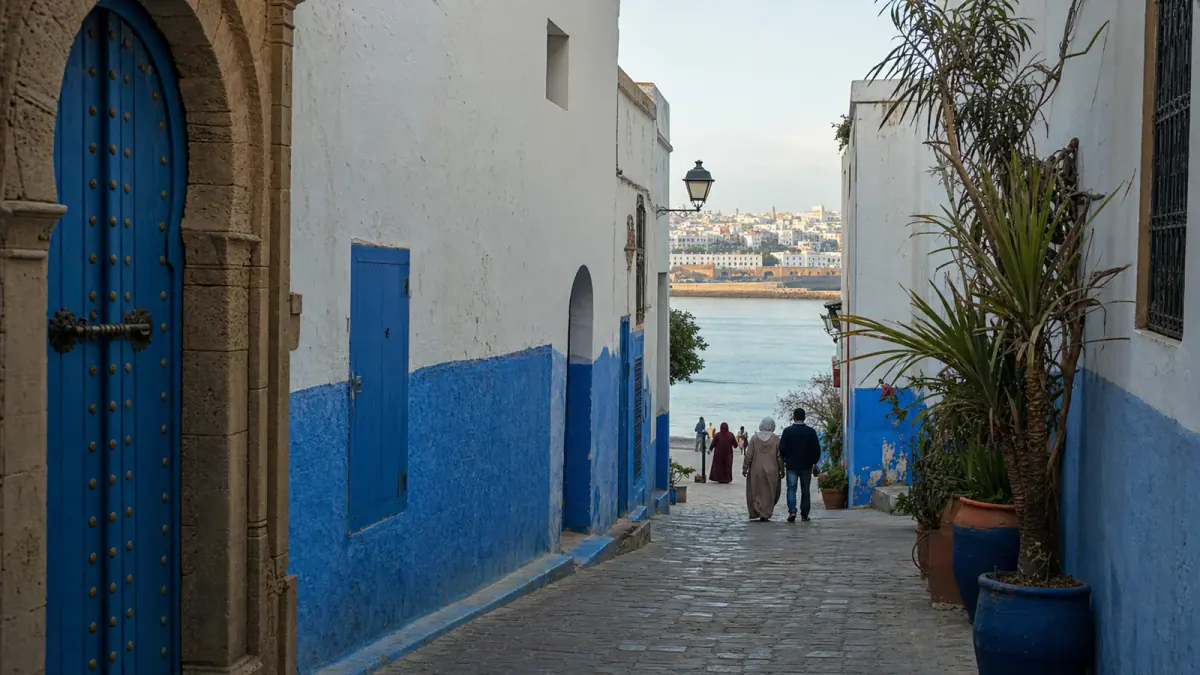
Chefchaouen is a small mountain city whose blue-painted lanes have become far more famous than its size suggests. The medina is compact and steep, with the kasbah and main square providing anchors. Its strongest quality is not a checklist of monuments; it is the slower relationship between town, hills and changing light.
An overnight stay matters. Day-trip crowds concentrate in the middle of the day, while morning and evening reveal a quieter town. The climb toward the Spanish Mosque viewpoint is popular, but footwear and heat matter more than social-media photos imply.
Choose Chefchaouen if you want:
- a small, walkable medina rather than a major city;
- photography and Rif Mountain views;
- a pause between Fes and Tangier;
- one or two low-schedule days.
Shorten your stay if: you need rail access, extensive museums or varied nightlife. Chefchaouen is reached by road, so it should fit the route rather than force a long detour. Use our detailed Chefchaouen travel guide to plan the medina and viewpoints responsibly.
6. Essaouira: Best for a Walkable Historic Coast
Essaouira combines an Atlantic harbor, fortified medina, ramparts, seafood, galleries and a beach in a compact footprint. Wind is part of the city’s identity: it cools hot days and supports water sports, but it can also make a beach afternoon feel very different from Agadir.
UNESCO describes the medina as an eighteenth-century fortified seaport where European military planning was adapted to a North African setting. The result is easier to navigate than the medinas of Fes or Marrakech, making Essaouira a useful decompression stop after either.
Choose Essaouira if you want:
- a medina and coast in the same walkable stay;
- seafood, art and a relaxed evening rhythm;
- character rather than resort facilities;
- an easy road extension from Marrakech.
Shorten your stay if: your priority is guaranteed still-water swimming or a large resort pool. Our guide to the best things to do in Essaouira explains how to combine the harbor, ramparts, medina and beach.
7. Agadir: Best for Beach Hotels and Family Ease
Agadir is modern because much of the city was rebuilt after the devastating 1960 earthquake. Its appeal is therefore different from Fes or Marrakech: a long beachfront, broad avenues, resort hotels, cafés and access to the Souss coast.
The reconstructed Agadir Oufella site provides context and a broad view, while Souk El Had supplies the busy market experience. Taghazout and the coast north of the city expand the choice of beaches and surf-oriented stays.
Choose Agadir if you want:
- straightforward beach-hotel logistics;
- a family-friendly base with resort services;
- winter sun and a long promenade;
- day trips around the Souss region.
Shorten your stay if: an intact old medina is your central reason for visiting Morocco. Agadir has an airport but no passenger rail station, so plan a flight, coach or road transfer. Our Agadir accommodation guide compares the main areas for beach and family stays.
8. Tangier: Best Northern Gateway
Tangier looks across the Strait of Gibraltar and carries layers of Moroccan, Mediterranean and international history. The medina, kasbah, seafront and modern city create more variety than a quick port stop suggests.
It is also one of the most useful cities for a northern itinerary. Morocco’s high-speed Al Boraq corridor links Tangier with Kenitra, Rabat and Casablanca, so the city pairs naturally with the capital and can anchor a route that continues by road to Chefchaouen.
Choose Tangier if you want:
- a northern city with sea views and cultural layers;
- fast rail connections to Rabat and Casablanca;
- an entry point from Spain or northern air routes;
- a logical partner for Chefchaouen.
Shorten your stay if: your route is focused entirely on Marrakech, the Atlas and southern Morocco. Tangier is worthwhile, but not when it turns a compact southern trip into a cross-country sprint.
9. Meknes: Best Quiet Imperial-City Addition
Meknes is one of Morocco’s four imperial cities, yet it receives less visitor pressure than Marrakech or Fes. Monumental gates, the old city and the historic royal complex give it weight without demanding a long stay.
Its greatest itinerary advantage is geography. Meknes can pair with Fes and with the archaeological site of Volubilis, creating a heritage-focused cluster rather than another isolated hotel change.
Choose Meknes if you want:
- imperial history at a quieter pace;
- a compact addition to a Fes stay;
- access to Volubilis and Moulay Idriss;
- an alternative to adding another large tourism center.
Shorten your stay if: you only have a few days and already chose Fes. In that case, visit Meknes as a day trip or save it for a slower second journey.
10. Ouarzazate: Best Base for Kasbah Country
Ouarzazate is not a classic medina break. It is a southern road hub associated with film production, arid landscapes and routes toward fortified villages, valleys and the desert. The city makes the most sense when the journey around it is part of the attraction.
Choose Ouarzazate if you want:
- a road trip through High Atlas and pre-Saharan landscapes;
- kasbah architecture and film locations;
- a staging point toward the Draa Valley;
- a quieter southern city between longer drives.
Shorten your stay if: you are not continuing through the region. Ouarzazate is a useful base, not a substitute for a full Sahara experience.
Morocco City Comparisons That Matter
Marrakech or Fes?
Pick Marrakech for variety, visitor infrastructure, gardens, food and excursions. Pick Fes for historic depth, craft and a medina that remains the central reason to visit. On a first trip of ten days or more, the two complement each other; on a short trip, choose the experience you value rather than rushing both.
Essaouira or Agadir?
Pick Essaouira for a compact historic city with ramparts, harbor and creative atmosphere. Pick Agadir for beach hotels, family facilities, a long promenade and easy resort time. Essaouira is character-first; Agadir is comfort-first.
Rabat or Casablanca?
Pick Rabat for monuments, a walkable historic layer and a calmer capital rhythm. Pick Casablanca for the Hassan II Mosque, contemporary urban scale and flight or rail convenience. If your schedule permits, they are close enough within the rail corridor to experience both without treating them as substitutes.
Chefchaouen or Tangier?
Pick Chefchaouen for blue lanes and mountain atmosphere. Pick Tangier for a larger cultural city, the sea and easier long-distance rail. Combining them makes sense on a northern route because they deliver very different experiences.
How to Connect Morocco’s Main Cities
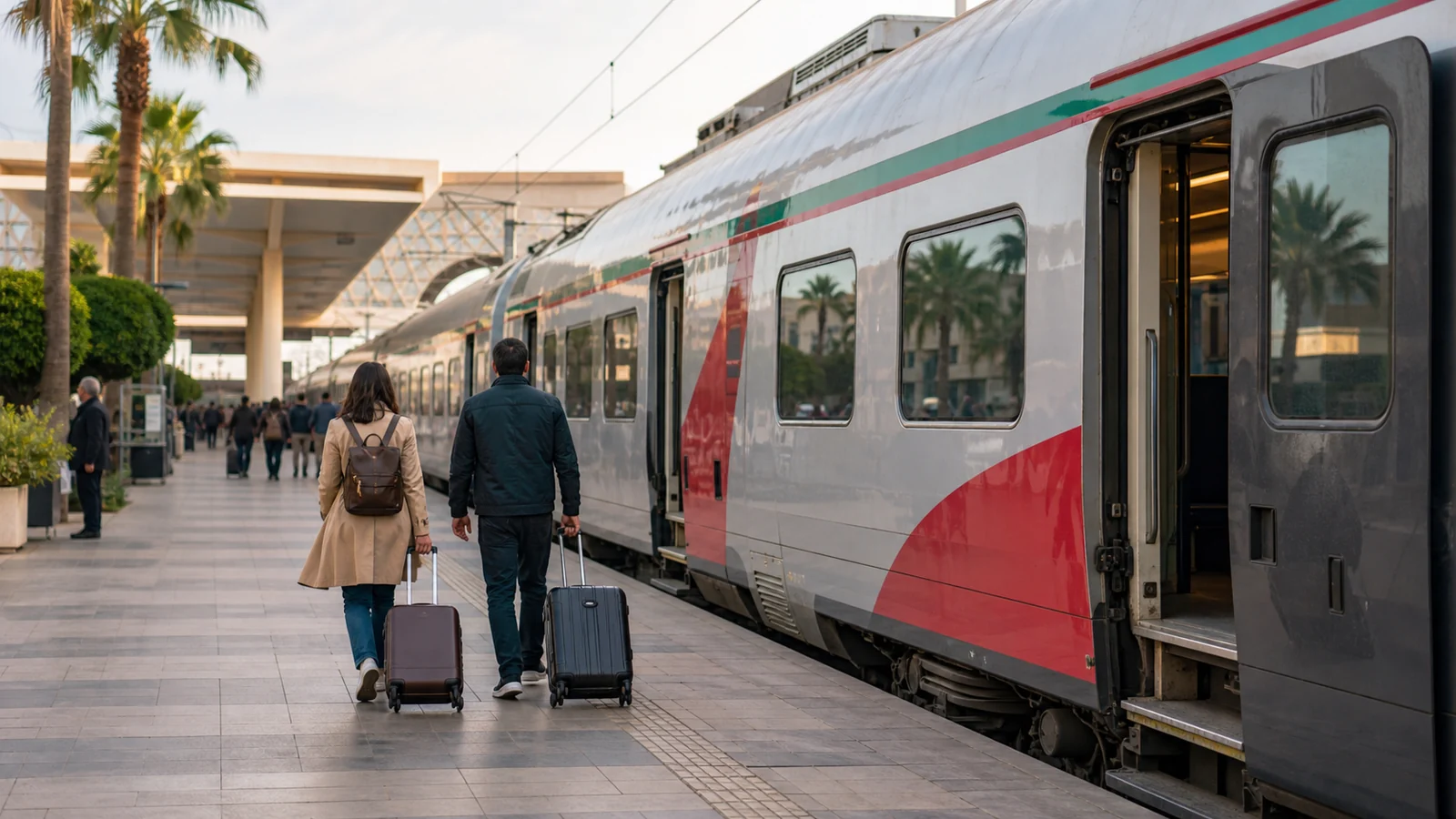
Rail is most useful when your route includes Tangier, Kenitra, Rabat and Casablanca, which are served by the high-speed corridor. Conventional trains also support routes involving Marrakech, Fes and Meknes. The Moroccan National Tourist Office transport guide explains the main transport modes, while ONCF Voyages is the place to verify current rail schedules and book.
Chefchaouen, Essaouira, Agadir and Ouarzazate require road transport for at least part of the journey. A coach can be more practical than a rental car when the destination itself is walkable. A car becomes valuable when the route—not only the city—is the purpose, especially in the Atlas, Souss or southern valleys.
Do not plan connections from an old blog timetable. Departure times, station arrangements and road conditions can change. Check the operator shortly before travel and leave margin around flights.
Three City Routes That Work
Seven nights: first-time contrast
Combine Marrakech with Essaouira. You get a high-energy inland city and a walkable Atlantic medina without spending the trip crossing the country. Add nights to Marrakech if mountains and gardens matter most; add them to Essaouira if the goal is rest.
Ten nights: imperial cities by rail
Travel Casablanca or Rabat → Meknes → Fes → Marrakech. This route uses the rail network for the main sequence and contrasts modern city life with three imperial centers. Do not force a day in Casablanca unless the mosque and modern-city experience genuinely interest you.
Ten to fourteen nights: northern Morocco
Combine Casablanca → Rabat → Tangier, then travel by road to Chefchaouen and continue toward Fes. This route balances rail efficiency, Atlantic and Mediterranean perspectives, mountain-town atmosphere and a major historic medina.
For the wider practical details—entry checks, money, accommodation and cultural etiquette—use our Morocco guide for first-time visitors.
Common City-Planning Mistakes
Treating every famous city as mandatory
Marrakech, Fes and Chefchaouen can all be excellent, but they do not belong in every short itinerary. Each extra stop costs packing time, transfers and orientation.
Expecting every city to have the same kind of medina
A medina is an old-city district, not a standardized attraction. Fes is dense and workshop-oriented; Essaouira is compact and coastal; Rabat’s old city sits within a broader capital; Agadir’s urban history follows a different path after 1960.
Choosing only by photographs
Blue walls, rooftops and beaches say little about transport, slopes, wind or crowd patterns. Choose by the day you want to live: long museum visits, unstructured medina walking, pool time, food exploration or a road trip.
Ignoring arrival and departure geography
A city can be appealing and still be wrong for the route. Start with your airport or ferry port, place the two most important stops, and only then add a third city if the connection is reasonable.
Frequently Asked Questions
What is the capital city of Morocco?
Rabat is the capital of Morocco. Casablanca is larger and more commercially prominent, but it is not the national capital.
What are Morocco’s four imperial cities?
Rabat, Fes, Meknes and Marrakech are the four imperial cities. Morocco’s official tourism guidance defines them as cities that served as the capital under successive dynasties.
What is the most beautiful city in Morocco?
There is no objective winner. Chefchaouen is the most visually distinctive for blue lanes, Fes has the richest medieval urban fabric, Essaouira combines stone ramparts with the Atlantic, and Rabat balances historic and modern architecture. “Most beautiful” depends on whether you value color, monumentality, coast or everyday street life.
How many cities should I visit in one week?
Two bases are usually enough. Three can work when the connections are short and efficient, but four often turns a week into transfers and check-ins.
Which Morocco cities are easiest without a car?
Marrakech, Casablanca, Rabat, Meknes, Fes and Tangier fit rail-based travel well. Their central areas can then be explored on foot, by tram where available, or by local taxi. Essaouira and Chefchaouen require a road connection but are walkable after arrival.
Which city is best for families?
Agadir is often the easiest choice for beach hotels, pools and broad promenades. Marrakech offers more varied activities but requires closer planning around heat, traffic and crowded medina lanes.
Final Choice: Build Contrast, Not a Checklist
For a first Morocco trip, choose one city for intensity or heritage and one for ease or coast. Marrakech and Essaouira are a balanced short pairing; Rabat, Fes and Tangier create a rail-friendly northern sequence; Agadir works best when the beach is the holiday rather than an afterthought.
Browse the Morocco destinations hub after choosing your route. The individual city pages can then answer the smaller questions—where to stay, what to see and how to shape each day—without turning this comparison guide into ten repetitive itineraries.